

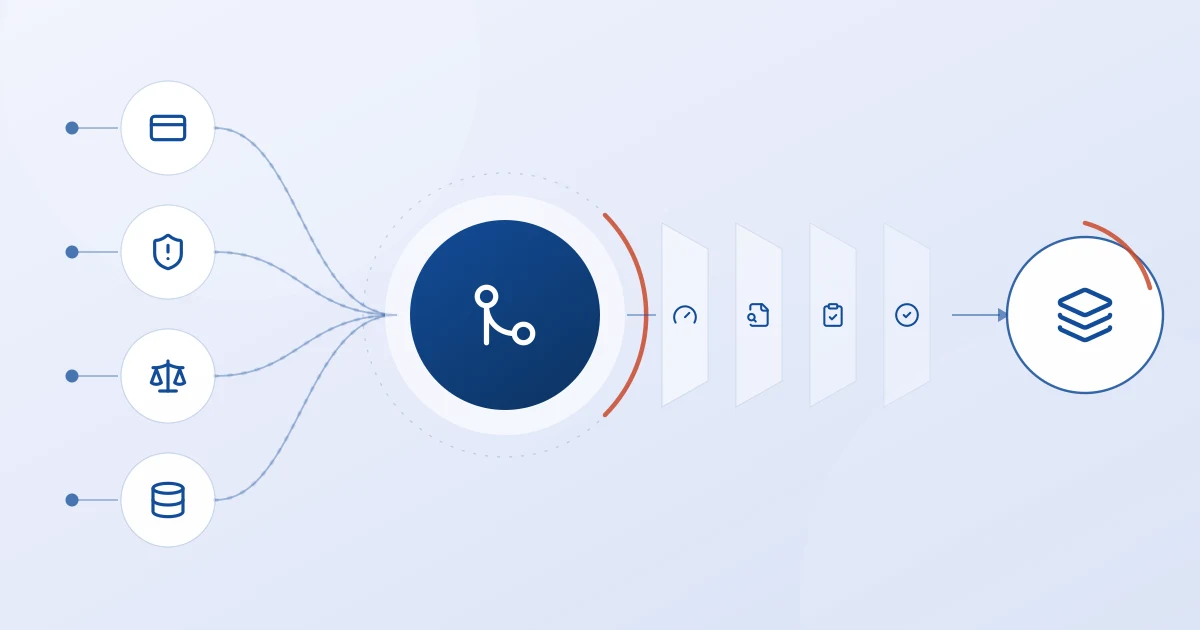
The Convergence Reshaping Lending Operations
The credit industry faces a critical transformation. Financial institutions are navigating three interconnected challenges that are fundamentally reshaping how lending operations function — and the institutions that recognize these challenges as interconnected rather than isolated are the ones positioning themselves for sustainable growth. The pattern of interconnection has only accelerated heading into 2026 — see our breakdown of the five lending compliance challenges driving Q2 2026 enforcement for the current expansion of this dynamic.
Manual processes, fragmented systems, and reactive compliance approaches no longer provide the foundation needed for confident operations in today's regulatory environment. The question facing every lending institution is whether their current infrastructure can support the speed, consistency, and transparency that both regulators and borrowers now expect.
Lenders using Salesforce-native compliance tools can streamline this convergence into a single, automated workflow — here's how it works in practice.
Challenge One: Credit Data Access Remains Fragmented
The first challenge centers on how credit data flows — or fails to flow — through lending organizations. Information remains trapped in silos across different bureaus, vendors, and internal systems. This fragmentation forces manual coordination across multiple portals and varying data formats, creating delays at every stage of the lending process.
The operational costs of fragmentation compound quickly. Each manual handoff introduces the potential for errors — transposed digits, mismatched identifiers, stale data pulled from cached reports rather than live bureau feeds. For institutions processing hundreds or thousands of applications monthly, these errors accumulate into measurable losses in both time and accuracy.
Modern borrowers expect seamless experiences. When data access becomes a bottleneck — when an applicant waits days for a decision because their credit data requires manual aggregation from multiple sources — institutions lose competitive advantage to more streamlined competitors. The lenders gaining market share are those who have eliminated the gap between data request and data availability.
For institutions on Salesforce, the path forward is clear: unified credit data access that pulls from all major bureaus directly into the CRM environment, with standardized data formats and automated workflows that eliminate manual coordination entirely. The only Salesforce-native credit access platform with pre-built, pre-configured objects — no additional setup required — transforms fragmented data access into a streamlined, single-platform process.
Challenge Two: Inconsistent Credit Decisioning Creates Risk
Credit decisioning represents the second critical challenge. Many institutions cannot confidently assert that identical loans receive identical treatment — and that inconsistency creates both operational and regulatory exposure.
When decisioning processes evolve organically — one underwriter applying criteria slightly differently than another, or policy updates reaching some team members before others — the result is a portfolio where similar applicants may receive materially different outcomes. This inconsistency is not merely an efficiency problem. Under ECOA and Regulation B, lenders must demonstrate that credit decisions are made on the basis of objective, consistently applied criteria. Inconsistent decisioning is a fair lending liability.
The pressure for speed compounds these challenges. When institutions prioritize velocity over defensibility, they often sacrifice the documentation and process controls that regulators expect. The institutions operating most effectively have found frameworks that deliver both — automated decisioning that applies your exact lending policies to every application, every time, while generating the compliance documentation needed to demonstrate consistency during examinations.
In our work with commercial lenders, we see a consistent pattern: institutions that implemented structured decisioning frameworks early spend less time defending their decisions during audits and more time focused on origination volume and portfolio quality.
Challenge Three: The Compliance Complexity Crisis
The compliance landscape grows more complex with each regulatory cycle. Federal requirements overlap with state-specific mandates, enforcement priorities shift across administrations, and new guidance documents arrive with increasing frequency. Commercial lenders are facing this directly through multi-state MCA compliance requirements — California, New York, Utah, and Virginia have all enacted disclosure or registration laws that apply to merchant cash advance and similar non-bank commercial financing products. Traditional periodic review approaches — the quarterly compliance audit, the annual policy refresh — no longer provide adequate protection.
The gap between periodic reviews creates windows of exposure where institutions may be operating outside current requirements without knowing it. A regulation that changed in March may not surface in compliance workflows until the next scheduled review in June. During that three-month window, every transaction processed under the outdated framework carries risk.
The cost of non-compliance continues to escalate beyond direct penalties. Consent orders, remediation efforts, enhanced monitoring requirements, and reputational damage create indirect costs that can exceed the original penalty by a significant factor. These pressures intensify under the CFPB's updated enforcement standard for furnishers and dispute teams, where the speed and quality of documented remediation now determine how a compliance event resolves. For lenders handling consumer financial information, the FTC Safeguards Rule, FCRA permissible purpose requirements, and ECOA adverse action obligations represent just the baseline of what continuous compliance requires. Lenders that furnish account data to credit bureaus and handle disputes face a separate set of FCRA mandates — see our FCRA furnisher obligations and dispute requirements breakdown.
Institutions that have transitioned from periodic checks to continuous validation built into every transaction operate with fundamentally different risk profiles. Rather than discovering compliance gaps after the fact, they prevent them from occurring in the first place — a distinction that matters during regulatory examinations.
Why These Challenges Amplify Each Other
These three challenges don't exist in isolation. They interact and amplify each other in ways that multiply risk and operational complexity.
Fragmented data access makes consistent decisioning more difficult — when underwriters are working from different data sources or different points in time, identical treatment becomes structurally impossible. Inconsistent decisioning complicates compliance demonstration — if you cannot show that your process is standardized, regulators will question every outcome. And compliance requirements, when implemented as manual checkpoints rather than automated controls, slow data access and disrupt decisioning workflows, creating the very bottlenecks that institutions are trying to eliminate.
This interconnection is why point solutions deliver limited benefit. An institution that solves data access fragmentation but leaves decisioning inconsistent has improved one-third of the problem while the other two-thirds continue to generate risk. The institutions achieving the strongest outcomes are those addressing all three challenges through integrated platforms — automated underwriting software providers that treat data access, decisioning, and compliance as a unified workflow rather than separate functions.
The Integrated Approach: From Burden to Competitive Advantage
Forward-thinking institutions recognize that the path forward requires integration, not incremental improvement. The lending organizations that are converting these challenges into competitive advantages share a common approach.
Automated data aggregation eliminates fragmentation by pulling credit intelligence from all major bureaus into a single environment. Decisioning frameworks prioritize consistency while maintaining explainability — every application assessed against the same objective standards, with clear documentation of how each decision was reached. And compliance transitions from periodic checks to continuous validation embedded in every transaction, generating audit-ready documentation as a byproduct of normal operations rather than a separate workstream.
The result is a lending operation where speed, transparency, and regulatory confidence reinforce each other rather than competing. Institutions that have made this transition report measurable improvements: faster time-to-decision, reduced compliance preparation costs, and the operational confidence that comes from knowing their processes are both consistent and defensible.
The question for every lending institution is not whether these challenges exist — they are universal. The question is whether your current infrastructure addresses them as the interconnected system they are, or whether you are still managing them as separate problems with separate tools and separate teams.
What This Means for Your Institution
The convergence of data access, decisioning, and compliance challenges is not a future state — it is the current operating environment. Institutions that continue to treat these as independent problems will find the gaps between them widening as regulatory expectations increase and borrower expectations for speed and transparency continue to rise.
The lenders positioning themselves most effectively are those who have embedded integrated solutions into their existing technology infrastructure. For institutions already operating on Salesforce, this means leveraging purpose-built credit compliance intelligence that transforms three interconnected challenges into a unified, automated workflow — turning what has historically been a burden into a foundation for confident, compliant growth.