

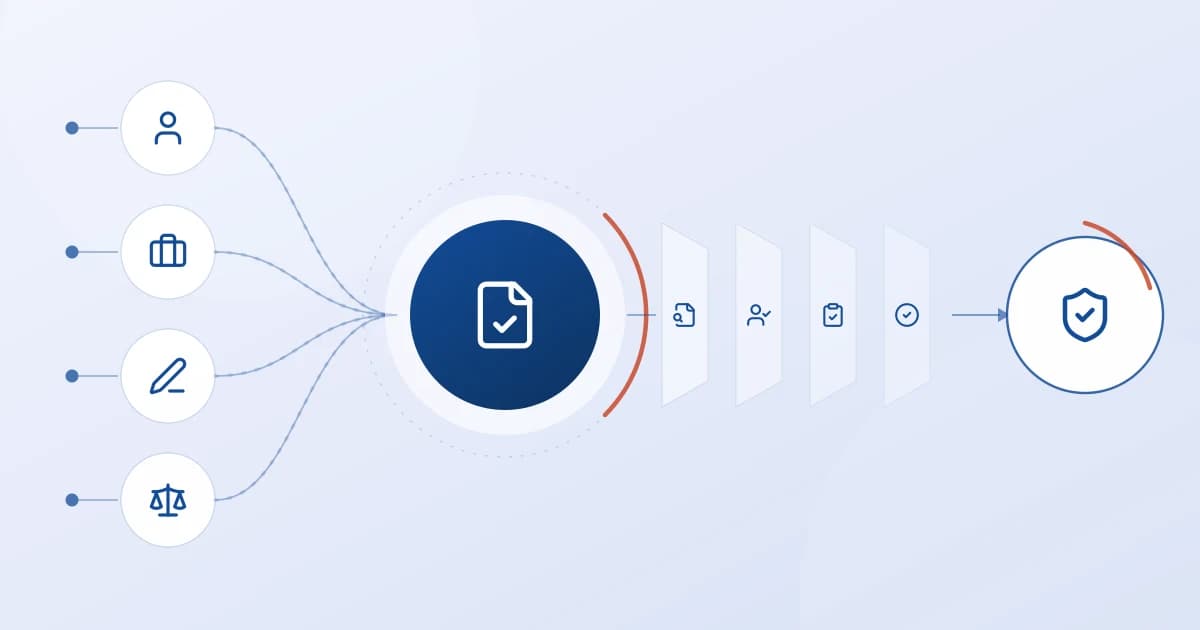
Yes — pulling a personal guarantor's credit report triggers Fair Credit Reporting Act obligations, even on a commercial loan. The FCRA follows the consumer report, not the loan type: the lender needs a permissible purpose, must send adverse action notices if the guarantee is declined or repriced, and must honor accuracy and dispute rights.
The Consumer Protection Obligation Most Commercial Lenders Miss
Small and mid-sized business lenders routinely require personal guarantees on commercial loans — from the principals of closely held corporations, the partners of small businesses, and the officers of early-stage companies. It is standard commercial lending practice. What is less standard is understanding the consumer compliance obligations that activate the moment a lender pulls a personal guarantor credit report.
The Fair Credit Reporting Act does not distinguish between consumer and commercial transactions when it comes to the obligations a lender assumes by accessing a consumer credit report. Pull a personal guarantor's credit file, and FCRA consumer protections follow — adverse action notices, permissible purpose requirements, accuracy obligations, and dispute resolution rights. These requirements apply regardless of the commercial nature of the underlying loan.
Most SMB lenders do not realize the full scope of these obligations until an examiner identifies the gap. For institutions operating on Salesforce, automating the documentation and notice workflow eliminates the exposure before it becomes an examination finding.
Schedule a Compliance Discussion to see how LASER's COMPLY pillar handles guarantor FCRA compliance within your existing lending workflow.
How a Personal Guarantor Credit Report Triggers Consumer Protections
Under the FCRA, a "consumer report" is any communication from a consumer reporting agency bearing on a consumer's creditworthiness, credit standing, or credit capacity — used or collected for the purpose of serving as a factor in establishing a consumer's eligibility for credit, employment, or other purposes. The definition does not include a carve-out for reports obtained in connection with commercial transactions.
When a commercial lender obtains a personal guarantor's consumer credit report as part of evaluating a business loan application, that report is a consumer report under the FCRA. The pull also lands on the guarantor's own credit file as an inquiry, governed by the same federal rules that determine which inquiries a borrower can see. The lender's FCRA obligations activate at the moment of the pull:
| FCRA Obligation | What It Requires |
| Permissible Purpose | A legally recognized basis for obtaining the report — for guarantors, written authorization is the clearest path |
| Accuracy | The lender must have reasonable procedures to ensure reported information is accurate |
| Adverse Action Notice | Required when credit is denied or terms are less favorable based on the consumer report |
| Consumer Rights Disclosure | Guarantor must be informed of their FCRA rights |
| Record Retention | Written or recorded application information must be retained for 12 months from when the applicant learned of the adverse action |
Permissible Purpose: Establishing the Right Basis for the Pull
A lender always has permissible purpose to obtain a consumer credit report when the consumer has authorized it in writing. For commercial lenders pulling guarantor credit reports, best practice is to include credit authorization language directly in the business credit application or in a separate authorization document that the guarantor signs at the time of application.
If a lender is uncertain whether permissible purpose exists for a guarantor on a business-purpose loan, written authorization eliminates the uncertainty. As noted in guidance from the Federal Reserve's Consumer Compliance Outlook, it has been acceptable practice for lenders to include credit report authorization language in the credit application or in a separate document when the consumer is a guarantor or co-obligor on a business loan.
Pulling a consumer report without permissible purpose is a direct FCRA violation with both civil and criminal exposure — regardless of whether the underlying transaction is commercial.
Adverse Action Notices: What SMB Lenders Must Send
The adverse action notice obligation is where most commercial lenders experience their most significant FCRA compliance gap. When a lender denies credit or offers materially less favorable terms based in whole or in part on information in a consumer credit report — including a guarantor's report — an adverse action notice is required.
The notice must:
- Identify the consumer reporting agency that supplied the report
- Inform the consumer of their right to obtain a free copy of the report within 60 days
- Inform the consumer of their right to dispute the accuracy or completeness of the report
- Under ECOA and Regulation B, state the specific reasons for the adverse action
The notice obligation applies to the guarantor individually — not just to the business applicant. If a guarantor's personal credit report contributed to the decision to deny or modify the loan terms, that guarantor is entitled to an adverse action notice under FCRA, and potentially a separate notice under ECOA if the specific reasons for adverse action are required.
ECOA and Regulation B: Additional Guarantor Obligations
The Equal Credit Opportunity Act and Regulation B add a layer of commercial lending compliance that intersects directly with the guarantor credit pull. For commercial credit, a creditor may require the personal guarantee of business principals, directors, officers, and shareholders of closely held corporations — but the decision to require a guarantee must be based on the guarantor's relationship to the business, not on a prohibited basis.
ECOA's prohibitions on discrimination apply to commercial transactions as well as consumer transactions. Creditors cannot require guarantees selectively based on race, sex, marital status, national origin, or other prohibited bases — for example, requiring spousal guarantees only from women-owned businesses or requiring guarantees only from married officers.
Record retention under ECOA for commercial credit applications requires institutions to retain all written or recorded information for 12 months after the date the applicant learned of the adverse action taken.
For SMB lenders whose product mix includes merchant cash advance or other revenue-based financing alongside term loans, state-level MCA regulation now in effect for commercial lenders adds a separate disclosure and registration layer in California, New York, Utah, and Virginia — distinct from FCRA and ECOA obligations but landing on the same originator.
Building Compliance Documentation Into the Workflow
The compliance gap for SMB lenders is rarely one of intent — it is almost always one of process. The institutions that experience examination findings on guarantor FCRA compliance are typically those relying on manual steps and ad hoc documentation rather than systematic workflow controls.
The most effective approach embeds the required documentation steps into the credit workflow itself:
- Written authorization captured at the time of application, before any credit pull
- Adverse action notice generation triggered automatically when a decision involves a consumer report
- Permissible purpose documentation recorded alongside the credit pull record
- Record retention automated within the platform rather than dependent on manual file management
As detailed in our analysis of why credit reports and PII are regulated, the regulatory frameworks governing credit data apply at every touchpoint in the lending workflow — including touchpoints that commercial lenders sometimes assume are outside the consumer protection framework.
What This Means for Your Institution
The personal guarantor compliance obligation is not a niche concern for large commercial banks. It applies to every SMB lender that requires personal guarantees and pulls consumer credit reports as part of evaluating those guarantees — which describes the overwhelming majority of small business lending in the United States.
The institutions that manage this exposure effectively are those that have built FCRA compliance into their commercial lending workflow at the point of application, not those trying to reconstruct documentation after an examination inquiry. Automating authorization capture, adverse action notice generation, and record retention within your Salesforce environment closes the gap systematically and generates the audit trail that demonstrates compliance under examination.
Schedule a Compliance Discussion to see how LASER's COMPLY pillar automates FCRA compliance for personal guarantor credit pulls inside Salesforce — including adverse action notices, permissible purpose documentation, and record retention.