

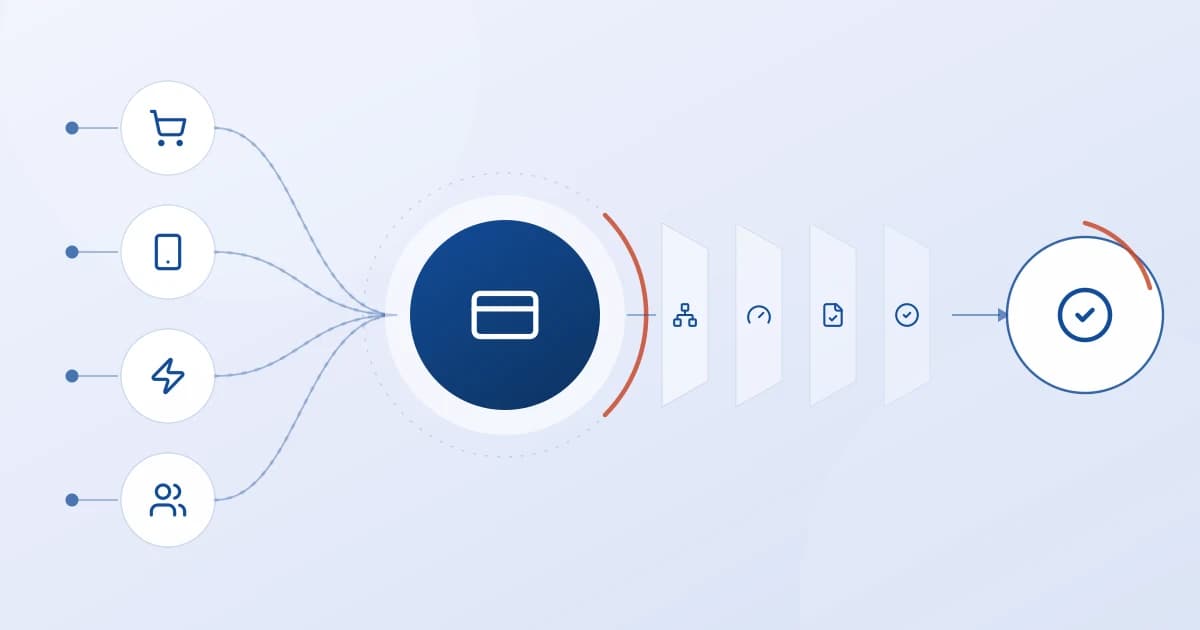
Embedded lending puts credit approval inside the platforms where customers already transact, rather than in a separate application flow. The compliance burden does not move with it: approval logic still has to be explainable, adverse action notices still have to be issued on denial, and the audit trail still has to live on the record.
Credit Is Moving to Where the Customer Is
The financial system of the next decade will not be built primarily inside bank branches, lending portals, or even institution-facing mobile apps. It will be embedded in the platforms, services, and transaction flows that consumers and businesses already use. That shift — from institution-centric credit distribution to platform-embedded credit access — is the embedded finance revolution.
For traditional lenders, the transition presents both an opportunity and a threat. The opportunity: reaching borrowers at precisely the moment and context where credit need is highest, without requiring them to navigate a separate lending interface. The threat: disintermediation — becoming invisible infrastructure behind a platform brand, losing the customer relationship to the platform while retaining the regulatory obligations of the lender.
The institutions that will thrive in the embedded finance environment are those that have built credit infrastructure capable of operating at the API level — delivering compliant, consistent lending capabilities through any integration point while maintaining full regulatory accountability. Schedule a Discovery Call to see how LASER's platform-native architecture supports embedded finance deployment.
The Scale of the Shift
Embedded finance is not a future trend — it is a current market reality with measurable impact. Salesforce's 2025 holiday shopping report found that AI and embedded finance influenced $262 billion in U.S. retail sales during the holiday season, with AI-driven embedded lending — including BNPL — accounting for a significant portion of that activity.
The projection from West Monroe's 2026 Financial Services Industry Outlook frames the structural change directly: by 2026, lending economics will be reshaped by embedded finance, B2B and BNPL-style models, and a rapidly expanding private credit ecosystem. Alternative and fintech lenders already using API-first, AI-driven platforms to deliver faster credit decisions at embedded touchpoints are creating competitive pressure on traditional institution-centric models.
| Embedded Finance Channel | Credit Application | Compliance Obligation |
| Point-of-sale / checkout | Consumer credit at purchase | ECOA, FCRA, TILA |
| B2B software platforms | Commercial credit at transaction | BSA/AML CIP, FCRA if guarantors involved |
| Healthcare platforms | Medical financing | TILA, ECOA, state licensing |
| Equipment marketplaces | Equipment financing | ECOA, commercial FCRA, BSA/AML |
Each embedded channel creates credit decisions — and every credit decision carries the institution's full regulatory compliance obligations, regardless of where in the customer journey it occurs.
What Credit Data Do Embedded Finance Providers Use for Real-Time Decisioning?
Real-time decisioning in embedded finance runs on three data streams delivered through APIs at the moment of the transaction: bureau credit reports and scores from Experian, Equifax, and TransUnion; bank-account and cash-flow data via aggregators such as Plaid; and identity and fraud signals that satisfy KYC. Together they produce an instant, defensible approve-or-decline decision inside the platform's own flow.
The competitive constraint is not access to any single source — it is orchestrating all of them compliantly, fast enough to return a decision before the customer abandons the flow. That is where institution-grade credit infrastructure on Salesforce separates durable lenders from those that simply rent a data feed.
The Compliance Architecture Challenge
Embedded finance does not create new regulatory frameworks. It creates new compliance execution challenges under frameworks that already exist — and it tests whether those frameworks can operate at the speed and through the channels that embedded delivery requires.
The three most critical compliance obligations in embedded finance contexts:
FCRA Permissible Purpose. Every credit pull, regardless of the interface through which it occurs, requires a legally recognized permissible purpose and documented authorization. When credit decisions are made through third-party platform integrations, the permissible purpose documentation must be captured at the API level — not as an afterthought in the institution's back-office systems.
BSA/AML CIP Sequencing. The requirement to complete identity verification before account opening or credit extension applies equally to embedded credit products. Lenders participating in embedded finance must ensure their CIP controls operate through their API integrations — completing verification before credit access is enabled, regardless of how seamless the customer experience appears on the platform side.
ECOA and Regulation B Adverse Action. Every credit decision — including decisions made in embedded contexts where the applicant may be a business customer — carries adverse action notification obligations when credit is denied or terms are less favorable. These obligations apply to the institution, not to the platform, regardless of where in the transaction flow the decision occurred.
What "Invisible Infrastructure" Risk Looks Like
The disintermediation scenario for traditional lenders in embedded finance is not hypothetical. It describes a specific operational outcome: the lender provides funding, bears regulatory risk, and maintains compliance obligations — while the customer relationship, the brand recognition, and the data advantage reside with the platform.
This outcome is not inevitable. The institutions that avoid it are those that participate in embedded finance on terms that preserve meaningful compliance visibility, data access, and customer relationship continuity — not those that treat API-based credit delivery as a commodity funding arrangement.
From a credit infrastructure perspective, the difference between meaningful participation and commodity funding is whether the lending platform provides compliance visibility into every transaction, whether the decisioning criteria are consistently applied and documented regardless of channel, and whether the institution maintains the audit trail that regulatory examination requires.
Building for the Embedded Finance Environment
The credit infrastructure requirements for compliant embedded finance lending are specific:
API-first architecture. Credit access, decisioning, and compliance documentation must be deliverable through standard API integrations — not requiring custom implementation for each platform relationship.
Sequenced compliance at the API level. CIP verification, FCRA permissible purpose documentation, and adverse action generation must operate through the API layer — maintaining regulatory compliance regardless of the customer-facing interface.
Consistent decisioning across channels. The same credit policy criteria, documentation requirements, and audit trail standards must apply whether credit decisions are made through the institution's own interface or through a third-party platform integration.
Portfolio visibility across embedded relationships. Compliance and portfolio management require visibility into credit performance across all origination channels, including embedded ones.
What This Means for Your Institution
Embedded finance is restructuring credit distribution in ways that will favor institutions with flexible, API-capable credit infrastructure and disadvantage those whose lending operations depend on institution-controlled interfaces. The regulatory obligations of lending do not change with the channel — but the infrastructure requirements for meeting those obligations at the speed and through the integration points that embedded finance requires are significantly different from traditional origination systems.
The institutions that adapt their credit infrastructure now — before embedded finance disintermediation becomes a portfolio reality — will be the ones writing the lending rules of the next decade rather than funding someone else's platform.
Schedule a Discovery Call to see how LASER's Salesforce-native credit infrastructure supports compliant embedded finance lending — delivering ACCESS, DECIDE, and COMPLY capabilities through any integration architecture.