

Why Synthetic Fraud Is the Fastest-Growing Threat in Lending
Synthetic identity fraud represents one of the most sophisticated threats facing commercial lenders today. Unlike traditional identity theft — where a criminal steals and uses a real person's complete identity — synthetic fraud involves creating entirely fictitious identities by combining real data elements with fabricated information. A legitimate Social Security number, often belonging to a child, elderly individual, or deceased person, is paired with a fake name, fabricated address, and invented date of birth to construct a borrower who does not exist.
The scale of the problem is staggering. North American identity fraud has reached $47 billion annually, and synthetic identity fraud is growing faster than almost any other category in the lending ecosystem. Lender exposure to synthetic fraud has increased 74% since 2020, driven in part by the unprecedented volume of personal data now available through breaches — over 16,000 data breaches in five years have flooded dark web markets with the raw credential materials that synthetic identities depend on. For a breakdown of the specific typologies now reaching every lender, see how the 2026 fraud mutation landscape is intensifying synthetic identity risk for lenders.
For lenders using Salesforce-native compliance tools, the opportunity is to embed identity verification directly into the onboarding workflow — catching synthetic identities before they enter your portfolio rather than discovering them after a bust-out loss.
How the Synthetic Fraud Attack Pattern Works
The attack follows a calculated, patient pattern that exploits the fundamental design of credit reporting systems. Understanding the lifecycle is essential for building effective defenses.
Stage 1 — Identity Construction. The fraudster combines a real SSN with fabricated personal details. When a credit application is submitted using this synthetic identity, the credit bureaus create a new credit file — because the combination of SSN and name does not match any existing record. The system treats this as a new consumer entering the credit market, not as a fraud attempt.
Stage 2 — Credit Cultivation. The synthetic identity begins building a credit history through small, carefully managed accounts. Secured credit cards, authorized user additions on established accounts, and small installment loans are used to create a pattern of on-time payments over months or years. During this phase, the synthetic identity looks indistinguishable from a legitimate thin-file borrower building credit for the first time.
Stage 3 — The Bust-Out. Once sufficient credit lines have been established, the fraudster maximizes every available credit facility — drawing down all lines of credit, taking cash advances, and extracting maximum value from the cultivated identity. Then the identity is abandoned entirely. There is no real person to pursue for collections, no legitimate address to send notices to, and no individual victim reporting the fraud. The lender absorbs the loss.
This lifecycle is what makes synthetic fraud so difficult to detect through traditional methods. At every stage before the bust-out, the synthetic identity behaves exactly like a real borrower. The credit history is legitimate. The payment pattern is clean. The fraud is invisible until the loss has already occurred.
Why Traditional Credit Checks Cannot Defend Against This Threat
Traditional credit checks evaluate creditworthiness — they confirm that a credit file exists and assess the likelihood of repayment based on historical behavior. They do not evaluate identity authenticity. A synthetic identity with 24 months of on-time payments, a 720 credit score, and a clean payment history will pass every standard credit evaluation because the credit data itself is real. The identity behind it is not.
This is precisely where KYC in lending becomes a non-negotiable operational requirement rather than a compliance formality. Lender KYC obligations mandate that lenders verify the real-world existence of the individuals they are onboarding — and meeting that standard against increasingly sophisticated synthetic identities requires more than document review.
The institutions most vulnerable to synthetic fraud are those that treat KYC as a checkbox exercise: collect a driver's license image, verify the SSN against a single database, and approve. Sophisticated synthetic identities are constructed to pass exactly these checks. Effective defense requires multi-layered verification that cross-references identity elements across independent authoritative sources and validates the physical presence of the applicant.
Building Multi-Layered Identity Verification Into Your Workflow
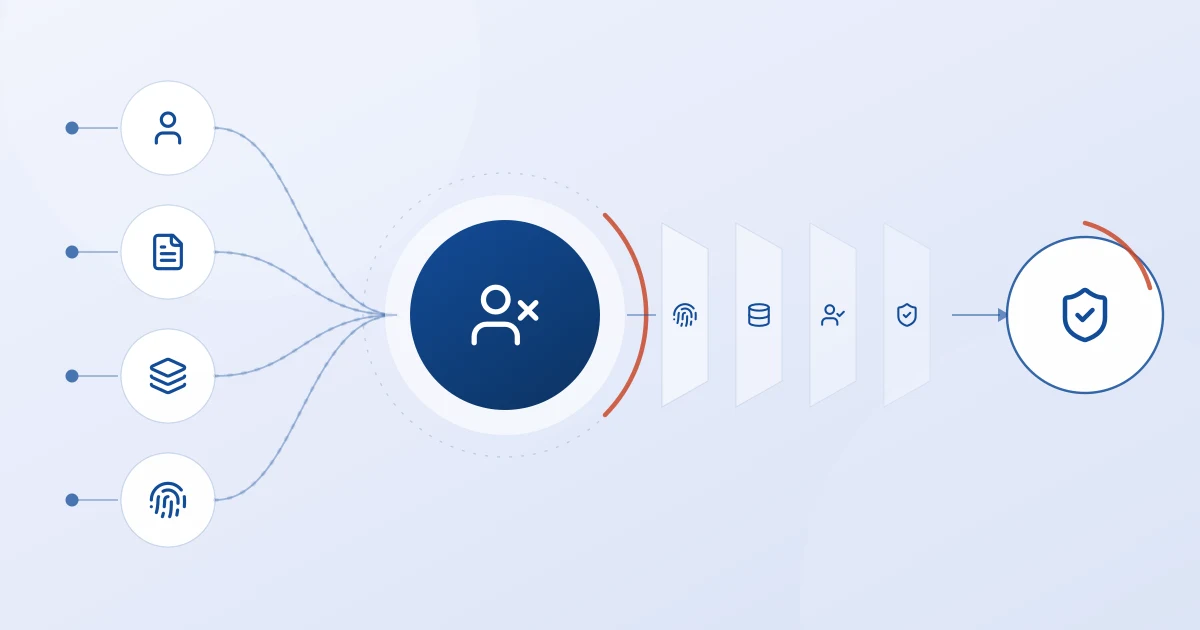
Effective synthetic fraud prevention requires identity verification that operates at multiple levels simultaneously, integrated directly into the lending workflow rather than bolted on as a separate process.
Authoritative data source validation confirms that the applicant's identity elements — SSN, name, date of birth, address — are consistent across independent databases. Mismatches between the SSN's issuance record and the applicant's stated age, or between the claimed address history and available records, surface the inconsistencies that synthetic identities cannot hide.
Government ID authentication goes beyond visual inspection. Document analysis evaluates the security features, formatting, and data encoding of government-issued identification to detect forgeries and alterations that would pass manual review.
Biometric verification and liveness detection confirms that the person presenting the identity is physically present and matches the documentation provided. This prevents photo spoofing, video replay attacks, and the use of AI-generated images — tactics that are becoming increasingly common as deepfake technology becomes more accessible.
Continuous monitoring extends protection beyond the onboarding moment. Screening customer databases against global watchlists and fraud indicators throughout the client lifecycle means that if an SSN appears on fraud databases or exhibits suspicious activity patterns after onboarding, automated alerts enable immediate action within your Salesforce environment.
The only Salesforce-native credit access platform with pre-built, pre-configured objects — no additional setup required — integrates Plaid IDV to deliver this multi-layered verification directly within your existing workflow. Every applicant record is validated as a real, verified individual before entering your lending pipeline, satisfying KYC obligations at the point of onboarding rather than retroactively after losses have occurred. See how loan application fraud prevention sequences identity verification, OFAC screening, and address validation ahead of the credit pull.
From Periodic Compliance to Continuous Protection
The traditional approach to identity verification — checking once at onboarding and then trusting the identity throughout the relationship — leaves institutions exposed to evolving threats. Synthetic identities that pass initial verification can still be flagged through ongoing monitoring as new fraud intelligence becomes available.
Continuous monitoring through tools like Plaid Monitor screens your customer database against updated watchlists, fraud databases, and behavioral indicators throughout the client lifecycle. This transforms AML KYC requirements compliance from a periodic checkpoint into a continuous, proactive risk management discipline.
For lenders, this shift means extending credit with confidence — knowing that every identity in your portfolio has been verified against the most current authoritative data available, and that your monitoring systems will surface new risks as they emerge rather than waiting for the next scheduled review.
What This Means for Your Institution
Synthetic identity fraud is not a theoretical risk — it is a documented, quantified threat that is growing in both sophistication and volume. The data breach landscape ensures that fraudsters will have abundant raw materials for constructing synthetic identities for years to come.
The lenders best positioned to defend against this threat are those who have embedded multi-layered identity verification and continuous monitoring into their core lending workflows. For institutions on Salesforce, this means moving beyond traditional credit checks to integrated KYC verification that validates identity authenticity — not just creditworthiness — at the point of onboarding and throughout the borrower relationship.
The cost of prevention is measurable. The cost of a bust-out — in direct losses, investigation resources, regulatory scrutiny, and eroded portfolio confidence — is significantly higher. Institutions that invest in proper KYC timing as a front-line defense rather than a back-office formality are the ones building sustainable, compliant lending operations.