

The Only 100% Salesforce-Native Credit Platform
Most credit-integration guides open with API keys, middleware, and external system configuration. This one doesn't have to — because there is no middleware.
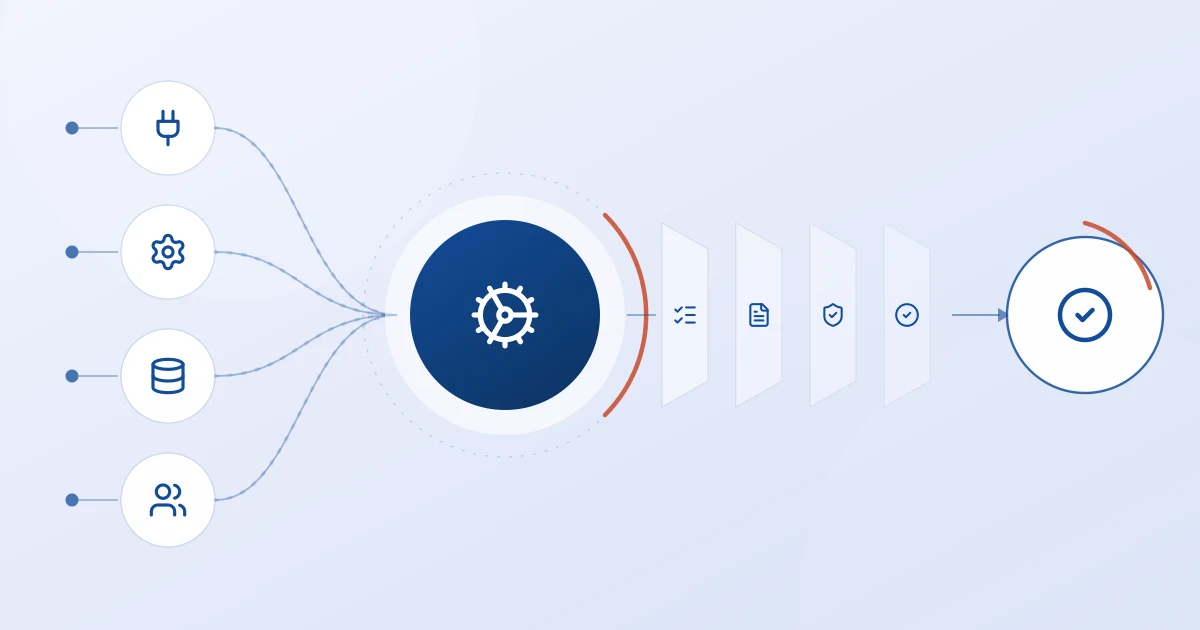
LASER Credit Access® is built differently from every other credit bureau integration in the Salesforce ecosystem. Most credit integrations require middleware, external system configuration, or custom development to connect Salesforce with bureau APIs. LASER installs directly from the AgentExchange as a 100% native Salesforce application — pre-built, pre-configured objects that work inside your existing Salesforce environment without additional setup.
This architecture is not just a technical distinction. It means that credit data access, compliance documentation, and automated decisioning all operate within the same Salesforce data model as your lending records, borrower profiles, and workflow automation. There is no data leaving Salesforce for a credit pull and returning — the entire process happens inside your environment, with full audit trail visibility in the objects your team already uses.
This guide covers setup, configuration, and key workflow design principles across LASER's three pillars: ACCESS, DECIDE, and COMPLY.
Understanding the Three Pillars
LASER Credit Access is organized around three functional pillars that together cover the complete credit lifecycle:
| Pillar | Function | Primary Value |
| ACCESS | Credit bureau integration and data retrieval | Real-time credit data from all major bureaus, direct into Salesforce |
| DECIDE | Automated decisioning and credit policy application | Consistent, auditable credit decisions applied at loan program level |
| COMPLY | Automated compliance workflows | CIP verification, adverse action, FCRA documentation — built into the workflow |
Each pillar operates independently or in combination. Lenders can deploy ACCESS alone for bureau data retrieval, add DECIDE for automated policy application, and COMPLY for full regulatory documentation — or deploy all three as an integrated system.
Setting Up ACCESS: Bureau Integration Configuration
LASER Credit Access integrates with Experian, Equifax, and TransUnion for consumer credit data, plus commercial credit providers for business lending. The platform has passed security and compliance reviews from all three major bureaus — a prerequisite that protects lenders and ensures data access meets bureau standards.
Bureau credential setup requires inputting your institution's bureau access credentials within the LASER configuration interface inside Salesforce. Bureau credentials are stored securely within your Salesforce environment, not in external systems.
Bureau selection by loan program allows different loan types to pull from different bureau combinations. Mortgage programs requiring tri-merge reports, auto programs using single-bureau pulls, and commercial programs pulling business credit can each be configured independently.
Score model selection is configurable per program — Classic FICO, VantageScore 4.0, and other available score models can be specified by loan type, enabling consistent scoring across your portfolio without manual selection at each pull.
Address validation is built into the ACCESS workflow — the platform validates applicant address before sending the bureau request, preventing No Record Found errors and eliminating the cost of unproductive bureau pulls.
Configuring COMPLY: Compliance Workflow Design
LASER's COMPLY pillar is where the regulatory architecture of the platform is most directly expressed. Compliance workflows are configured to enforce the sequencing and documentation that BSA/AML, FCRA, and GLBA require — not as policy reminders, but as system controls.
CIP verification sequencing is enforced at the workflow level. The platform requires configured identity verification steps to complete before credit bureau access is enabled. This enforces the BSA/AML pre-account verification requirement while satisfying FCRA permissible purpose standards — automatically, for every application.
Permissible purpose documentation is captured at the time of each credit pull, with the permissible purpose basis recorded alongside the pull record in Salesforce objects.
Adverse action documentation is generated automatically when credit decisioning produces a denial or materially less favorable terms based on consumer report data. The adverse action notice includes required FCRA and ECOA elements — CRA identification, consumer rights disclosure, specific reasons for adverse action — and is retained in the lending record.
Audit trail generation is a byproduct of normal LASER operations. Every CIP step, every credit pull, every compliance checkpoint, and every decisioning event generates a timestamped record in Salesforce — creating the documentation that regulatory examinations require without separate documentation workflows.
Configuring DECIDE: Credit Policy Automation
LASER Credit Attributes — the DECIDE-layer application — enables fully automated credit decisioning within Salesforce. The no-code rule builder allows credit managers to create and maintain lending policies without developer involvement:
Rule creation allows credit teams to define approval, referral, and denial criteria based on score ranges, derogatory account types, utilization thresholds, income ratios, and other bureau data elements — using a point-and-click interface rather than code.
Program-level policy application enables different rules for different lending programs — loan-to-value requirements for mortgage, payment-to-income thresholds for auto, credit utilization limits for personal loans — applied automatically based on loan type.
Identical loans, scored identically is the operational outcome. Every application that meets the same criteria receives the same decision — eliminating the inconsistency that creates ECOA fair lending risk and the manual judgment that creates documentation gaps.
Batch evaluation enables credit managers to run historical loan portfolios through new or updated credit rules before deploying them — testing policy changes against real data before they affect live applications.
Integration With Plaid: Bank Statement and Income Verification
LASER's integration with Plaid brings bank statement data, income verification, and cash flow analysis into the same Salesforce environment as bureau credit data. For lenders serving thin-file or alternative-data borrowers, this integration enables decisioning based on financial behavior rather than credit history alone.
Plaid data flows through the same ACCESS workflow as bureau data — subject to the same sequencing, documentation, and audit trail requirements — ensuring that alternative data use meets the same compliance standards as traditional credit bureau pulls.
Key Workflow Design Principles
Institutions getting the most from LASER Credit Access typically design their lending workflows around three principles:
Embed compliance in the process, not after it. Configure COMPLY controls as workflow gates, not post-decision checklists. CIP verification, permissible purpose capture, and adverse action generation should fire automatically as part of the application process, not require manual initiation.
Use program-level configuration to ensure consistency. Every loan type should have defined bureau selection, score model, and policy rules configured at the program level. Ad hoc decision-making at the application level creates the inconsistency that compliance audits and fair lending reviews will identify.
Test policy changes with batch evaluation before deploying. The batch evaluation capability in LASER Credit Attributes allows credit teams to see exactly how policy changes would have affected historical applications — reducing policy risk before changes go live.
What This Means for Your Institution
LASER Credit Access provides the credit infrastructure foundation that supports ACCESS, DECIDE, and COMPLY as integrated capabilities within Salesforce — not as three separate systems that need to be manually coordinated. The pre-built, pre-configured architecture means deployment is faster and operational consistency is higher than custom integrations.
The institutions that get the most from the platform are those that treat configuration as a compliance decision — building bureau selection, score models, and policy rules into the platform deliberately, so that every application benefits from the same controls and generates the same documentation.
Schedule a Discovery Call to see a live walkthrough of LASER Credit Access setup and configuration — and how the ACCESS, DECIDE, and COMPLY pillars work together in your Salesforce environment.