

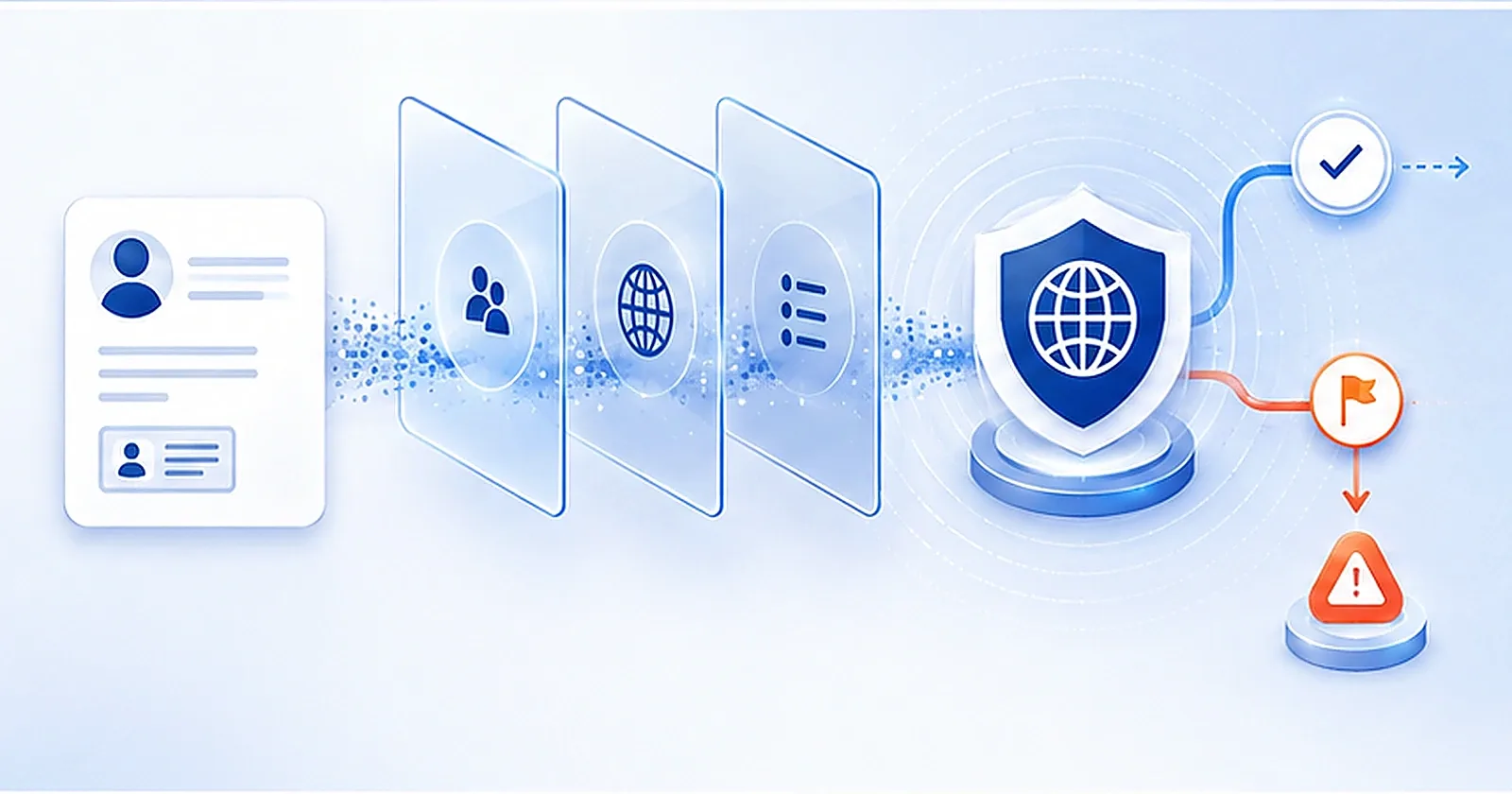
Sanctions screening is the check a lender runs before extending credit to confirm an applicant isn't a party the institution is legally barred from doing business with. In the United States that screen is an OFAC check — a match of the applicant against the sanctions lists maintained by the Treasury's Office of Foreign Assets Control. It's quick, it's expected, and getting it wrong is costly: OFAC penalties are strict-liability, so they can apply even without intent. This guide explains what an OFAC check is, why sanctions screening is mandatory for lenders, where it fits in the loan workflow, and how to handle a potential match.
What is an OFAC check?
The Office of Foreign Assets Control (OFAC), part of the U.S. Department of the Treasury, administers economic and trade sanctions. An OFAC check screens a person or business against OFAC's sanctions lists — most importantly the Specially Designated Nationals and Blocked Persons (SDN) list — to confirm they are not a sanctioned party.
For lenders, it answers a simple question before a loan is made: are we allowed to transact with this applicant?
Why lenders must run sanctions screening
OFAC sanctions apply to all U.S. persons, and financial institutions are expected to screen applicants before extending credit. The stakes are high because OFAC civil penalties operate on a strict-liability basis — an institution can face penalties even if it did not know it was dealing with a sanctioned party. Screening is therefore a standard, documented part of onboarding and the credit decision, not an optional extra.
When to screen in the lending workflow
The ideal point is at application, before or at the same time as the credit pull, so a potential match is surfaced before any credit is extended. Running the check alongside the credit report keeps it from being forgotten and gives you both credit data and sanctions clearance in a single step. For ongoing relationships, periodic re-screening is prudent, since sanctions lists change.
Handling a potential match
A potential match is not a confirmed one. Screening uses fuzzy name matching — deliberately loose, so it doesn't miss a near-spelling — which means false positives are common. A defensible process:
- Review the hit against the applicant's identifying details (date of birth, address, entity type) to confirm or clear it.
- Document the review and the basis for the decision.
- If it's a false positive, clear it and proceed, keeping the record.
- If it's a true match, block the transaction and follow OFAC's reporting requirements. For confirmed or ambiguous matches, involve counsel or a sanctions specialist.
Recordkeeping
Keep a record of every screening: who was screened, when, against which lists, the result, and how any potential match was reviewed and resolved. That trail is what demonstrates a real, risk-based screening program if you're ever examined.
An OFAC check compliance checklist
- Screen every applicant against the SDN list before extending credit.
- Run screening at application, before or with the credit pull.
- Use fuzzy matching, then review potential hits against identifying details.
- Document each screening result and the resolution of any potential match.
- Re-screen ongoing relationships periodically.
- Establish a written procedure for handling and escalating true matches.
- Retain OFAC screening records for audit and examination.
Where LASER fits
LASER Credit Access integrates OFAC screening directly into the credit-pulling workflow. Screening can run automatically whenever a credit report is pulled, or be triggered manually, and it supports fuzzy name matching, address-based searches, and keyword searches across sanctions sources. Results are stored in OFAC Status records linked to the applicant's Contact, Lead, or Account in Salesforce — so the screening and its resolution live alongside the rest of the file. As with every compliance feature, LASER helps you run and record the check; the underlying obligation to screen and to act on a confirmed match remains the lender's.
For the broader compliance picture, see our adverse action notice guide, the GLBA compliance guide, and our lending compliance software.
This article is for informational and educational purposes only and is not legal advice. Sanctions requirements change; confirm current obligations with qualified legal counsel or a sanctions specialist before acting.