

Lending Is Growing — and So Is the Operational Pressure to Keep Up
Lenders entered 2026 with momentum. Total loans at commercial banks increased 5.4% from 2025, according to Federal Reserve data, driven in part by a 4.3% increase in commercial and industrial portfolios. Across C&I, commercial real estate, SBA, agricultural, and residential lending, activity has remained resilient despite higher interest rates, geopolitical uncertainty, and lingering tariff headwinds.
The growth is real — and so is the complexity it brings. In a higher-rate, higher-scrutiny environment, lenders are not simply doing more of what they were doing before. They are making more precise credit decisions, tightening documentation standards, adapting underwriting criteria for changing economic conditions, and managing regulatory expectations that continue to evolve across every lending vertical.
The institutions best positioned to grow their loan portfolios in 2026 are those whose loan management software on Salesforce gives them the infrastructure to move quickly and consistently — connecting credit bureau data, decisioning logic, and compliance documentation in a single operational workflow rather than assembling them across disconnected systems. Lenders who want to understand what that looks like in practice for their specific portfolio mix can start with a discovery call.
The 2026 Lending Environment: Resilient Growth Meets Disciplined Underwriting
The Federal Reserve data tells a consistent story: lending activity is up, but caution is embedded in how lenders are approaching it. Community bank lending officers interviewed by ICBA describe a bifurcated environment — rising loan demand on one side, economic uncertainty on the other — and a deliberate decision to grow by going deeper on underwriting rigor, not by expanding risk appetite.
OptimumBank, a $1.27 billion-asset community bank in Fort Lauderdale, saw its loan inquiry volume nearly double starting in November 2025. Chief lending officer Jeni Kampeas Chokron notes that some of that volume may be coming from borrowers whose previous lenders have pulled back — a pattern visible across multiple markets where bank consolidation is creating lending gaps that community and regional lenders are filling.
The response at OptimumBank is instructive for all lenders: "We always dig deep, and now we're digging deeper." The bank is not changing its risk appetite, but it is being more selective, staying disciplined on metrics, and being explicit about exit strategy on every credit. That discipline is the sustainable growth model for 2026's environment — and it requires the operational infrastructure to support it consistently across a growing portfolio.
What "digging deeper" requires at the platform level:
Consistent underwriting depth across a growing volume of applications requires more than experienced lenders — it requires a loan management system that enforces the documentation standard, applies credit policy criteria uniformly, and produces the audit trail that demonstrates consistency when delinquencies surface or examiners arrive. Institutions whose underwriting depth lives in individual loan officer judgment rather than platform-enforced workflow face compounding risk as portfolio volume grows.
So what does this mean for your institution? The lenders growing most effectively in 2026 are not choosing between growth and discipline. They are building the operational infrastructure that makes disciplined underwriting the default output of a growing origination workflow — not a special effort applied to selected credits.
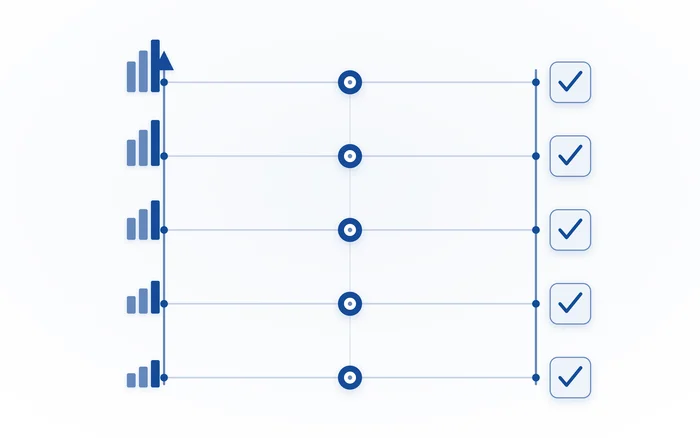
Sustainable 2026 loan growth pairs rising origination volume with platform-enforced underwriting discipline — not one at the expense of the other.
C&I and CRE: Where the Volume Is and What It Demands
Commercial and Industrial Lending
The 4.3% increase in C&I portfolios at commercial banks in 2025 carried into 2026 as small businesses and manufacturers continue to access credit for equipment, expansion, and working capital. The picture is uneven. Some businesses are holding capital spending in reserve given geopolitical uncertainty and persistent oil price pressure. Others — particularly those with strong cash flow and identified growth opportunities — are actively financing expansion.
For lenders, the C&I opportunity in 2026 requires genuine borrower-level analysis. The macro signals are mixed enough that blanket underwriting approaches — apply the same criteria to all C&I borrowers in a sector — miss the divergence within sectors between businesses managing uncertainty well and those whose cash flow is deteriorating. Sherburne State Bank's chief lending officer Jarred Merchant describes reviewing both the health of the business and the health of the consumer, making sure all parties are genuinely comfortable with current prices and rates — "to make sure the deal still makes sense for both parties."
That borrower-level discipline at scale requires rules-based decisioning inside Salesforce that surfaces the right data at the point of underwriting, not after the loan is booked.
Commercial Real Estate
The CRE picture is more complex. The Mortgage Bankers Association projects commercial mortgage origination volume will increase 27% to $805.5 billion in 2026, with multifamily originations expected to rise 21% to $399.2 billion. After two and a half years of reduced CRE lending activity at many institutions, the momentum is returning.
At the same time, 17% of the $5 trillion in outstanding commercial mortgages — approximately $875 billion — is scheduled to mature in 2026. That volume of maturing debt creates both refinancing pressure for some borrowers and new origination opportunity for lenders positioned to underwrite quickly and accurately.
CRE underwriting in the current environment requires particular attention to:
| CRE Underwriting Factor | 2026 Consideration |
|---|---|
| Lease structure and tenant quality | Investment properties where leases don't support current-rate debt service require careful income analysis |
| Owner-occupied vs. investment | Owner-occupied is generally more straightforward to underwrite; investment properties require more granular tenant and lease review |
| LTV and capital treatment | Proposed Basel III changes would scale risk-weighting by LTV — an 80% LTV loan dropping from 50% to 45% risk weight has meaningful capital implications for portfolio sizing decisions |
| Maturing debt management | $875 billion in CRE maturities this year means refinancing discussions are high-volume; documentation and decisioning speed matter |
| Geographic concentration | Excess supply in some multifamily markets requires market-level underwriting, not just property-level analysis |
The Honesdale National Bank grew its loan portfolio 13.5% in 2025, with CRE lending as a key driver. Executive vice president Ronald Sebastianelli credits longstanding borrower relationships — some spanning 20 to 30 years — as the risk-reduction mechanism that makes portfolio growth sustainable. "Continuing to mine our portfolio and get referrals from the people we've done business with for a long time really drives our lending."
That relationship depth is a genuine competitive advantage for community and regional lenders against larger institutions. But sustaining it at growth scale requires a loan management platform that gives relationship managers the credit data and decisioning support to move as quickly as borrowers expect.
So what does this mean for your institution? CRE's return to momentum in 2026 is both an opportunity and an underwriting pressure point. The maturing debt volume creates time-sensitive refinancing conversations where documentation speed and decisioning accuracy determine whether a lender captures the credit or loses it to a competitor with faster workflow.
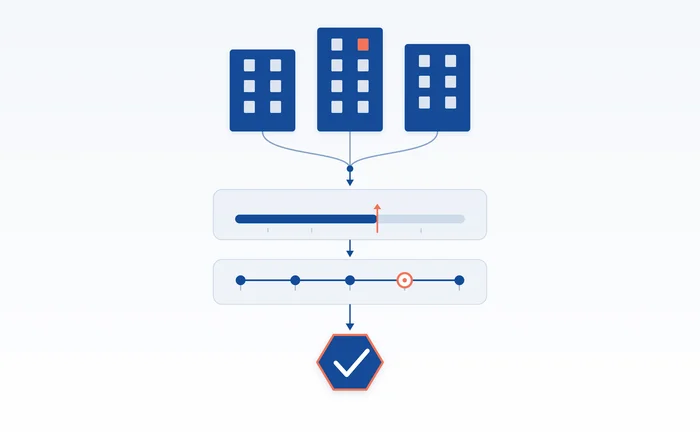
CRE lending in 2026: $805.5B in projected originations and $875B in maturing debt make LTV analysis and decisioning speed the deciding factors.
SBA, Agriculture, and Residential: The Full Portfolio Picture
SBA Lending — New Rules, New Opportunities
SBA lending is undergoing significant rule changes in 2026 that affect both eligibility and volume. Lenders active in the SBA space need to understand the current rule landscape before the compliance implications compound at origination volume.
Key SBA changes effective in 2026:
| Change | Details | Lender Impact |
|---|---|---|
| Small Loan threshold | Maximum "Small Loan" decreased from $500,000 to $350,000 | More loans fall into standard underwriting; Small Loan processing efficiencies reduced |
| FICO SBSS minimum | Increased to 165 (from prior lower threshold) | Stronger credit quality requirement; some previously eligible borrowers no longer qualify |
| Citizenship requirement | 100% business ownership must be U.S. citizens or nationals (effective March 1, 2026); green card holders no longer eligible for 7(a) or 504 loans | Documentation and eligibility verification requirements increase at onboarding |
| Made in America guarantee | 7(a) and 504 loan limits increased to $10 million for qualified small manufacturers | New high-value opportunity for lenders with manufacturing sector relationships |
| MARC program | Revolving credit facility for small manufacturers (launched late 2025) | More complex to service than term loans; requires servicer capability for revolving structures |
| Grocery guarantee | 90% federal guarantee for food production and supply chain businesses | New product line for lenders in agricultural and logistics markets |
| Stricter standards | Higher capital reserves required; 2023 relaxed guidelines reversed | Underwriting discipline requirements increase; documentation depth matters more |
Plumas Bank in Quincy, California, closed $19 million in SBA loans in Q1 2026 and is projecting more than $60 million for the full year. Senior vice president Rodney Broges attributes the volume to a warm-lead model built on relationships with business brokers, loan brokers, and commercial real estate brokers — not direct cold outreach to applicants. "We market to the spheres of influence."
The countercyclical nature of SBA demand is also worth noting: if economic conditions tighten, conventional lending policy typically tightens first, pushing better-quality borrowers who lack traditional collateral into the SBA program. That shift creates volume opportunity for lenders with SBA origination infrastructure already in place.
Agricultural Lending
Farm operating loan volume increased nearly 20% in 2025, according to the Federal Reserve of Kansas City's National Survey of Terms of Lending to Farmers, and demand is expected to remain elevated in 2026. The dynamics are bifurcated: row crop farmers facing cash flow stress from higher input costs and lower commodity prices are seeking debt restructuring and operating capital; ranchers, by contrast, are benefiting from healthy market prices and using credit for portfolio expansion.
Choice Bank in Fargo, North Dakota — one of the state's largest agricultural lenders — is projecting increased ag lending volume in 2026 across land and equipment purchases and operating capital. The bank has also entered the ag input financing space, funding credit facilities through local co-ops for seed, chemical, and fertilizer purchases. "More growers are showing tendencies of preferring to use these house charge accounts at the place of purchase versus traditional bank credit lines."
Residential Mortgage
Fannie Mae's Housing Forecast projects single-family mortgage originations will increase 24% in 2026 to $1.96 trillion, supported by an expected average 30-year rate decline from 6.6% to 5.8%. Community Financial Services Bank in Benton, Kentucky, is seeing steady demand — driven by growing families, empty nesters downsizing or buying second homes, and existing homeowners taking HELOCs for renovation.
Proposed Basel III changes are also directly relevant to residential lenders. The proposed LTV-based risk-weight scaling would reduce the risk weight on an 80% LTV mortgage from 50% to 45%, with further reductions at lower leverage levels. Separately, the proposed reduction in the 250% risk weight on mortgage servicing rights could make MSR ownership materially more attractive for community banks that exited the servicing business following post-Great Recession capital rules.
"If and when these rules are finalized, it would encourage community banks to retain mortgage servicing and expand their mortgage businesses," notes Ron Haynie, senior vice president of housing finance policy for ICBA.
So what does this mean for your institution? Across SBA, agriculture, and residential, 2026 is not a single-sector lending story. It is a portfolio diversification story — and managing multiple product lines with distinct regulatory frameworks, underwriting criteria, and documentation standards requires a loan management platform that handles that complexity systematically, not through separate workflows for each loan type.
Why LASER for Multi-Vertical Lending on Salesforce
The 2026 lending environment rewards lenders who can move quickly, document thoroughly, and maintain consistent underwriting standards across a growing and diversifying portfolio. That combination — speed, documentation, consistency — is the operational problem that Salesforce-native loan management software is built to solve.
Salesforce-native credit access, built-in compliance, and decisioning — unified in a single app, ready from day one.
LASER Credit Access® connects lenders to Equifax, Experian, and TransUnion inside Salesforce, returning credit bureau data as structured Salesforce objects — not PDF reports that require manual interpretation before they reach the decisioning layer. The DECIDE pillar applies configured credit policy logic to that structured data at the point of underwriting, producing consistent decisions with a complete audit trail for every application. The COMPLY pillar enforces the compliance controls — permissible purpose, adverse action notice triggers, FCRA documentation — automatically, as the natural output of the origination workflow.
For lenders managing C&I, CRE, SBA, agriculture, and residential originations from the same Salesforce environment, the ability to configure product-specific underwriting criteria within a single platform — rather than maintaining separate origination systems for each lending vertical — is a meaningful operational advantage. Every loan type runs through the same credit bureau connection, the same documentation standards, and the same compliance audit trail.
How Salesforce-native loan management platforms embed compliant credit decisioning workflows is directly relevant to every lender now evaluating whether their current platform can support the volume and complexity of 2026's lending growth.
Explore LASER's Salesforce-native credit decisioning tools for multi-vertical lender portfolios and credit bureau integration for lenders on Salesforce to see how every vertical runs through one Salesforce environment.
What Lenders Should Do to Capitalize on 2026 Lending Growth
1. Audit your loan management workflow for documentation consistency. Rising origination volume amplifies whatever documentation gaps exist in your current workflow. If your underwriting process relies on individual loan officer practice rather than platform-enforced documentation standards, the gaps that are manageable at current volume become examination findings at higher volume.
2. Review your SBA eligibility verification procedures. The citizenship requirement effective March 1, 2026 and the increased FICO SBSS minimum require updated eligibility verification at the onboarding stage. Ensure your loan management system captures the documentation required to demonstrate compliance with both changes at the application level — not reconstructed from files after the fact.
3. Assess CRE underwriting criteria for the maturing debt environment. With $875 billion in commercial mortgages maturing in 2026, refinancing discussions are high-volume and time-sensitive. Review whether your underwriting criteria and credit bureau integration support the documentation and decisioning speed that CRE refinancing conversations require.
4. Evaluate Basel III capital rule implications for your mortgage portfolio strategy. If proposed changes to LTV-based risk weights and mortgage servicing rights are finalized, they could materially affect your optimal portfolio composition. Lenders with mortgage servicing capacity or LTV-tiered portfolio strategies should model the capital treatment implications before the rules are finalized.
5. Build relationship-mining into your loan management workflow. Sebastianelli at Honesdale National Bank attributes 13.5% portfolio growth in part to systematically mining existing borrower relationships for referrals and repeat business. A loan management platform that makes existing customer credit history visible at the point of relationship outreach — rather than requiring a manual file search — makes that relationship-mining systematic rather than opportunistic.
So what does this mean for your institution? The lenders who capture the most from 2026's lending growth are not simply the ones who say yes to more applications. They are the ones whose operational infrastructure makes the right answer — approve, decline, or modify — the fastest answer, with the documentation to back it up. The complete guide to setting up LASER Credit Access on Salesforce covers how that infrastructure is built and configured for lenders who are ready to move from evaluation to implementation.
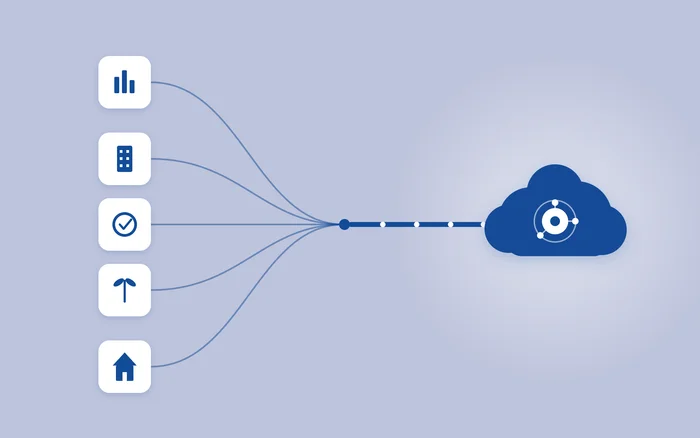
One Salesforce-native platform for every lending vertical — the operational foundation for capturing 2026's multi-vertical loan growth.
Ready to Support 2026 Lending Growth With Salesforce-Native Loan Management?
The 2026 lending environment rewards speed, consistency, and documentation depth across every vertical — C&I, CRE, SBA, agriculture, and residential. The institutions capturing the most from this growth cycle are those whose loan management software gives them the credit bureau access, decisioning infrastructure, and compliance documentation to move quickly and accurately at the same time.
LASER Credit Access delivers Salesforce-native credit access, built-in compliance workflows, and configurable decisioning tools in a single application. If your institution is evaluating whether your current loan management platform is built for what 2026's lending growth actually requires, a discovery call is the right starting point.