
What a Frozen Credit Report Means for Your Pipeline
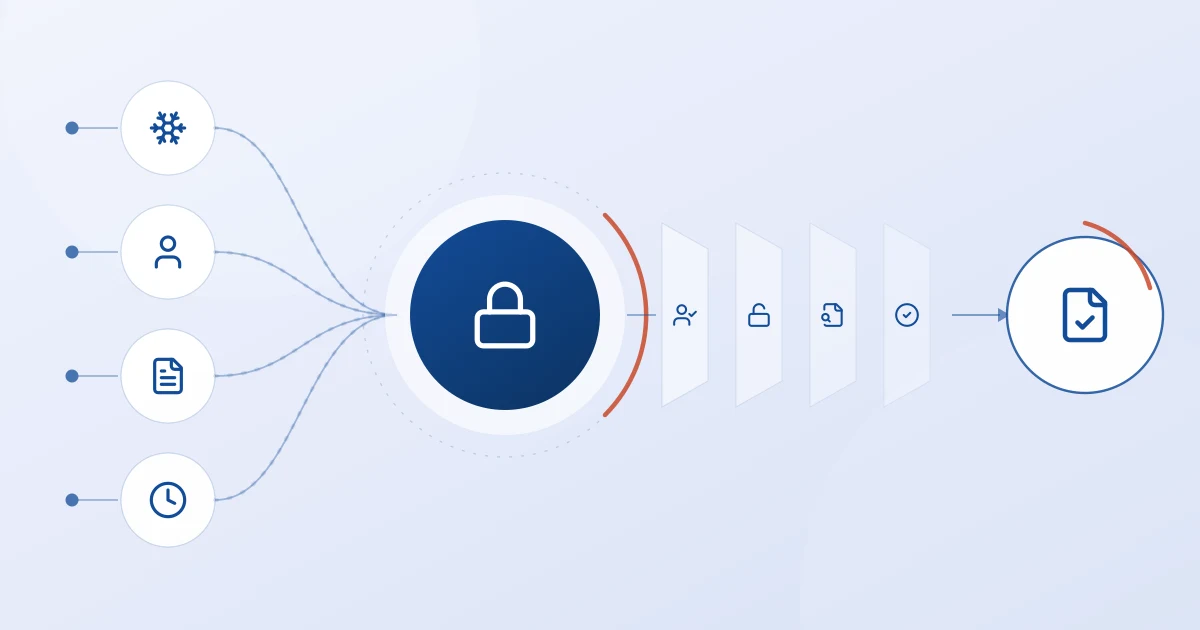
A security freeze is one of the most effective tools a consumer has against identity theft — it restricts access to their credit file so no one, including a legitimate lender, can pull it to open new credit. For the consumer, that's the point. For a lender, it means an application can stall at the credit-pull step with no usable data coming back, and often without an obvious explanation for the applicant.
Freezes are common and getting more so. Since the Economic Growth, Regulatory Relief, and Consumer Protection Act made freezes free nationwide on September 21, 2018, far more consumers use them as routine protection rather than a last resort after fraud. So a frozen file isn't an edge case — it's a normal situation your team should know how to recognize and resolve without friction.
Freeze, Fraud Alert, or Lock — They're Not the Same
Three different mechanisms get used interchangeably in conversation but behave differently, and knowing which one you're dealing with determines how the applicant clears it.
A security freeze is the most restrictive. It blocks access to the credit file entirely, is free, and is federally regulated. New creditors can't pull the report until the consumer lifts the freeze. This is the one that stops a loan application cold.
A fraud alert is lighter. The file stays accessible, but creditors must take reasonable steps to verify the applicant's identity before extending credit. A consumer sets it at one bureau, which is then required to notify the other two. It slows the process slightly but doesn't block the pull.
A credit lock is a bureau's own commercial product. It functions much like a freeze but is governed by the bureau's terms rather than the federal freeze statute, and may carry a fee or be bundled with monitoring. Functionally similar for your purposes, but worth recognizing as a distinct thing.
Helping an Applicant Lift a Freeze
The good news is that lifting a freeze is fast and free, and the timeframes are set by law — useful to know so you can set accurate expectations rather than vague ones. A bureau must place a freeze within one business day of an online or phone request, and must lift one within one hour of an online or phone request. Mailed requests take up to three business days each way.
For a loan application, a temporary lift is almost always the right move rather than permanent removal: the applicant opens access for a specific date range, and the freeze restores itself automatically afterward — protection preserved, application unblocked. The one catch is that a freeze must be lifted at each bureau separately; lifting it at one does not lift it at the others, so if you pull from a specific bureau, that's the one the applicant needs to address.
Each bureau lets consumers manage freezes online (the fastest route), by phone, or by mail:
- Experian — experian.com/freeze, or 888-397-3742
- Equifax — equifax.com/personal/credit-report-services, or 888-298-0045
- TransUnion — transunion.com/credit-freeze, or 800-916-8800
One situation worth flagging: the 2018 law also created a "protected consumer freeze" for minors and incapacitated adults. If an applicant or co-applicant involves a guardianship arrangement, lifting that kind of freeze requires written documentation of authority and can't typically be done instantly online — so build in extra time.
Keeping It Smooth on Your End
A frozen file doesn't have to mean a frustrated applicant or a dropped deal. The difference is usually in how quickly your team recognizes the situation and how clearly they explain it. A few practices help: train staff to recognize a freeze as the cause when a pull returns no data, have a short, calm explanation ready (a freeze is the applicant's own protection working as intended, not a problem with their credit), and point them to a temporary lift at the relevant bureau with a realistic timeframe. Framed that way, a freeze becomes a brief, reassuring detour rather than a red flag.
Because LASER Credit Access® runs credit pulls inside Salesforce, a frozen result is visible in the same workflow your team already uses — so the file doesn't get lost and the next step happens in context rather than in a separate system.
The Bottom Line
Credit freezes are a permanent feature of the lending landscape, and a common one. Handled well, an applicant with a frozen file is simply someone who needs a quick, free, temporary lift before you can proceed — not a lost opportunity. The lenders who deal with this smoothly are the ones whose teams recognize it immediately, explain it plainly, and know exactly which bureau to point the applicant toward.
Related reading: For more on handling applicants with limited or hard-to-access credit files, see our guide on accessing credit data without an SSN.