


Mortgage Credit Scoring Just Changed — and Your Integration Needs to Keep Up
On April 22, 2026, HUD Secretary Scott Turner and FHFA Director William Pulte announced something the mortgage industry had not seen in decades: new credit scoring models approved for federally backed mortgage underwriting. FICO 10T and VantageScore 4.0 joined Classic FICO as eligible models for FHA-insured loans and loans purchased by Fannie Mae and Freddie Mac. For mortgage lenders, the change raises an immediate infrastructure question — whether their credit bureau integration is ready for a multi-model world — and it traces back to the 2018 Economic Growth, Regulatory Relief, and Consumer Protection Act, which first directed FHFA to validate alternative scoring models.
A month later, on May 22, 2026, HUD issued implementation guidance that clarified one of the most operationally significant questions the April announcement left open: what happens to the tri-merge credit report requirement? The answer was unambiguous. FHA will continue requiring lenders to use tri-merge credit reports for all single-family mortgage loans, regardless of which approved scoring model is used.
For mortgage lenders, this guidance resolves the scoring model question while creating a new operational requirement: your credit bureau integration Salesforce workflow must be capable of supporting multiple approved scoring models against a consistent three-bureau reporting standard. That is not a minor configuration update. It is an infrastructure question that lenders with Salesforce-native credit access tools are better positioned to answer than those running credit bureau connections through disconnected systems.
Lenders who want to understand what this means for their origination workflow — or who need to pull credit report data inside Salesforce with multi-model support — can start with a discovery call to understand how LASER's ACCESS pillar handles this today.
What the FHA and FHFA Actually Announced — and Why It Took This Long
The April 22 announcement was the operational conclusion of a process that began in October 2022, when FHFA validated both FICO 10T and VantageScore 4.0 for use by Fannie Mae and Freddie Mac. Validation is not the same as implementation. What the 2022 decision established was regulatory eligibility — it did not immediately change what any lender was required or permitted to do.
The path from validation to implementation followed a phased timeline designed to give lenders, investors, and the GSEs time to build the supporting data infrastructure:
| Milestone | Date | What It Meant |
| FHFA validates FICO 10T and VantageScore 4.0 | October 2022 | Both models approved for Fannie/Freddie use; implementation timeline TBD |
| Fannie and Freddie publish historical VantageScore 4.0 data | July 2024 | Tens of millions of loans with historical VS 4.0 scores released to help lenders understand model performance |
| Approved lenders begin delivering VS 4.0 loans to GSEs | Mid 2025 | Limited rollout begins; Classic FICO remains available |
| FHFA and HUD joint announcement | April 22, 2026 | VS 4.0 available to approved lenders for conventional loans; FICO 10T approved for FHA loans with implementation to follow |
| FHA tri-merge guidance issued | May 22, 2026 | Confirms tri-merge requirement persists across all scoring models |
| Fannie/Freddie publish historical FICO 10T data | Summer 2026 (expected) | Will support broader FICO 10T adoption for conventional loans |
| Rocket Mortgage adopts VS 4.0 | Late May 2026 | Among the first major lenders to publicly confirm use of VS 4.0 alongside Classic FICO in qualification process |
The deliberate pacing reflects the complexity of the change. Credit scoring model transitions in the mortgage market affect every participant in the chain: borrowers, lenders, LOS vendors, credit reporting agencies, investors, and the GSEs themselves. Each needs to recalibrate risk models, underwriting guidelines, and technology integrations before broader adoption can occur safely.
Understanding how alternative data is expanding credit access for underserved borrowers provides important context for why these newer models represent a meaningful shift — not just a technical update — in how creditworthiness is evaluated.
So what does this mean for your institution? If your mortgage origination workflow was built around Classic FICO as the only approved model, 2026 is the year that assumption expires. The infrastructure question is not whether to support multiple scoring models — FHA has answered that. The question is whether your credit bureau integration can handle multi-model decisioning without rebuilding from scratch.
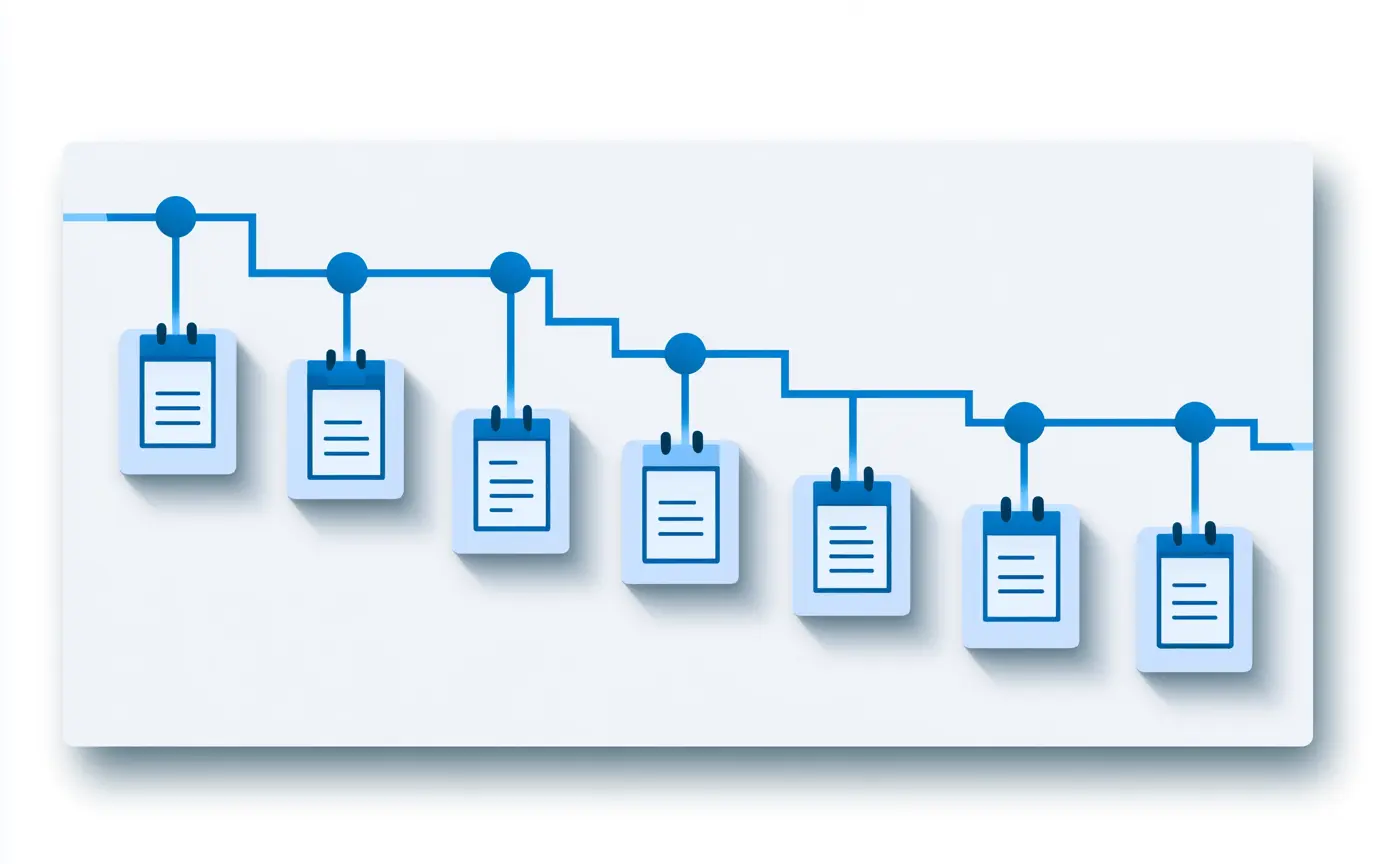
FHA and FHFA credit-scoring model rollout, from 2022 validation to 2026 lender adoption.
What FICO 10T and VantageScore 4.0 Actually Change for Underwriting
The significance of approving new credit scoring models is not simply that lenders now have options. It is that those options are fundamentally different from Classic FICO in ways that affect which borrowers qualify, at what terms, and how risk is distributed across the portfolio.
Classic FICO: the baseline
Classic FICO evaluates credit risk based on a point-in-time snapshot of five weighted factors: payment history (35%), amounts owed (30%), length of credit history (15%), new credit (10%), and credit mix (10%). The model has been the de facto standard for mortgage underwriting since the early 1990s. It does not incorporate trended data — it shows where a borrower stands at the moment of application, not whether their financial behavior has been improving or deteriorating over time.
FICO 10T: trended data added
FICO 10T is the tenth iteration of FICO's scoring model. The defining addition is trended data: the model examines 24 months of credit activity rather than a single snapshot. A borrower who has been consistently paying down debt over the past two years will score higher under FICO 10T than under Classic FICO, even if their current balance looks similar. Conversely, a borrower who has been increasing utilization on their revolving accounts over the same period may score lower. The model also incorporates rent payment history, a data type that Classic FICO does not use.
VantageScore 4.0: alternative data and thin-file capability
VantageScore 4.0, developed jointly by Equifax, Experian, and TransUnion, is specifically designed to score borrowers that Classic FICO either cannot score or scores inaccurately due to thin credit files. It incorporates trended data, rent payment history, utility payment history, and is capable of generating a score for consumers with as little as one month of credit activity and one account. For lenders operating in markets with high concentrations of first-time homebuyers, recent immigrants, or borrowers with non-traditional credit histories, VantageScore 4.0 expands the scoreable population without requiring manual underwriting exceptions.
What the tri-merge requirement preserves:
Regardless of which scoring model a lender uses, the FHA's May 22 guidance requires that the underlying credit data come from all three major bureaus — Equifax, Experian, and TransUnion. The Consumer Data Industry Association (CDIA) praised the decision, framing tri-merge reporting across all acceptable scoring models as a way to ensure consistency, reduce risk, and preserve the integrity of the credit evaluation process for lenders, investors, and borrowers alike.
The Community Home Lenders of America had previously warned that single-bureau pull proposals could create opportunities for data manipulation in federally backed lending programs. The FHA's guidance closes that opening.
So what does this mean for your institution? The choice of scoring model is now a lender-level decision with real underwriting consequences. FICO 10T rewards borrowers who demonstrate improving financial behavior over time. VantageScore 4.0 opens the qualified borrower pool by scoring thin-file applicants. Classic FICO remains available. The correct model for any given borrower depends on their credit profile — which means lenders need the technical infrastructure to evaluate multiple models against three-bureau data and select the most appropriate outcome, not simply default to whichever model the system was built around.

Comparing Classic FICO, FICO 10T, and VantageScore 4.0 for FHA mortgage underwriting.
Why LASER for Credit Bureau Integration in a Multi-Model World
The FHA's new scoring framework creates a specific infrastructure challenge: lenders need to pull three-bureau credit data, apply multiple approved scoring models, and document the selection and outcome — all within a single, auditable origination workflow. That is not a problem a disconnected credit bureau integration solves. It is a problem a Salesforce-native credit access platform is designed for.
Salesforce-native credit access, built-in compliance, and decisioning — unified in a single app, ready from day one.
LASER Credit Access connects mortgage lenders to Equifax, Experian, and TransUnion inside Salesforce — the same platform where the loan application, underwriting decision, and compliance documentation all live. Because LASER operates natively within Salesforce's data architecture, every tri-merge credit pull is logged within the loan record, every scoring model result is available for the decisioning workflow, and every compliance event — permissible purpose, adverse action notice trigger, model selection — is captured in the audit trail automatically. That infrastructure is built and supported by a team with deep roots in lending, technology, and compliance.
For lenders now supporting FICO 10T, VantageScore 4.0, and Classic FICO simultaneously, the operational question is not which model to use. It is whether your integration can return all three model scores from three-bureau data in a single pull, make that data available to your decisioning engine, and document the selection in a format that satisfies both FHA guidelines and FCRA accuracy standards. Why the regulatory framework around credit reports and PII matters for lenders is directly relevant here: multi-model credit reporting does not reduce your compliance obligations — it adds configuration requirements that your credit bureau integration must be built to handle.
For mortgage lenders, that means Salesforce-native credit bureau integration for mortgage lenders and credit decisioning inside Salesforce with multi-model scoring support operate inside the same origination record your team already works in.
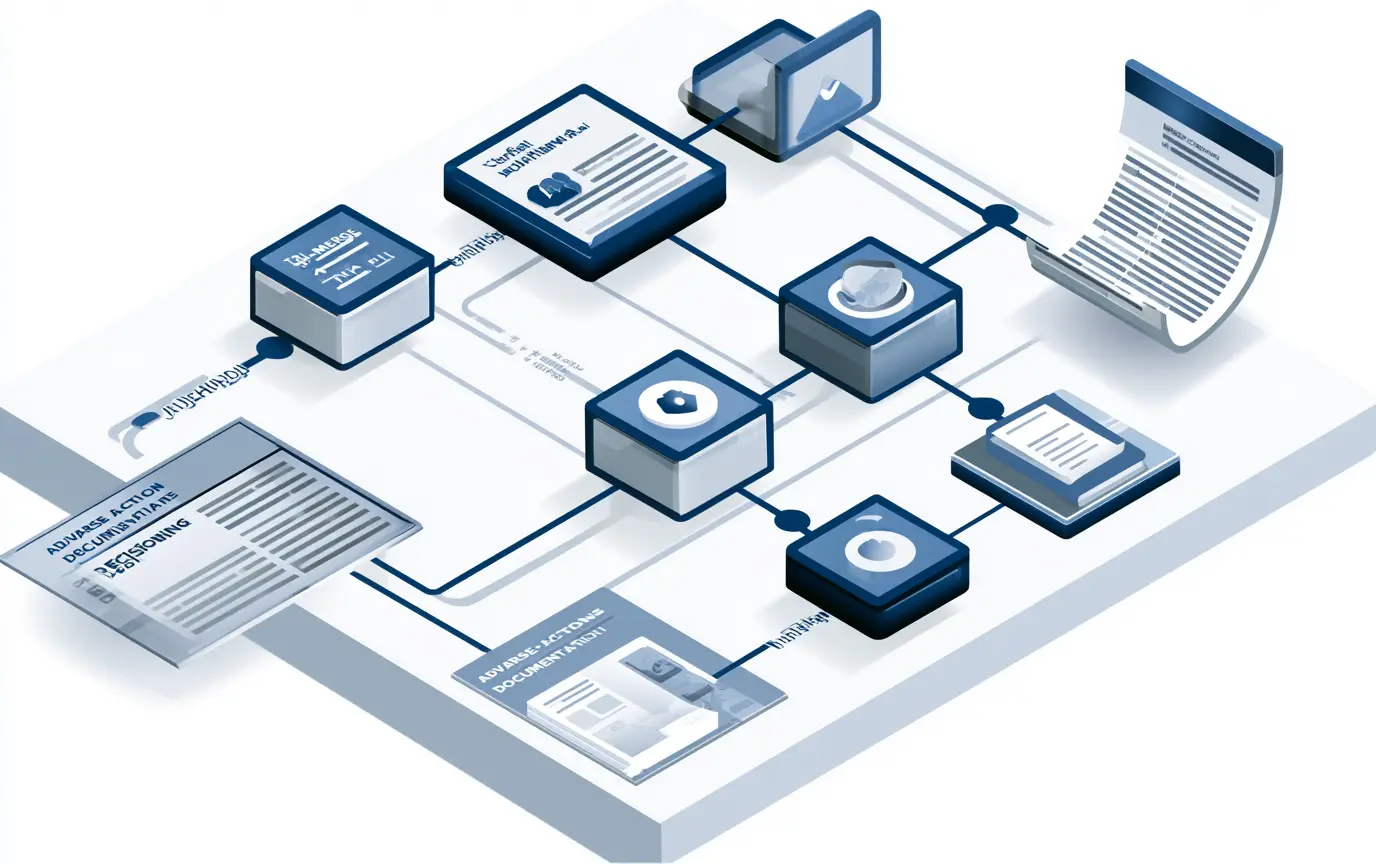
Compliance documentation for tri-merge reports and multi-model scoring in FHA lending.
What Lenders Need to Do Before Full Implementation Arrives
The FHA's May 22 guidance confirms the framework — implementation dates and detailed operational guidance are still forthcoming. That gap between policy announcement and operational deadline is the window lenders should use to close integration gaps before they become compliance problems.
Practical steps for mortgage lenders now:
So what does this mean for your institution? The lenders who navigate this transition most effectively will not be the ones who wait for final implementation guidance before assessing their integration readiness. They will be the ones who use the current window to identify gaps, test configurations, and update their adverse action and documentation workflows — so that when the FHA issues implementation dates, they are already prepared.

Moving mortgage lenders toward integrated, Salesforce-native credit bureau access.
Ready to Support Multi-Model Credit Scoring Inside Salesforce?
The FHA's new scoring framework is not a future consideration for mortgage lenders — it is an active operational requirement taking shape now, with implementation guidance still forthcoming. Lenders who use this window to confirm their credit bureau integration supports tri-merge reporting and multi-model decisioning will be positioned to move when final guidance arrives. Those who wait for implementation dates to begin the assessment will be solving a systems problem under regulatory time pressure.
LASER Credit Access connects mortgage lenders to Equifax, Experian, and TransUnion inside Salesforce, with built-in compliance workflows and decisioning support that align with how FHA, FHFA, and the GSEs are reshaping the credit reporting landscape. If your institution is evaluating credit bureau integration options — or assessing whether your current integration is ready for FICO 10T and VantageScore 4.0 — a discovery call is the right starting point.