

No, a soft pull does not affect credit. A soft inquiry is not counted by FICO or VantageScore, so it cannot raise or lower a credit score, and it is never shown to another lender who pulls the same file. Only the consumer sees it, on their own credit report. That is the answer applicants want. For a lender, there is more to it: a soft pull is still a consumer report, so the Fair Credit Reporting Act still applies to how you get it and what you do with it.
Does a Soft Pull Affect Your Credit Score?
It does not. Credit scoring models look at hard inquiries because a hard inquiry means a person applied for new credit, and a cluster of new applications is a risk signal. A soft inquiry signals nothing of the kind. Checking your own credit, being prequalified, or having an existing card issuer review your account says nothing about whether you are taking on new debt, so the models ignore it.
The result is easy to state:
- Soft pull: no change to the score, and invisible to other lenders.
- Hard pull: a small, temporary change to the score, visible to other lenders for up to two years.
The FCRA itself never uses the words "soft" and "hard." The distinction comes from the credit bureaus, which record each inquiry according to its purpose. An inquiry recorded as promotional, account review or consumer-initiated is kept out of the scoring data and out of the copy sent to other lenders. An inquiry recorded as an application for credit is not.
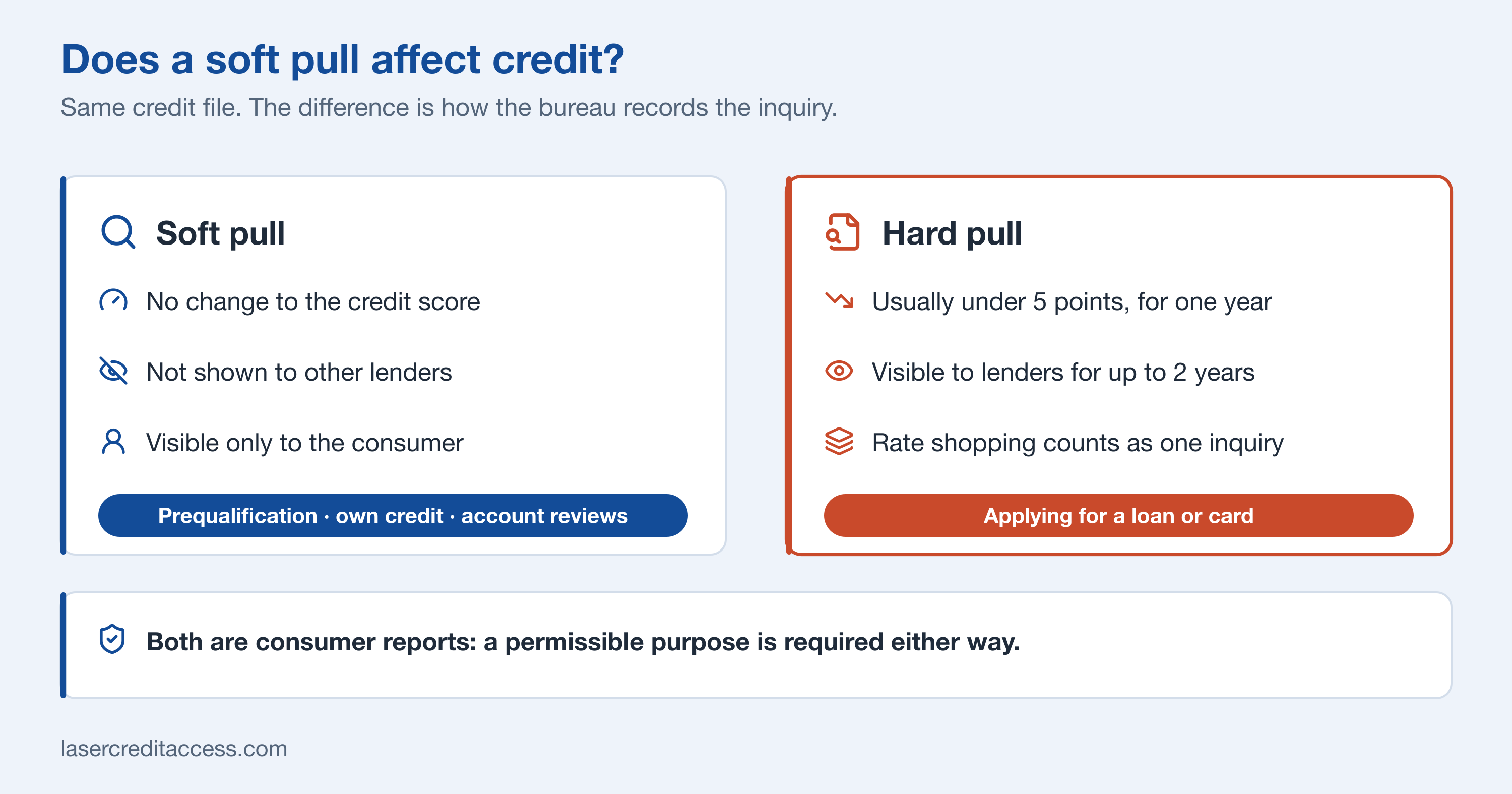
The same file, two ways of recording the inquiry. Only one of them reaches the score.
What Is a Soft Pull on Credit?
A soft pull is any credit check the bureau records as a soft inquiry because it is not tied to an application for new credit. The most common ones are:
- Checking your own credit through a bureau, a bank app or a credit monitoring service.
- Prequalification, when a lender gives an estimate of what you might qualify for before you apply.
- Prescreened offers, the "you're preapproved" mail and email built from bureau lists.
- Account reviews, when a lender you already have an account with checks your file.
- Some background and insurance checks, which are not credit applications at all.
A hard pull happens when you formally apply for credit and the lender checks your file to make the decision: a mortgage, an auto loan, a credit card, a personal loan or a business loan with a personal guarantee.
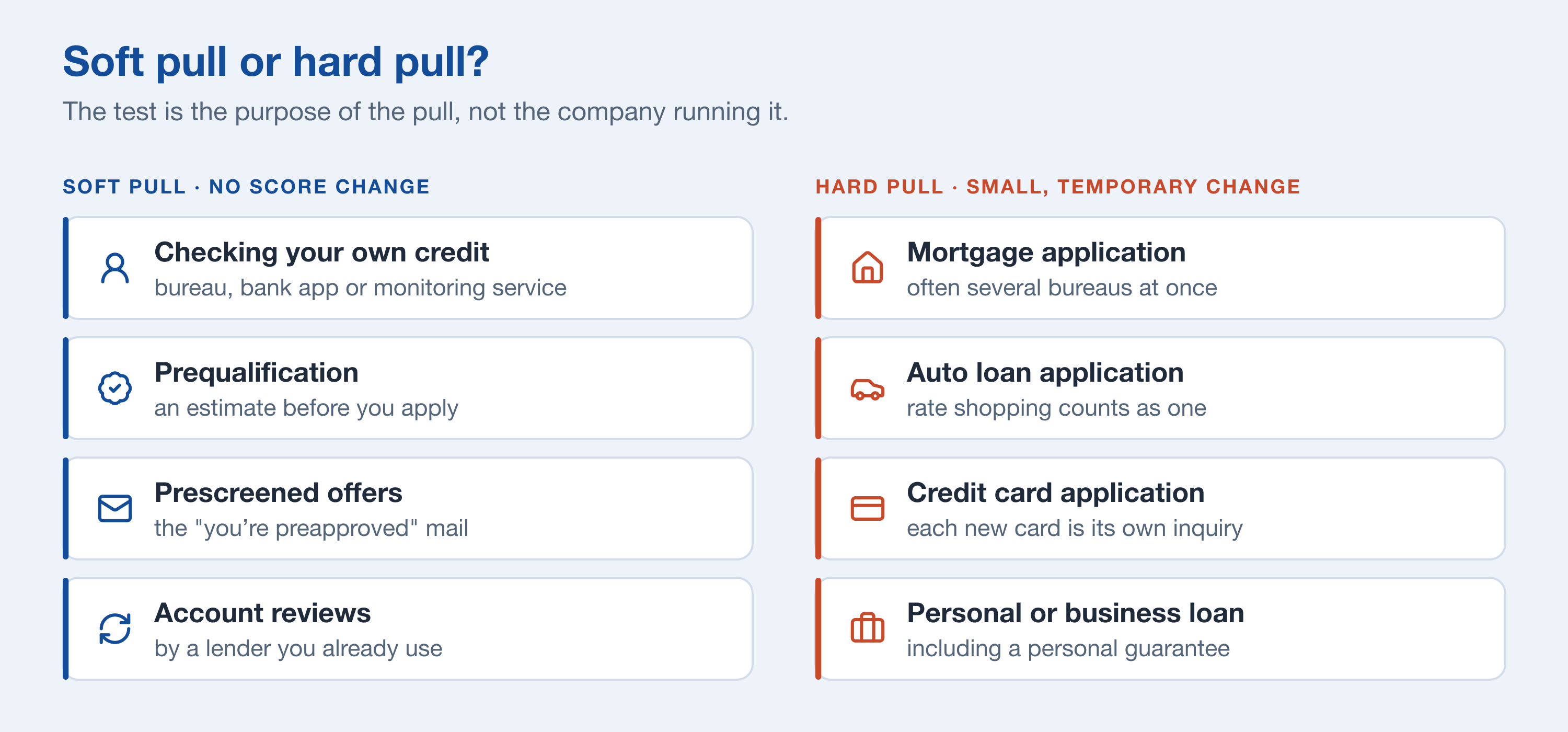
The test is the purpose of the pull, not the company doing it. The same lender can run both.
Does a Soft Pull Show a Credit Score?
It can. A soft pull can return a credit score and the same file a hard pull would return at that moment. What changes is how the bureau records the inquiry, not what data comes back. Some prequalification products are configured to return a score and a short summary rather than the full file, but that is a product choice, not a limit of soft pulls.
That matters for the second question applicants ask: why the score from their monitoring app does not match the lender's. The type of pull is almost never the reason. The usual reasons are:
- A different scoring model. Many free monitoring services show a VantageScore, while many lenders use a FICO Score, and mortgage lending often uses older FICO versions.
- A different bureau. Experian, Equifax and TransUnion do not hold identical files, so the same model can return different scores from each.
- A different date. A balance reported last week can move a score that was pulled last month.
A soft-pull score is accurate for the model and bureau it came from. It is just not always the same score the lender will use at application.
Who Can See a Soft Pull?
Only the consumer. When a person requests their own credit report, the bureau shows every inquiry, soft and hard. The FCRA requires the bureau to identify everyone who obtained the person's report in the past year, or two years for employment purposes (15 U.S.C. § 1681g(a)(3)).
When a lender pulls the same person's file, the soft inquiries are left out. The lender sees the hard inquiries and nothing else. So the borrower has the most complete view of who has looked at their credit, and no single lender does. Our guide to soft credit pull visibility walks through why that asymmetry exists and what it means when you read an inquiry section.
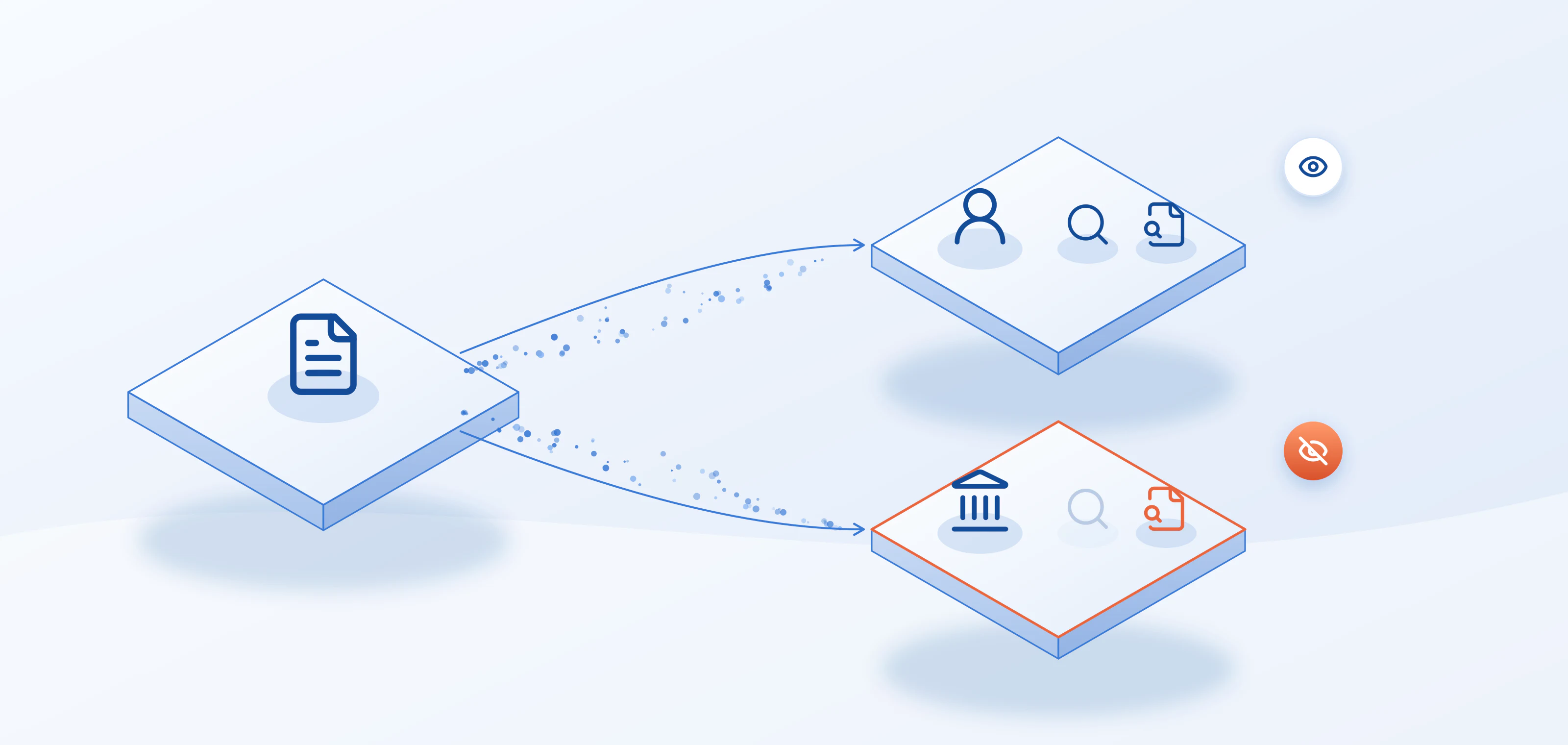
The consumer sees everything. A lender pulling the same file sees only the hard inquiries.
How Much Does a Hard Pull Affect Your Credit?
Since applicants usually ask about soft pulls because they are worried about hard ones, it helps to put the hard pull in proportion. According to FICO, for most people one additional hard inquiry takes less than five points off their FICO Scores. Three numbers sum it up:
- Under five points for one additional inquiry, for most people.
- One year of effect on FICO Scores, even though the inquiry stays on the report for up to two years.
- One inquiry, not several, when someone rate-shops. FICO groups multiple mortgage, auto or student loan inquiries made within a short window into one: 14 to 45 days, depending on the score version. It also ignores those inquiries for the first 30 days, while the shopping is under way.
Inquiries matter more for people with short or thin credit histories, where there is less other information for the score to weigh. Several new hard inquiries in a short time across unrelated products, such as several credit cards, are what actually move a score.
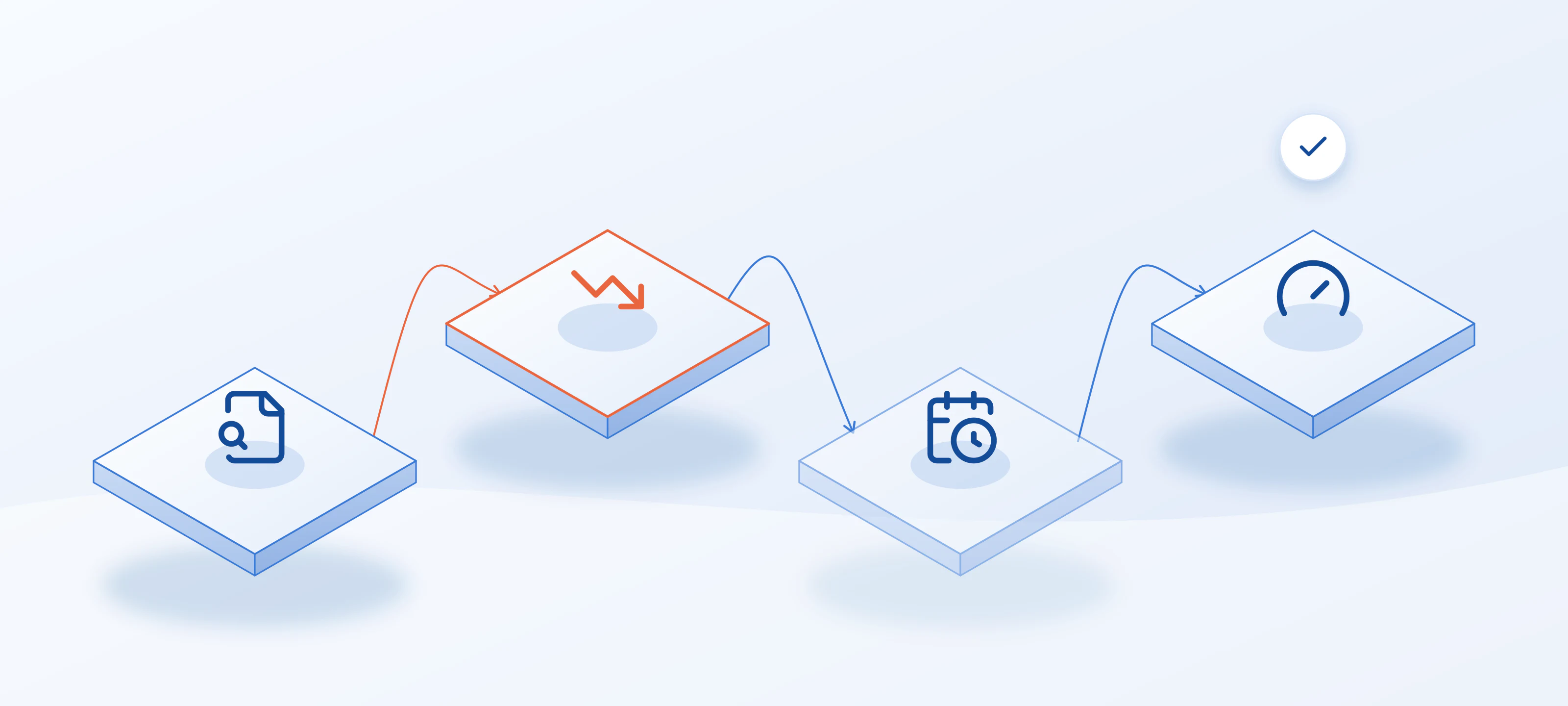
A hard pull is small and temporary. The rate-shopping window keeps comparison shopping from multiplying it.
Why Lenders Use Soft Pulls
For a lender, the soft pull solves an abandonment problem. An applicant who is not sure they will qualify often walks away rather than risk a hard inquiry. A soft-pull prequalification lets the lender look at the file, give a real indication of terms, and ask for the full application only when the numbers work. The applicant's score is untouched either way.
That is why the soft-then-hard pattern has become standard in consumer and small business lending. Prequalify with a soft pull at the top of the funnel, then run the hard pull at application, when the applicant has decided to go ahead. Telling the applicant up front which pull you are running, and when, is one of the simplest ways to keep them moving.
What a Soft Pull Doesn't Change for Lenders
"Soft" describes how the inquiry is recorded. It does not mean the pull sits outside the FCRA. Three obligations apply whichever way the bureau records it:
- You still need a permissible purpose. A soft pull is a consumer report, so it needs a permissible purpose under 15 U.S.C. § 1681b. For prequalification, that is typically the consumer's written instruction (§ 1681b(a)(2)). Account reviews and prescreened firm offers rely on other permissible purposes in the same section. Pulling without one is an FCRA violation whether or not the score moves.
- Adverse action rules still apply. If you deny credit or offer worse terms based in whole or in part on a consumer report, the FCRA notice duties in 15 U.S.C. § 1681m apply, and the inquiry type doesn't change that. Our adverse action notice guide covers what the notice must contain and when it is due.
- The pull type has to be right. Running a hard inquiry where you meant to run a soft one leaves a mark on a consumer's report that they did not agree to. Our guide to fixing an inadvertent hard credit pull covers what to do when that happens and how to stop it repeating.
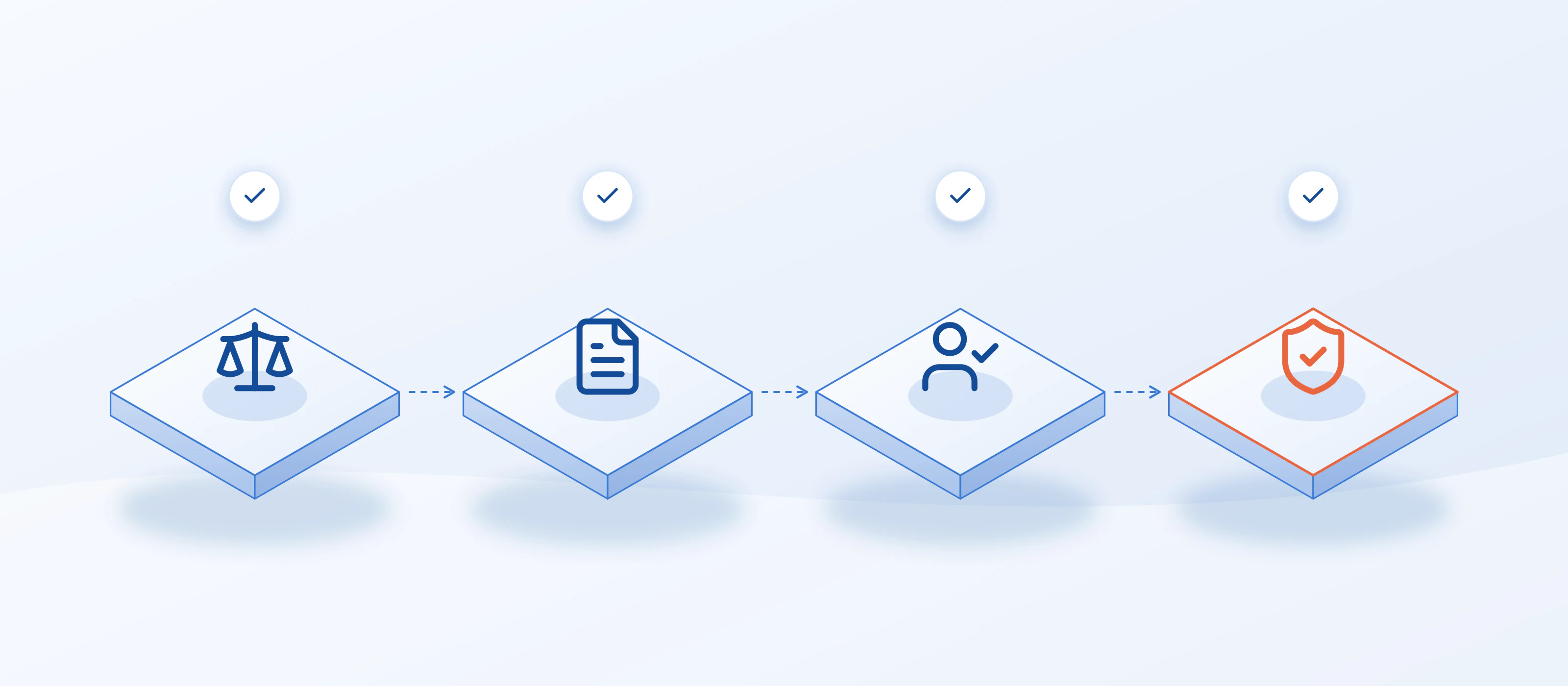
Soft describes how the inquiry is recorded. The FCRA obligations around it stay the same.
Keeping the Pull Type and Its Purpose on the Record
The practical risk for a lender is not the score. It is losing track of which pull was run, for which applicant, and on what basis. When prequalification runs in one tool and the application pull in another, that record ends up split across systems, which is exactly where an examiner or a disputing consumer will look.
LASER Credit Access® runs soft and hard pulls from Experian, Equifax and TransUnion directly inside Salesforce, with permissible-purpose tracking on every pull and role settings that control which users can run which inquiry type. The inquiry, its purpose and the decision it supported sit on the same borrower record. See how credit data access inside Salesforce works, or how the Experian, Equifax and TransUnion integrations handle both inquiry types.
Sources
- FICO: Credit checks and inquiries
- Experian: What is a soft inquiry?
- 15 U.S.C. § 1681b, permissible purposes of consumer reports
- 15 U.S.C. § 1681g, disclosures to consumers
- 15 U.S.C. § 1681m, requirements on users of consumer reports
This article is provided for informational and educational purposes only and does not constitute legal or credit advice. Confirm current requirements with qualified legal counsel before acting.