

What does FCRA compliance require of lenders?
FCRA compliance means meeting the Fair Credit Reporting Act's obligations across the entire credit lifecycle — not just when you pull a report. Lenders must have a permissible purpose before accessing a consumer report, keep the data they furnish to bureaus accurate, deliver adverse action notices, and investigate consumer disputes within the statute's deadlines.
The FCRA Applies to More of Your Operation Than You Think
Most lenders are familiar with the Fair Credit Reporting Act as a consumer protection law. What many underestimate is the scope of what it actually requires from them — not just as credit report users, but as data furnishers and dispute handlers. The FCRA creates binding obligations at every stage of the credit lifecycle: when you pull a credit report, when you report account data to the bureaus, and when a consumer or CRA sends you a dispute.
Getting any of those stages wrong is not a minor administrative slip. State Attorneys General and the Consumer Financial Protection Bureau have made FCRA compliance a primary enforcement priority. In our work with commercial lenders and consumer finance institutions, misaligned furnishing practices and incomplete dispute workflows are among the most common compliance gaps we see — and among the most costly to remediate after an exam.
Lenders using Salesforce-native compliance tools can bring all three FCRA obligations — permissible use, data furnishing, and dispute management — into a single, auditable workflow from day one. This checklist walks through each area so your institution knows exactly where it stands.
New to the underlying rules? Our guide to FCRA permissible purpose explains what qualifies before a credit pull, and how that duty connects to accuracy, adverse action, and disputes.
Using Credit Reports: The Permissible Purpose Requirements
The FCRA establishes a defined list of permissible purposes for accessing consumer credit reports. Pulling a report outside those boundaries — even unintentionally — is a statutory violation, not simply a policy misstep.
What lenders must have in place:
| Requirement | What It Means in Practice |
|---|---|
| Documented permissible purpose | Credit application, account review, employment screening (with consent), or insurance underwriting — all must be documented at the time of access |
| Accurate consumer identification | Reports must be pulled for the correct individual; "possible match" or name-only matching creates mixed-file risk |
| No impermissible marketing use | Credit reports cannot be obtained for marketing purposes under any circumstances |
| State law review | States including California and New York impose additional restrictions on employment-related credit pulls; lenders must verify local requirements in addition to federal rules |
| Adverse action notice compliance | When a credit decision is based in whole or in part on a credit report, the consumer must receive written notice including the CRA's name, the right to dispute, and instructions for obtaining a free copy |
The adverse action notice obligation catches lenders off guard more often than most of the other requirements. The FCRA's standard at 15 U.S.C. § 1681m is "in whole or in part" — meaning even a partial reliance on credit data triggers the notice requirement. Partial reliance is not a safe harbor.
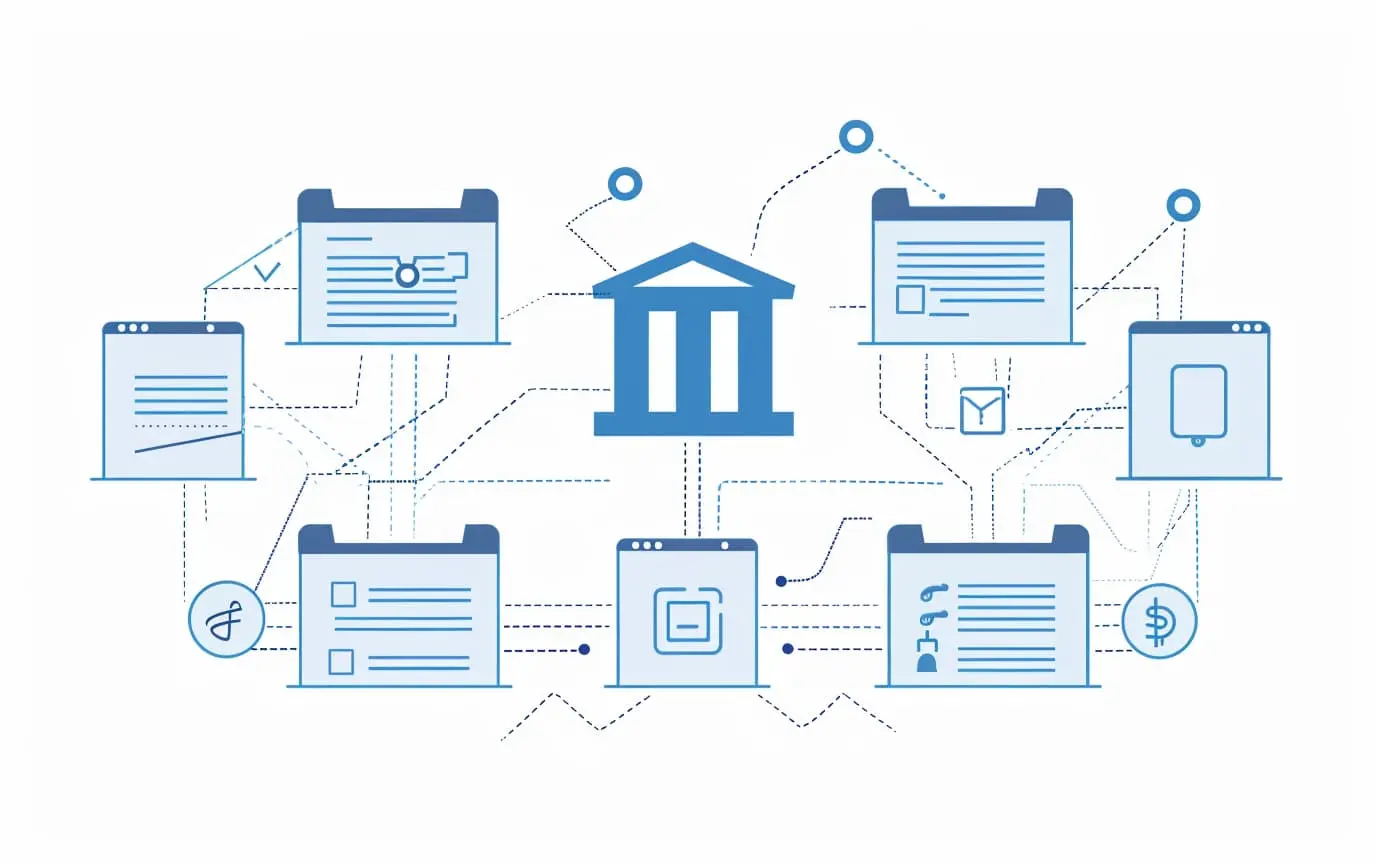
FCRA permissible-purpose requirements governing every credit report a lender accesses.
So what does this mean for your institution? If your permissible purpose policies have not been reviewed in the past 12 months, or if your adverse action notice workflow is not connected directly to your credit pull process, those are immediate gaps that regulators will find during an examination.
Furnishing Data to Credit Bureaus: Accuracy Is a Legal Standard
Every lender that reports account data to Equifax, Experian, or TransUnion is a data furnisher under the FCRA. That status creates affirmative obligations under 15 U.S.C. § 1681s-2 that go well beyond simply sending monthly data files.
Core furnisher obligations:
- Accuracy at the point of reporting: Furnishers must report data that is accurate and complete. Common accuracy failures include outdated balances, incorrect account status codes, and inaccurate payment history. The standard is not "best effort" — it is accuracy.
- Prompt correction of known errors: If your institution discovers inaccurate data — through an audit, complaint, or dispute — the correction must be made across all CRAs where that data was reported. Knowingly continuing to report inaccurate data is a direct FCRA violation under § 1681s-2(a)(1)(B).
- Date of First Delinquency (DOFD) on negative accounts: For all delinquent, charged-off, or collection accounts, furnishers must report the DOFD. This field determines the seven-year reporting clock under § 1681c. Missing or incorrect DOFD is one of the most frequently cited furnishing violations in CFPB examination findings.
- Dispute flagging: When a consumer disputes an account directly with your institution, that account must be flagged as "in dispute" with all CRAs until the investigation is complete. If information changes as a result of the investigation, the update must be sent to every CRA.
- Identity theft procedures: If notified that reported data relates to identity theft, re-reporting that data without 100% verification of accuracy violates § 1681s-2(a)(6). Furnishers must maintain documented fraud response procedures.
- Written policies and staff training: The CFPB's Furnisher Rule (16 C.F.R. Part 660 / Regulation V) requires furnishers to maintain written policies and procedures governing the accuracy and integrity of their reported data. These must include internal controls, employee training, and review cycles to reflect system or regulatory changes.
For additional context on why credit reports and PII are regulated at this level, the regulatory history behind the FCRA is directly relevant to understanding the standard of care the law expects from furnishers today.
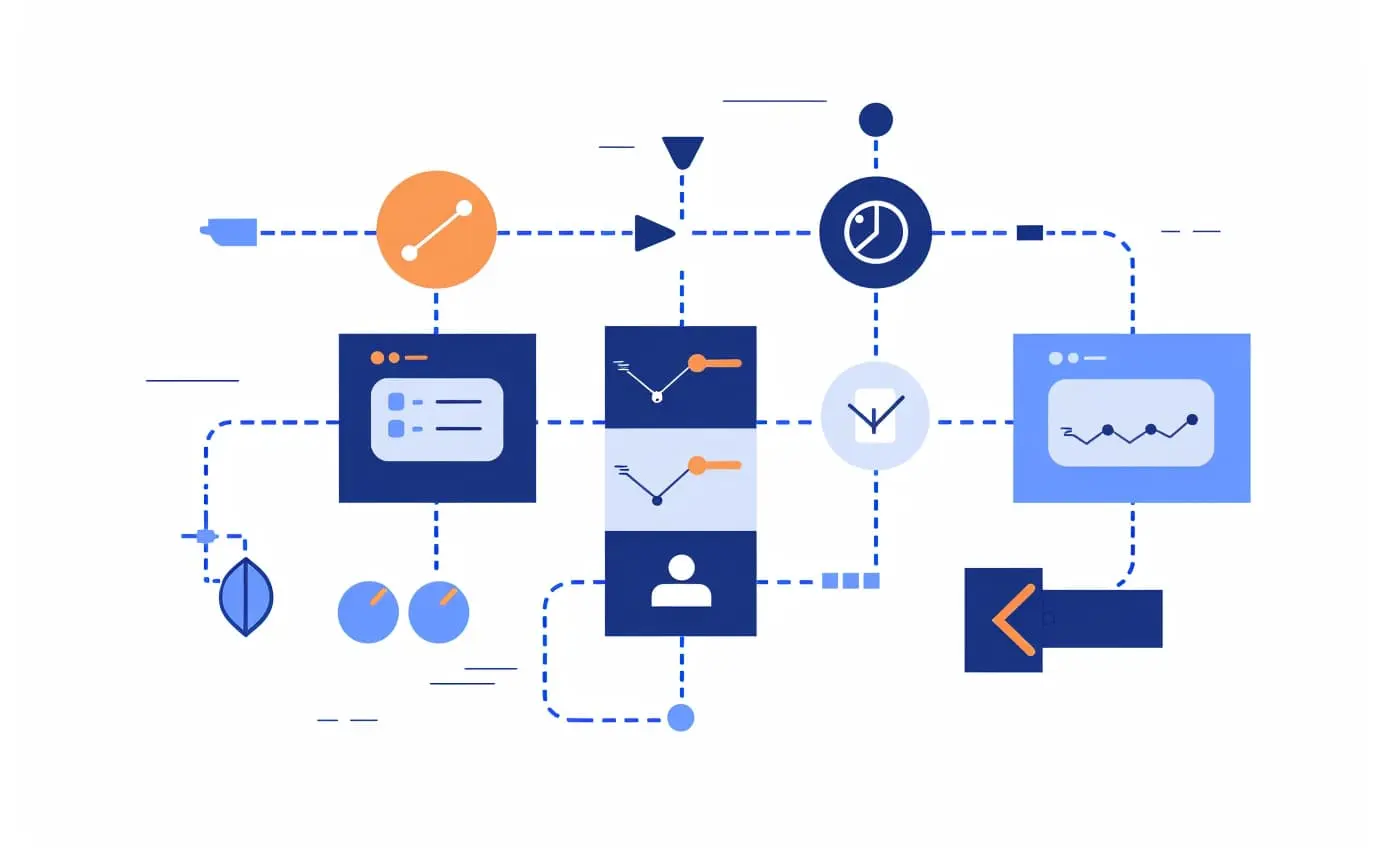
Data furnisher obligations: accuracy standards and dispute management under the FCRA.
So what does this mean for your institution? Regulators do not treat furnishing inaccuracies as administrative errors. CFPB and state AG enforcement actions in the furnishing space have resulted in consent orders, mandatory remediation programs, and civil monetary penalties measured in the tens of millions. A regular data audit cadence is not optional compliance infrastructure — it is a baseline expectation. For lenders in auto finance specifically, furnishing accuracy gets harder during periods of elevated delinquency, when payment plan modifications, dispute holds, and date-of-first-delinquency tracking all increase in volume at once — a dynamic covered in the compliance priorities facing auto lenders in mid-2026.
How LASER Supports FCRA Compliance for Lenders
Maintaining FCRA compliance across all three obligation areas — permissible use, furnishing accuracy, and dispute handling — requires more than a policy binder. It requires an operational infrastructure that connects credit data, compliance workflows, and audit trails inside a single system.
LASER Credit Access® delivers exactly that. Salesforce-native credit access, built-in compliance, and decisioning — unified in a single app, ready from day one.
Our platform connects lenders to the major credit bureaus — Equifax, Experian, and TransUnion — within Salesforce, with pre-built objects that capture permissible purpose at the point of access, support furnishing accuracy workflows, and create the audit trail that examiners expect. Because everything runs natively inside Salesforce, there is no data transfer between disconnected systems, no manual reconciliation, and no gap between your credit data and your compliance records.
Lenders working toward stronger FCRA alignment — whether building a new compliance program or remediating findings from a prior exam — should explore how credit compliance intelligence is evolving for institutions that operate on Salesforce.
Handling Disputes: The Timeliness and Thoroughness Standard
The FCRA dispute framework applies to lenders in two directions: CRA-initiated disputes (where the bureau notifies you of a consumer challenge) and direct disputes (where the consumer contacts your institution directly). Both carry the same investigation obligation, and both carry enforcement risk if mishandled.
The dispute compliance framework:
| Obligation | Statutory Basis | Common Failure Mode |
|---|---|---|
| Investigate all CRA-forwarded disputes | 15 U.S.C. § 1681s-2(b) | Treating e-OSCAR summary codes as a substitute for actual investigation |
| Investigate direct disputes | 16 C.F.R. § 660.4 (Reg. V) | Categorizing valid disputes as "frivolous" to avoid investigation |
| Complete investigations within 30 days | § 1681s-2(b)(2) | Allowing backlogs in dispute queues without tracking SLAs |
| Review all submitted documentation | § 1681s-2(b)(1)(A) | Relying on codes only; ignoring consumer letters, images, and PDFs |
| Correct or delete inaccurate data | § 1681s-2(b)(1)(D) | Correcting in-system records but failing to push corrections to all CRAs |
| Maintain investigation records | Reg. V Appendix E | Insufficient documentation to reconstruct investigation decisions during an exam |
The investigation standard under § 1681s-2(b) is not a cursory review. The CFPB's supervisory guidance is explicit: furnishers must review all information provided by the CRA or the consumer, not just the summary dispute code transmitted via e-OSCAR. Failure to conduct a thorough investigation — or to complete one within 30 days — is independently actionable, regardless of whether the underlying account information was accurate.
Improving KYC timing and downstream compliance accuracy also directly supports dispute prevention: when account data is accurate from the point of origination, the volume and complexity of downstream disputes is significantly lower.
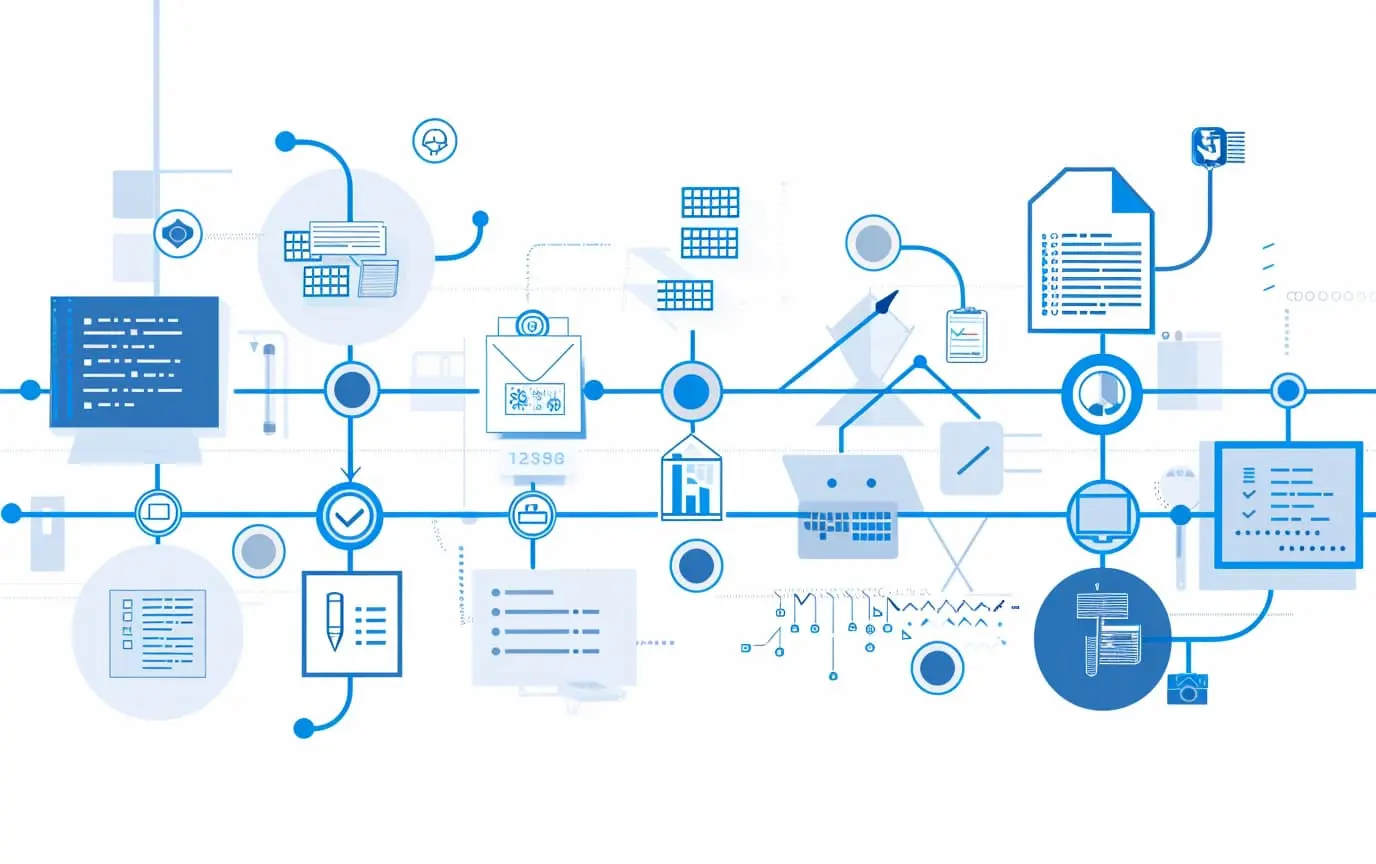
The FCRA dispute-investigation timeline and obligations for credit data furnishers.
So what does this mean for your institution? CFPB examination findings in the dispute space consistently cite two failure modes: inadequate investigation scope and missed 30-day deadlines. Both are operationally preventable with the right workflow infrastructure. If your dispute management process relies on manual tracking or disconnected systems, remediation before an exam is far less expensive than remediation after one.
What Lenders Should Do Next
FCRA compliance at the operational level requires three capabilities working together: accurate data capture at origination, compliant reporting workflows to the credit bureaus, and a dispute management process built to meet the investigation standard the CFPB and courts have defined. Most compliance failures in this area do not stem from ignorance of the law — they stem from process gaps that leave one or more of those capabilities disconnected from the others.
Practical steps to close common FCRA gaps:
So what does this mean for your institution? The lenders best positioned on FCRA compliance are not necessarily those with the most sophisticated legal teams — they are the ones whose compliance workflows are embedded directly in their operational systems, making the right process the default process.

Building FCRA compliance directly into the Salesforce lending workflow.
Ready to Build an FCRA-Compliant Credit Workflow Inside Salesforce?
The FCRA creates real obligations at every point where your institution touches consumer credit data — pulling reports, furnishing account information, and resolving disputes. The lenders who manage those obligations most effectively are the ones whose compliance infrastructure is built into their operational workflow, not bolted on as an afterthought.
LASER Credit Access brings FCRA-relevant compliance controls directly into Salesforce, connecting credit bureau access, automated compliance workflows, and decisioning tools in a single native application. If your institution is building toward stronger FCRA compliance or closing gaps identified in a recent examination, a compliance discussion is the right first step.