
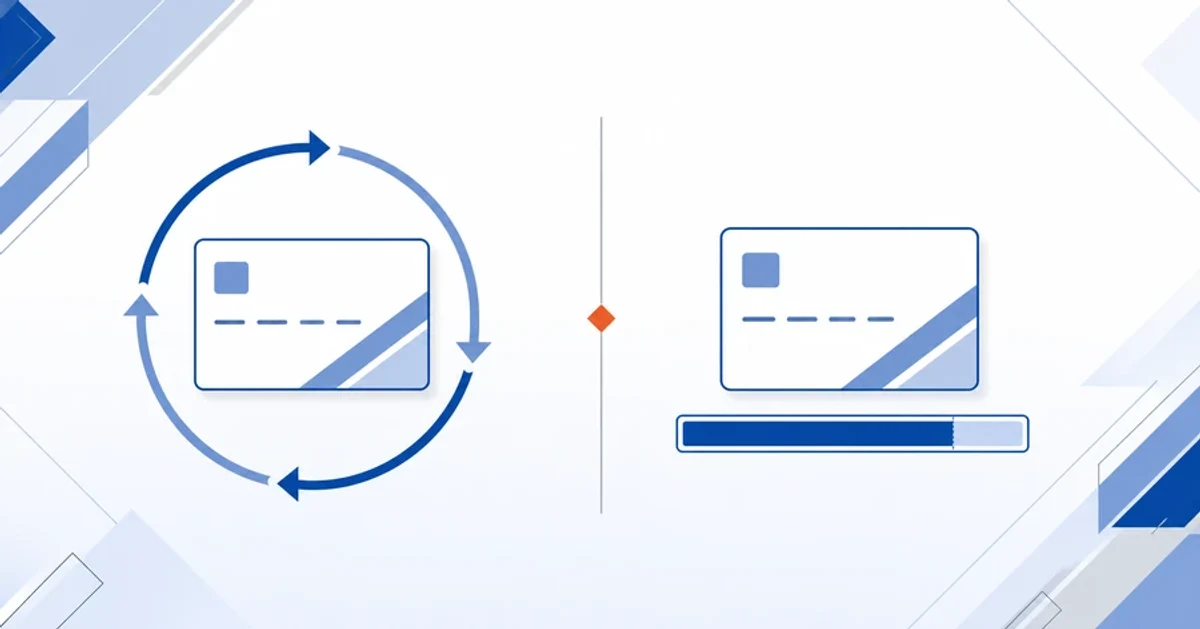
A revolving account lets you borrow, repay, and borrow again up to a set credit limit — like a credit card — with a balance that carries month to month. An open account must be paid in full each cycle, such as a charge card or utility bill. The difference changes how each affects your credit utilization and score.
Two credit types that are easy to confuse
Few things on a credit report cause more quiet confusion than the difference between a revolving account and an open account. The two look alike at a glance, yet they behave differently — and those differences shape how a credit profile is read. Here is a clear, jargon-free look at what sets them apart, and why it matters.
What Is a Revolving Account?
A revolving account is a line of credit — such as a credit card or a home equity line of credit (HELOC) — that lets you borrow against a set credit limit, carry a balance from one month to the next, and borrow again as you repay. Interest applies to any balance you carry.
Because a revolving account reports a credit limit, its balance feeds directly into your credit utilization — the share of available revolving credit you are using, and one of the most influential factors in a credit score. That reusable, limit-based structure is what sets a revolving account apart from an open account, which must be paid in full at the end of each billing cycle.
The short version
A revolving account lets you borrow, repay, and borrow again against a set limit, carrying a balance from one month to the next if you choose. An open account extends credit that must be paid in full at the end of each billing cycle. That single distinction — carry a balance versus settle in full — drives almost everything else.
Side by side
| Revolving Account | Open Account |
|---|---|
| Has a set credit limit you can borrow against, with available credit that replenishes as you repay | Often has no preset spending limit |
| Lets you carry a balance and make at least a minimum payment each cycle | Must be paid in full by the due date — no balance carries over |
| Charges interest on any balance you carry | Typically charges no interest, since nothing is carried month to month |
| Examples: credit cards and home equity lines of credit (HELOCs) | Examples: charge cards, such as certain American Express cards |
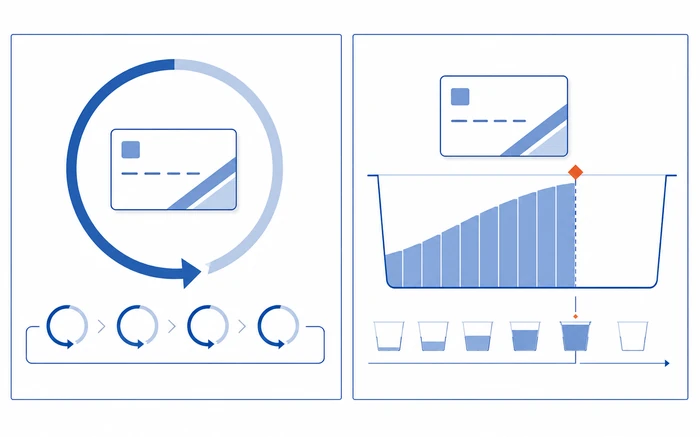
A revolving account's credit line replenishes as you repay, cycle after cycle; an open account fills within a single cycle and resets at the due date.
Why the difference matters
Two parts of a credit score are especially sensitive to this distinction.
Credit utilization. This is the share of your available revolving credit you are using, and it is one of the most influential factors in a score. Because revolving accounts report a credit limit, their balances feed directly into that calculation. Open accounts generally do not carry a reported limit, so they usually sit outside utilization altogether — a helpful nuance to keep in mind when reading a report.
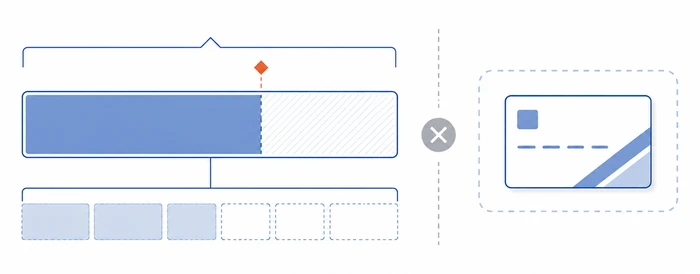
Utilization measures how much of your available revolving credit is in use. Open accounts, with no reported limit, typically fall outside the calculation.
Worth remembering: Payment history is the single largest factor in most credit scores, and here the account type makes no difference at all. A late payment weighs heavily whether it lands on a revolving account or an open one. Paid on time, both help; paid late, both hurt.
A note on the word "open"
"Open" is one of the more slippery words in credit reporting, because it means two different things. As an account type, it describes credit due in full each cycle. As an account status, it simply means active and not closed. An account can be active — "open" in status — whether it is revolving, open, installment, or mortgage in type. Reading the two meanings as one is a common source of misunderstanding.
It is worth noting, too, that some newer charge cards now offer flexibility features (such as Amex Pay Over Time) that let cardholders carry a balance on select purchases. Because these accounts still lack a standard reported credit limit, using such features generally does not change how the account is treated for utilization.
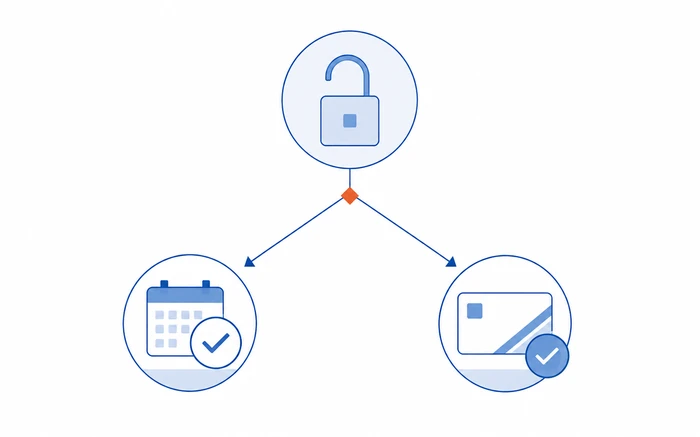
"Open" splits two ways — an account type that must be paid in full each cycle, and an account status that simply means active and not closed.
Clarity is the point
Consistency of Process — Identical Loans, Scored Identically.
At LASER Credit Access®, we believe credit data should be transparent and simple to understand — for lenders and the people they serve alike. It is the same conviction behind our work to expand credit access through better data. When the fundamentals are clear, decisions become more confident, more consistent, and more defensible. That is the standard we build toward, from data access through compliance.
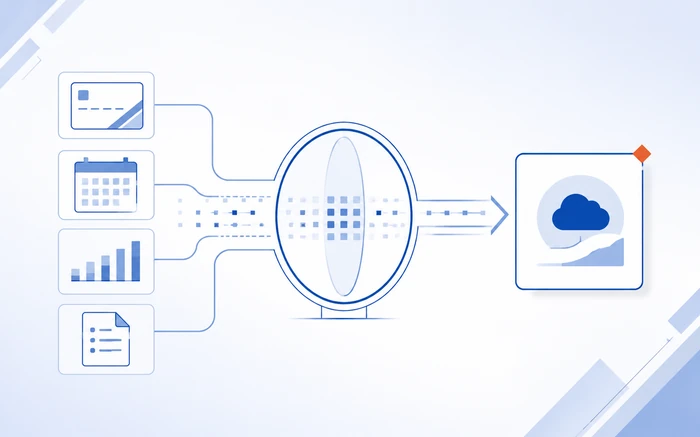
Transparent credit data, read consistently and resolved into confident decisions — delivered natively on Salesforce.
Definitions and scoring treatment reflect published consumer guidance from FICO (myFICO) and Experian. This article is for general educational purposes and is not financial or legal advice.
Schedule a Discovery Call to see how LASER Credit Access delivers transparent, compliant credit data natively on Salesforce.