

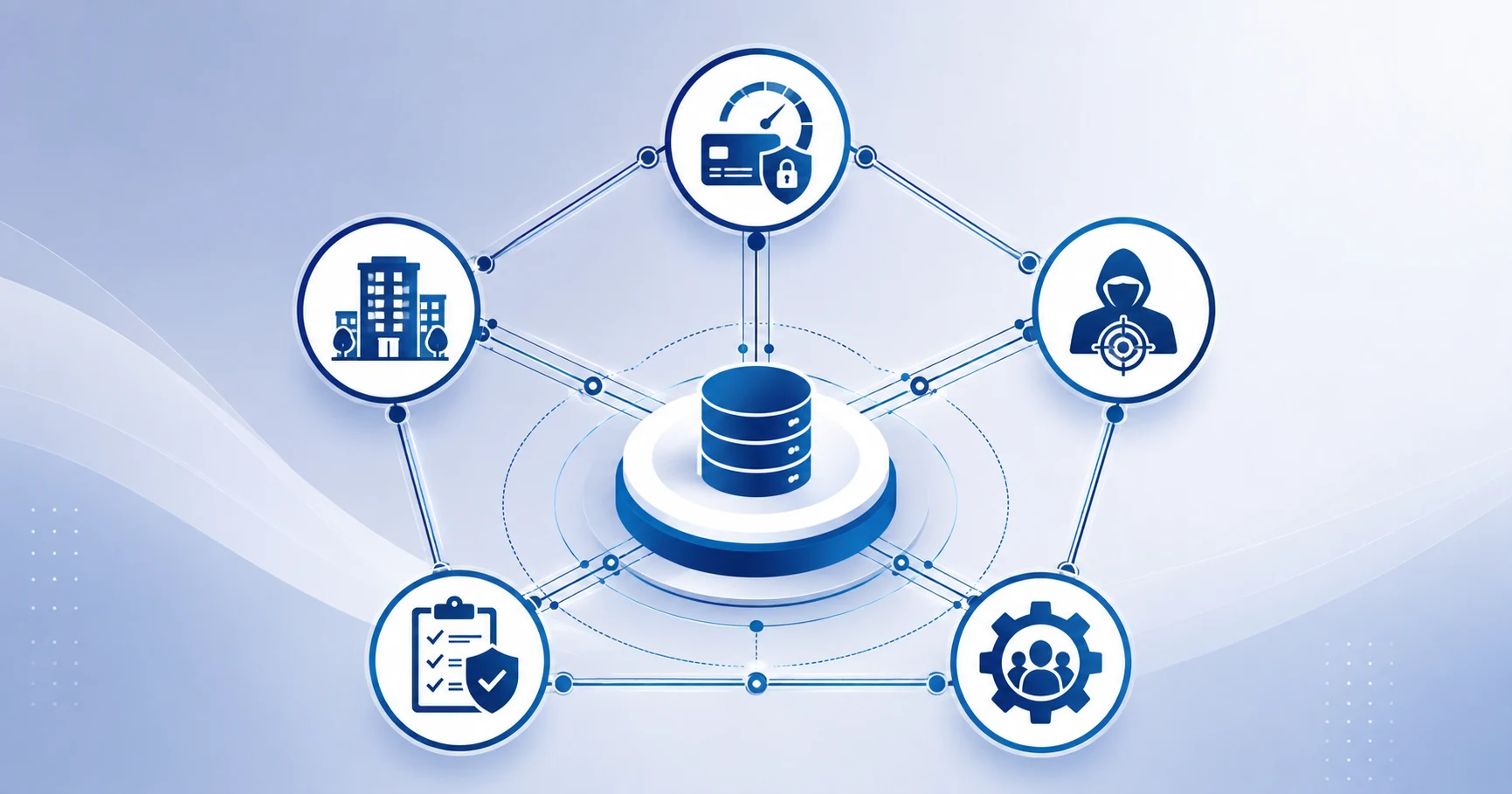
The Risks Are Interconnected — and So Must Be Your Response
The Office of the Comptroller of the Currency's Spring 2026 Semiannual Risk Perspective delivers a message that every lender — not only OCC-supervised national banks — should internalize: the federal banking system "remains sound and resilient," but faces "elevated and interconnected" risks tied to commercial credit deterioration, technology disruption, cyber threats, fraud, and persistent uncertainty around interest rates and liquidity.
The word "interconnected" is doing significant work in that framing. Credit risk does not remain isolated to the credit function. Fraud risk does not remain isolated to the fraud team. Vendor risk does not remain isolated to the technology department. And compliance risk does not remain isolated to the compliance officer. As ProSight Financial Association's credit risk program director Laurie Foster noted in framing the themes of the 2025 Annual Risk, Compliance, and Fraud Conference: everything is intertwined. A market risk — interest rate volatility — affects what borrowers pay, connecting directly to credit risk. Operational risk and IT risk ripple into credit quality, fraud exposure, and compliance standing simultaneously.
For lenders evaluating how to manage this environment, the operational question is specific: does your platform give you visibility across all five risk categories — credit quality, fraud and cyber, compliance change, vendor and technology risk, and their interconnections — or does each category run through a separate system that must be manually reconciled when the risks converge?
Credit bureau integration Salesforce is the starting point for lenders building the infrastructure to answer that question correctly. When credit data, compliance workflow, and decisioning logic all live natively in the same Salesforce environment, the risk picture is unified — not assembled. Lenders who want to evaluate how their current infrastructure maps against the 2026 risk environment can begin with a compliance discussion.
Risk Category 1: Credit Quality — The Manageable Pressure With Concentrated Pockets
The OCC's Spring 2026 assessment finds bank balance sheets strong by historical standards, with capital ratios and liquidity high. Bank earnings improved in 2025, supported by loan growth and a decline in funding costs, and OCC-supervised banks have manageable exposures to borrowers with weaker credit profiles. But "manageable overall" does not mean "uniform across the portfolio" — and the places where credit quality is most pressured in 2026 are specific.
Credit conditions and refinancing risk in certain segments of commercial real estate lending and private credit markets warrant ongoing monitoring, and modest increases in past-due loans have been observed in some consumer portfolios.
Two developments in 2026 have added new dimensions to credit risk management that lenders must now incorporate explicitly into their underwriting and portfolio monitoring frameworks.
The interagency credit guidance on non-work-authorized borrowers (July 13, 2026): The OCC, FDIC, and NCUA jointly issued guidance reminding supervised financial institutions to apply existing safe-and-sound credit risk management practices when lending to borrowers who are not legally authorized to work in the United States. The guidance advises that such borrowers may present elevated credit risk because their ability to generate income, employment continuity, and financial stability may be more uncertain.
Financial institutions are advised to watch for concentrated exposure to geographies, employers, or industries vulnerable to immigration enforcement or workforce disruption, as this can produce correlated — not just isolated — credit deterioration. The guidance also identifies specific documentation and verification practices: firms should consider requiring and reviewing paystubs, W-2s, tax returns, employer verifications, bank statements, or evidence of continuing work authorization, and should consider whether loans showing credit weakness regardless of delinquency status may require classification and allowance treatment.
Private credit and nonbank competition: Banks continue to face competition from nonbank lenders that affects credit risk in multiple ways. Competition from private credit, fintechs, and other nonbank lenders may compress credit margins, and increased competition combined with the rescission of leveraged lending guidance by the OCC and FDIC may put pressure on credit standards. When credit standards compress under competitive pressure, the documentation infrastructure that demonstrates disciplined underwriting becomes more important — not less.
For lenders whose credit bureau integration operates natively inside Salesforce, the response to both developments is a configuration update, not a system rebuild. Underwriting criteria that incorporate geographic concentration monitoring, employment verification documentation requirements, and portfolio-level concentration alerts are embedded in the workflow — producing consistent documentation of disciplined underwriting at the application level and portfolio-level visibility without manual data assembly.
So what does this mean for your institution? Credit quality in 2026 is not a single-number story. The aggregate picture is manageable; the concentrated pockets — CRE refinancing pressure, consumer portfolio stress, immigration enforcement-related income risk, and private credit competitive dynamics — each require specific operational responses that must be reflected in your underwriting workflow and portfolio monitoring configuration, not managed through periodic manual review.
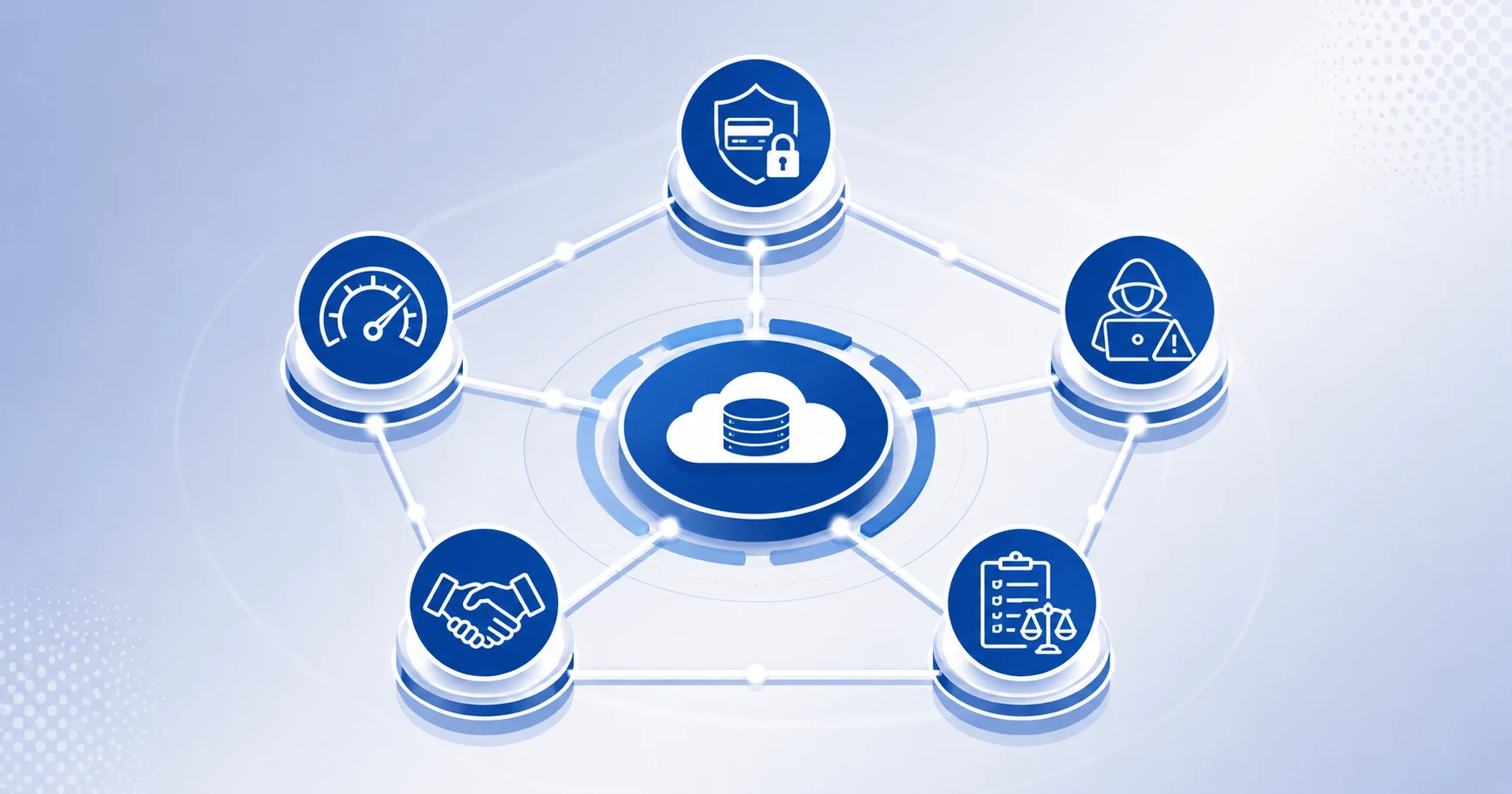
Credit quality pressure points for lenders in 2026: CRE refinancing, consumer stress, immigration guidance, and nonbank competition.
Risk Category 2: Fraud and Cyber Risk — Rising Sophistication Demands Integrated Detection
Cyber threats and fraud remain a primary concern. Cybercriminal groups targeting the financial sector are increasingly sophisticated, and foreign state-sponsored actors continue to pose a threat. Banks continue to face challenges from both the elevated levels and rising sophistication of fraud and scams.
Fraud remains a primary driver of operational losses. Impersonation scams facilitated by social media and text messages are rising in sophistication. FinCEN has issued specific alerts regarding health care fraud schemes and money laundering networks. Geopolitical tensions have strained compliance systems, increasing the risk of BSA/AML violations.
The OCC explicitly connects AI and fraud risk in both directions: a sound understanding of the potential benefits and possible risks associated with increasingly advanced AI tools coming onto the market — tools that can assist with cybersecurity functions — can be important for cyber risk management. AI is simultaneously a fraud detection tool and a fraud enablement tool. The same generative AI capabilities that help institutions identify anomalous patterns are enabling fraudsters to construct synthetic identities, generate falsified income documentation, and execute application stacking across multiple lenders simultaneously.
The 2026 Celent study on fraud in lending found that 93% of lenders now believe fraud losses are directly embedded in their credit portfolios, with 61% identifying synthetic identity fraud as the fastest-growing fraud type. At the application level, this means that fraud detection cannot be treated as a pre-approval gate separate from credit evaluation — it must be integrated into the same workflow.
Vendor-related fraud risk is also significant. When a vendor suffered a ransomware breach and reportedly paid a ransom, it created OFAC sanctions exposure and FinCEN SAR filing requirements for every client institution. When the breach occurred, customers called their banks, not the vendor. Ultimately, the financial institution is on the hook for everything their vendors do.
Understanding how AI fraud detection helps lenders counter generative-AI-enabled fraud is essential context for lenders configuring their fraud detection workflows — because the AI tools enabling fraud are moving faster than most institutions' detection configurations.
So what does this mean for your institution? Fraud and cyber risk in 2026 are not perimeter problems — they are embedded in your credit portfolio, your vendor relationships, and your customer onboarding workflow simultaneously. An institution whose fraud detection operates separately from its credit decision workflow cannot detect the synthetic identity that passes a CIP check and receives a credit approval before the fraud surfaces in portfolio performance data.
Risk Category 3: Compliance Change — Federal Narrowing Plus State Expansion
The compliance environment for lenders in 2026 is not simply more complex than prior years — it is structurally different. The CFPB has narrowed its enforcement scope and reduced its supervisory examination volume. At the same time, state attorneys general and state financial regulators have materially expanded their enforcement activity in the areas the CFPB has vacated.
Although federal banking regulators are refocusing on core financial risks, there are significant increases in regulatory and enforcement activity at the state level. State and local agencies and attorneys general are initiating more investigations, with scopes ranging from redlining to UDAAP, and 22 state attorneys general have formed a consumer protection working group.
When the OCC removed disparate impact from federal oversight, states continued enforcement, including Massachusetts, which announced a settlement for AI-model-related disparate impact outcomes. When federal CRA modernization rolled back to 1995 standards, New York, Massachusetts, Illinois, and California began looking to enforce their own community reinvestment laws.
Simultaneously, new federal guidance has arrived on specific compliance questions that require immediate institutional response:
OCC/FDIC/NCUA interagency credit guidance (July 13, 2026): Financial institutions must incorporate risks associated with non-work-authorized borrowers into underwriting, account management, credit classification, allowance analysis, and compliance processes — while remaining consistent with applicable consumer protection laws including TILA/Regulation Z and ECOA/Regulation B.
CFPB June 8, 2026 Statement on Ability to Repay and Immigration Status: The CFPB issued a statement reminding creditors of their obligations under TILA and ECOA in connection with lending to borrowers whose work authorization may be uncertain.
OCC stablecoin licensing framework: The OCC's information-collection notice for stablecoin licensing — published in late July 2026 — signals that digital asset activities will require detailed governance, risk management, compliance, and AML documentation from institutions pursuing or already engaged in this space.
The dual-track compliance environment — federal narrowing plus state expansion — means that a compliance program calibrated to federal-only oversight is now systematically underestimating its actual exposure. How credit compliance intelligence is reshaping lender decisioning is directly relevant to how lenders build the monitoring infrastructure to track obligations across both federal and state compliance frameworks simultaneously.
So what does this mean for your institution? The compliance change management problem in 2026 is not about tracking one set of evolving rules. It is about tracking two parallel rulemaking tracks — one at the federal level narrowing and refocusing, one at the state level expanding to fill the gap — and maintaining a compliance program that satisfies both simultaneously. A compliance workflow embedded in your loan management platform can reflect those changes through configuration updates. A compliance program managed through policy documents and staff training cannot.
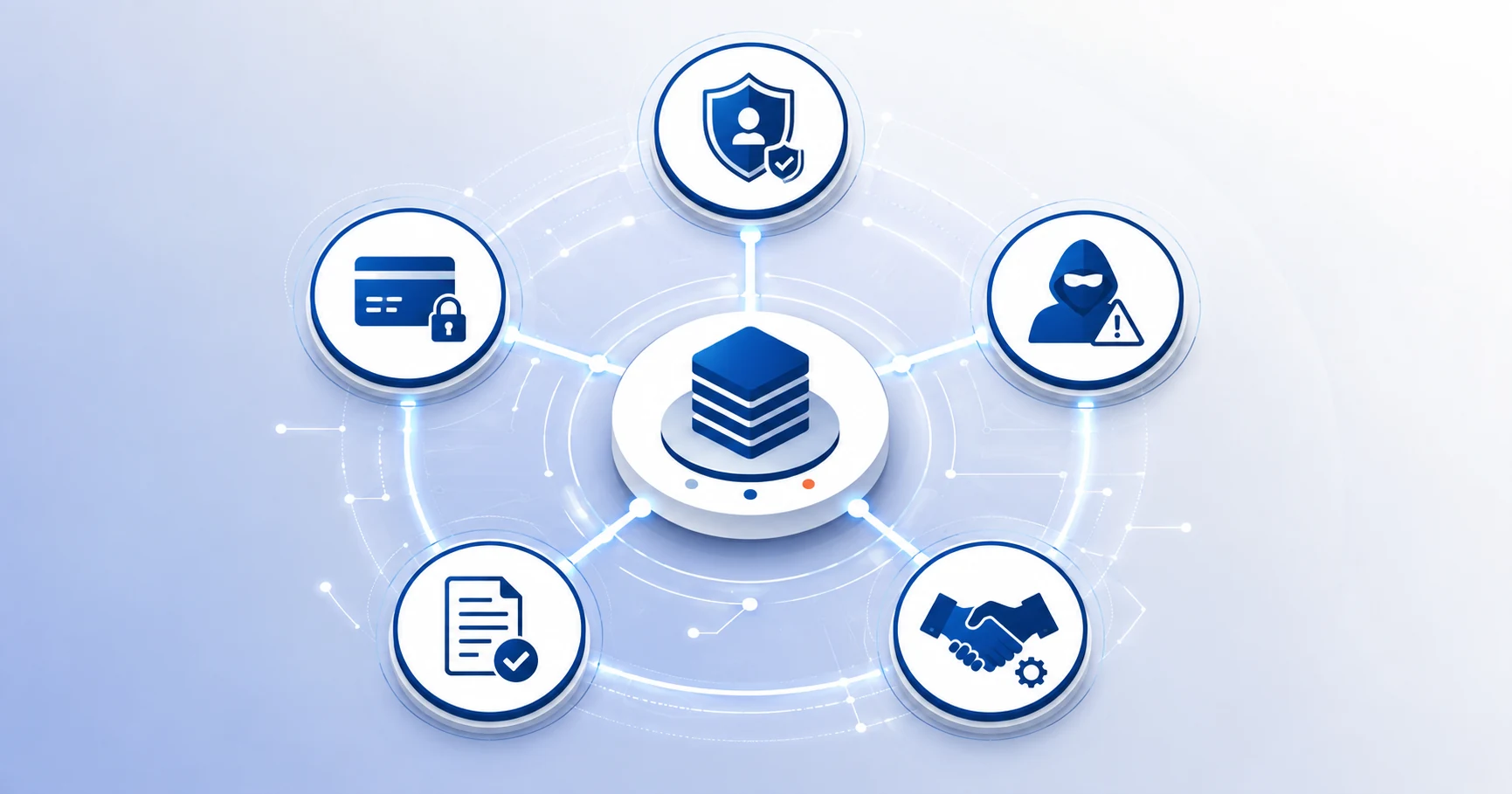
The dual-track compliance environment: federal oversight narrowing while state enforcement expands under new 2026 interagency guidance.
Why LASER for Credit, Fraud, and Compliance Risk on Salesforce
The OCC's "elevated and interconnected" risk characterization is the most operationally significant finding in the Spring 2026 Risk Perspective — because interconnected risks require an integrated response. A lender whose credit risk, fraud detection, and compliance documentation each run through separate systems cannot see the connections between them. They can only see each risk category in isolation, respond to each individually, and discover the connections retrospectively — typically during an examination or after a portfolio loss.
Salesforce-native credit access, built-in compliance, and decisioning — unified in a single app, ready from day one.
LASER Credit Access is built natively inside Salesforce, connecting lenders to Equifax, Experian, and TransUnion for credit bureau access that returns structured data directly into the loan record. The DECIDE pillar applies configured credit policy logic to that structured data — incorporating the 2026 interagency guidance's documentation requirements, concentration monitoring triggers, and credit classification criteria within the same underwriting workflow where credit bureau data is accessed. The COMPLY pillar enforces compliance documentation — permissible purpose, adverse action, FCRA audit trail — automatically, as the natural output of the origination process.
For lenders managing the five interconnected risk categories the 2026 environment presents, LASER's native architecture means that credit quality data, fraud detection signals, compliance documentation events, and decisioning audit trails all exist within the same Salesforce record. When a regulator asks how a specific credit decision was made, what data was used, and what compliance controls were applied, the answer is in one place — not assembled from three disconnected systems on an accelerated timeline.
Explore LASER's Salesforce-native credit bureau integration connecting lenders to Equifax, Experian, and TransUnion and its built-in compliance workflow tools for lenders managing credit, fraud, and regulatory risk on Salesforce to see how the pieces fit together.
The complete guide to setting up LASER Credit Access on Salesforce covers what integrated credit bureau data, decisioning, and compliance infrastructure looks like in a Salesforce-native environment — and why the architecture matters as much as the individual capabilities.
Risk Category 4: Vendor and Technology Risk — You Are Responsible for What Your Vendors Do
AI governance creates a specific vendor risk challenge: the difficulty is not AI that institutions deliberately deployed — it is AI embedded in vendors' tools as "enhanced features." For lenders, loan origination system workflow optimization, document extraction, and fraud detection are AI systems that need governance.
A sound understanding of the potential benefits and possible risks associated with increasingly advanced AI tools that vendors are bringing to market is important for risk management. The OCC's Spring 2026 Risk Perspective frames vendor AI governance as an institutional responsibility — not a vendor responsibility — because when a vendor's AI tool produces a biased credit outcome, a privacy violation, or a fraudulent approval, the regulated institution bears the examination and enforcement consequences.
The practical implications for lender vendor management programs in 2026:
| Vendor Risk Area | What Institutions Must Document | Regulatory Basis |
| AI tools embedded in LOS or fraud detection | Validation records, fair lending testing, adverse action explainability | OCC/FRB/FDIC Model Risk Management Guidance (amended April 2026) |
| BSA/AML program vendor dependencies | Vendor SAR filing practices, transaction monitoring coverage, customer identification processes | BSA AML program requirements — 31 C.F.R. § 1020.210 |
| Ransomware and breach response | Vendor breach notification, OFAC screening of ransom payments, SAR filing obligations | OCC cyber risk guidance; OFAC regulations; FinCEN SAR requirements |
| GLBA data sharing with third-party AI systems | Data use policies, consumer notification, model training data governance | GLBA / Regulation P (15 U.S.C. §§ 6801–09) |
| Fourth-party risk | Vendor's vendor relationships, subprocessor data handling, concentration risk | OCC third-party risk management guidance (2023) |
The BSA/AML connection is direct: in 2025, enforcement actions consistently cited inadequate oversight of merchant services programs, ISOs, prepaid card programs, and fintech partnerships. A BSA/AML program is only as strong as its vendors' controls.
So what does this mean for your institution? Vendor risk in 2026 is not a due-diligence checkbox at onboarding. It is a continuous monitoring obligation that encompasses the AI tools your vendors embed in their products, the AML controls your payment and fintech partners maintain, and the data governance practices of every third party that touches borrower PII. Lenders whose vendor management programs have not been updated to reflect AI governance expectations and the ransomware-plus-OFAC risk chain are carrying examination risk in their vendor portfolio as surely as they carry credit risk in their loan portfolio.
Risk Category 5: Interconnected Risk — When One Risk Category Becomes All of Them
The ProSight conference theme — "everything is intertwined" — is the operational insight that the OCC's "elevated and interconnected" characterization is pointing toward. The five risk categories described in this post are not independent. They converge in ways that can multiply their individual impact:
The interest rate–credit quality chain: Persistent high rates increase debt service burdens for existing borrowers. Rising debt service increases delinquency probability, particularly in segments where borrowers are already financially stressed. Rising delinquency triggers FCRA reporting obligations that must be executed accurately under time pressure — creating compliance exposure precisely when the credit team is most stretched.
The fraud–credit quality confusion: Synthetic identity fraud is designed to produce borrowers who look creditworthy during underwriting and default shortly after funding. When fraud losses surface in credit performance data, they are often initially classified as credit losses — obscuring the fraud signal in the credit trend data until the pattern becomes too large to explain by credit criteria alone.
The vendor–compliance convergence: When a vendor's AI tool produces outcomes that have disparate impact on a protected class, the lender — not the vendor — receives the fair lending examination finding. When a vendor's AML tool fails to flag a SAR-triggering transaction, the lender files the SAR late or not at all. The vendor's operational failure becomes the lender's compliance violation.
The geopolitical–AML chain: Geopolitical tensions increase sanctions and money laundering risk, straining bank compliance systems, and may raise the potential for sanctions and BSA/AML violations. A lender whose transaction monitoring is not configured to detect geopolitically-driven sanctions evasion patterns is missing a risk category that the OCC has explicitly named as elevated in 2026.
The operational response to interconnected risk is not a more complex organizational structure or a larger compliance team. It is a platform architecture where credit data, compliance workflow, and risk monitoring share a common data model — so that the connection between a credit event, a fraud signal, and a compliance obligation is visible in the same record, at the same time, without manual reconciliation.
Understanding how three interconnected compliance challenges are transforming credit operations provides additional operational context for institutions building unified risk visibility across credit, fraud, and compliance functions.
So what does this mean for your institution? The OCC's warning about interconnected risks is not a description of complexity for its own sake. It is a description of how risk spreads across an institution when each risk category is managed in isolation. The lenders best positioned in 2026 are those whose operational infrastructure makes the connections between risk categories visible before they become losses — because the data that would reveal the connection lives in the same system, not in different ones.
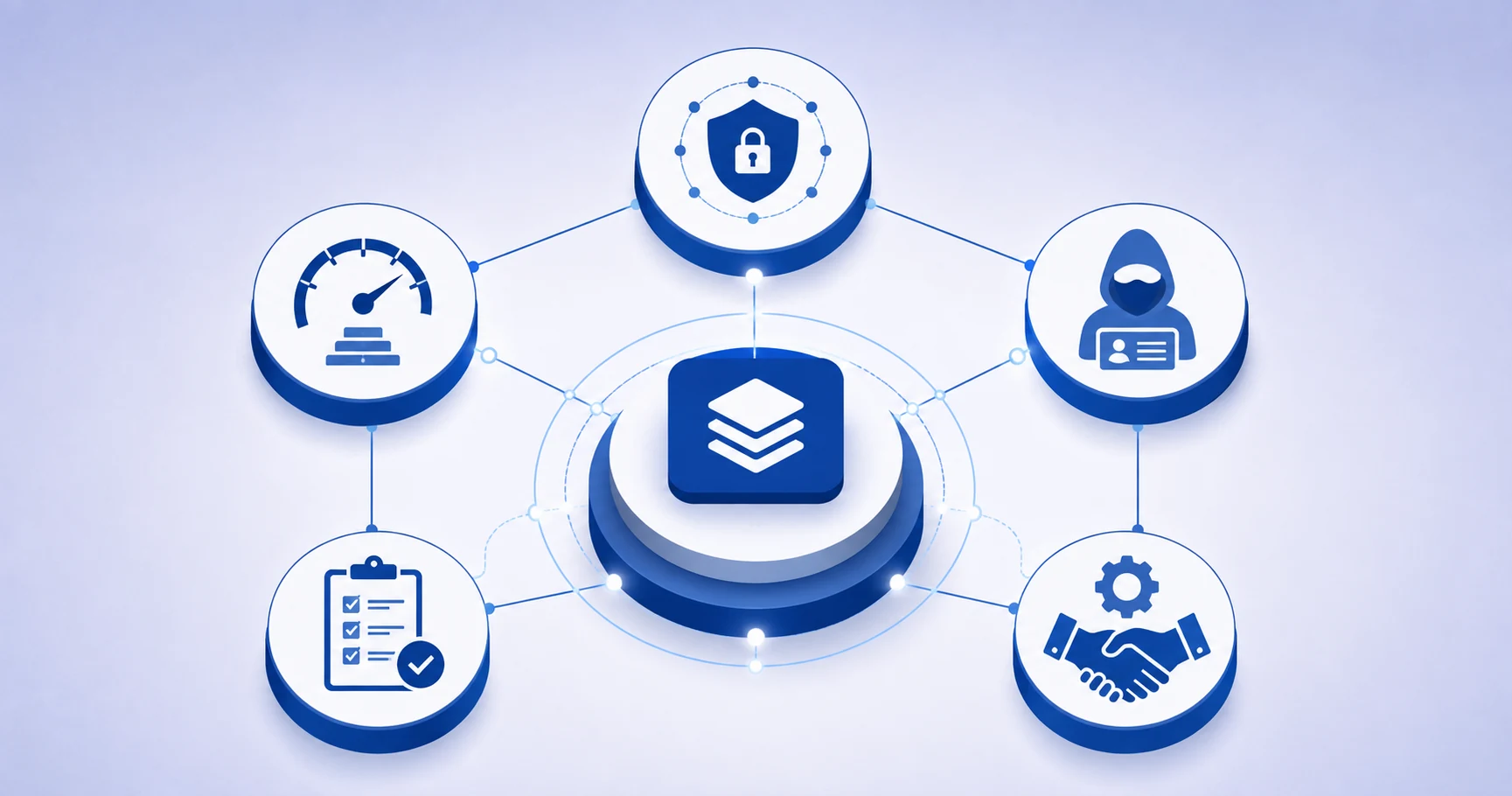
How credit, fraud, cyber, compliance, and vendor risk converge across a lender's operations in 2026.
What Every Lender Should Do Before Year-End
1. Apply the OCC/FDIC/NCUA interagency credit guidance now. The July 13, 2026 interagency guidance is not a proposed rule — it is current supervisory expectation. Review your underwriting documentation standards for employment verification, geographic concentration monitoring, and allowance methodology for credits with income uncertainty. Document the review and any resulting policy updates.
2. Audit your AI vendor governance against the OCC's model risk expectations. For every AI tool embedded in your LOS, fraud detection, or document processing workflow — whether built in-house or provided by a vendor — confirm that validation records exist, fair lending testing has been conducted, and adverse action explainability has been assessed. If the vendor cannot provide this documentation, that gap is your examination risk, not theirs.
3. Map your compliance monitoring to both federal and state obligations. Update your compliance monitoring calendar to track state-level enforcement priorities alongside federal guidance. The 22-state attorney general consumer protection working group and the individual state enforcement actions in Massachusetts, New York, Illinois, and California are active, named enforcement environments for any lender with borrowers in those states.
4. Test your fraud detection configuration against current synthetic identity patterns. Review your CIP verification methodology to confirm it includes non-documentary verification that can detect AI-generated identity documents. If your fraud detection relies primarily on documentary verification, test its performance against synthetic identity indicators before an application-stacking scheme reaches your portfolio.
5. Review your vendor BSA/AML oversight for fintech and payment processor relationships. Confirm that your vendor due diligence documentation addresses each vendor's customer identification practices, transaction monitoring coverage, and SAR filing processes. BSA/AML enforcement actions consistently cite inadequate oversight of merchant services programs, ISOs, and fintech partnerships. Your BSA/AML program is only as strong as your vendors' controls.
So what does this mean for your institution? The five action items above correspond directly to the five interconnected risk categories the OCC has flagged as elevated in 2026. Each one has a specific operational requirement — not a policy aspiration — that must be reflected in your workflow, your documentation, and your platform configuration before the next examination cycle begins.
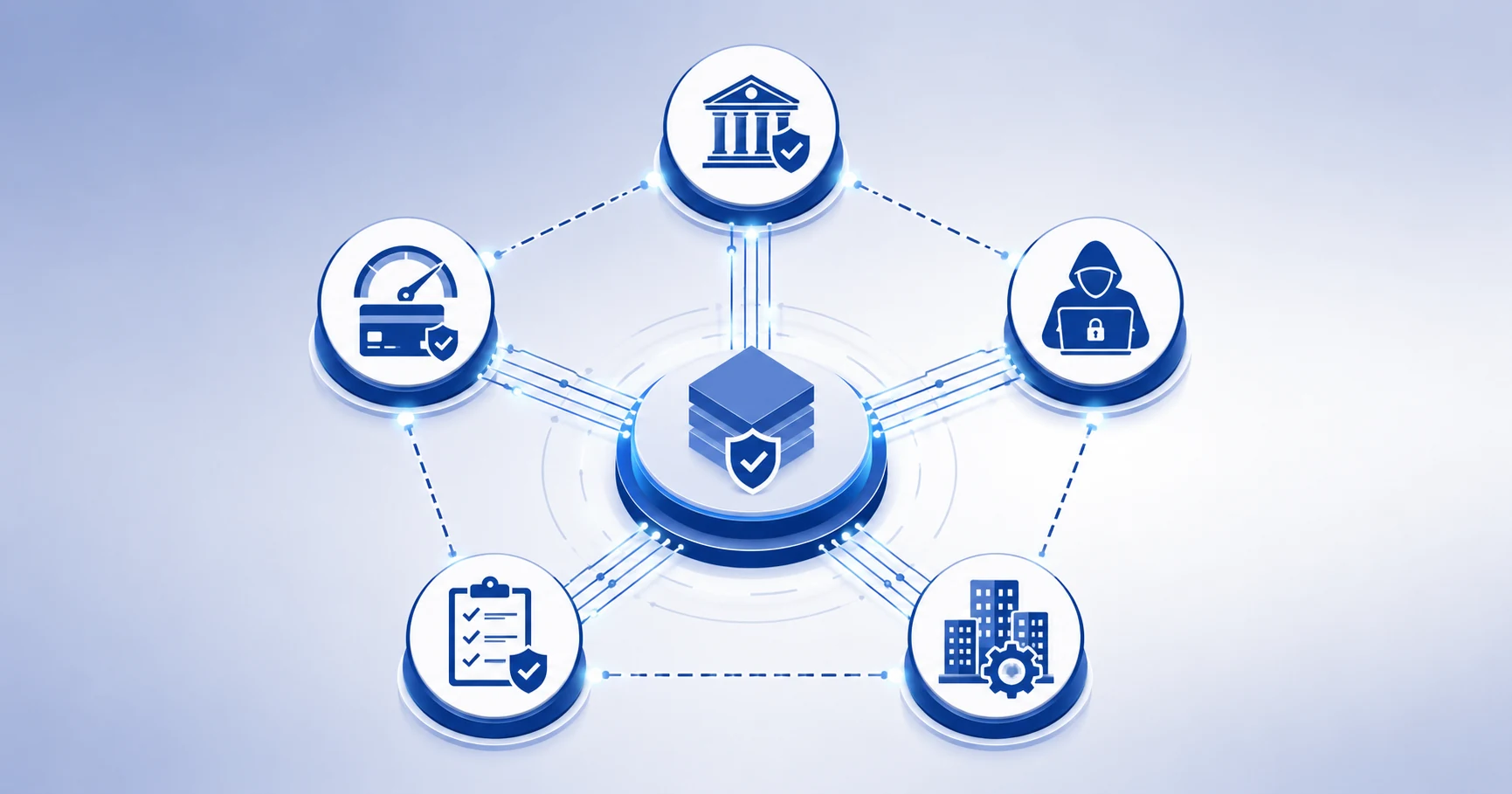
Unifying credit bureau integration, decisioning, and compliance inside a single Salesforce-native platform.
Ready to Build Unified Credit, Fraud, and Compliance Risk Management Inside Salesforce?
The OCC's 2026 warning about elevated and interconnected risks is not an abstract regulatory concern — it is an operational description of the environment every lender is managing today. Credit quality, fraud, cyber risk, compliance change, and vendor risk are not five separate problems. They are five converging pressure points that an integrated platform handles systematically and that disconnected systems manage individually — until the moment the connections between them become visible in examination findings or portfolio losses.
LASER Credit Access delivers Salesforce-native credit bureau integration, built-in compliance workflow, and configurable decisioning tools in a single application. If your institution is evaluating whether its current platform gives it the unified risk visibility the 2026 environment requires, a compliance discussion is the right starting point.