

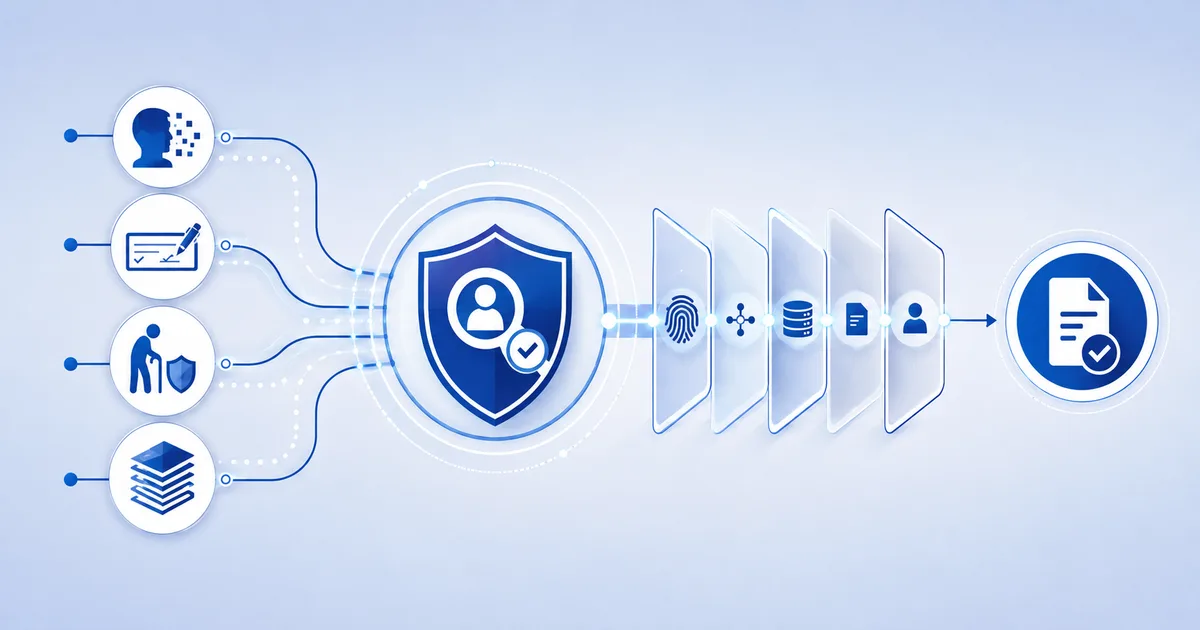
Fraud Spreads Like a Virus — and Most Lenders Are the Next Host
"Fraud is like a virus." That framing from James Johnson, vice president of compliance at First Community Credit Union, is more than a metaphor. Fraud schemes do not simply repeat — they mutate. What begins as a localized check-washing operation in California adapts its method, finds a new vector, and resurfaces weeks later on the East Coast with enough variation to defeat the detection controls that stopped the original scheme.
The 2026 fraud landscape validates that characterization with numbers that no lender can treat as a credit union-specific problem. Consumer fraud losses jumped 25% to $12.5 billion in 2024, according to FTC data. Business and government impersonation scams alone topped $1.1 billion — more than triple the 2020 figure. Financial institutions reported more than $688 million in suspicious mail theft-related check fraud in just six months following a federal FinCEN alert. Elderly Americans lost nearly $2.8 billion to crypto fraud in 2024 despite representing only 17% of the U.S. population. And crypto ATM fraud complaints jumped 99% in a single year.
These numbers describe an industry-wide problem, not an institution-type problem. Banks, credit unions, non-bank lenders, auto financiers, and commercial lenders all face the same fraud typologies — synthetic identity construction, check fraud and washing, business impersonation, elder exploitation, and AI-enhanced document counterfeiting. The question is not whether synthetic identity fraud and its cousin schemes will reach your portfolio. It is whether your detection infrastructure will identify them before they become credit losses.
For lenders building fraud detection into their Salesforce lending workflow, the answer starts with connecting the right identity verification data to the right decisioning triggers — natively, at the point of origination, before a fraudulent application reaches the approval stage. Lenders evaluating whether their current infrastructure closes these detection gaps can start with a compliance discussion.
The Four Fraud Mutations Reaching Every Lender in 2026
Mutation 1: Synthetic Identity Fraud — The Clean Credit Profile That Does Not Exist
Synthetic identity fraud is the fastest-growing fraud type in lending, identified by 61% of lenders in the 2026 Celent study commissioned by Zest AI as their primary fraud concern. It differs fundamentally from traditional identity theft: rather than stealing an existing person's identity, synthetic identity fraudsters construct a new identity — typically using a real Social Security number (often belonging to a child, deceased person, or credit-inactive adult) combined with fabricated name, address, and date-of-birth information.
The constructed identity is then "credit built" — added to legitimate accounts as an authorized user, used to open secured credit products, and aged over months or years until it reaches the credit profile that passes standard underwriting thresholds. By the time a synthetic identity applies for a personal loan, an auto loan, or a business credit line, the credit bureau file looks legitimate. The derogatory data — the charge-off, the default — arrives after the loan is funded, and is often classified initially as a credit loss rather than a fraud event.
For lenders, the synthetic identity problem is both a KYC failure and an underwriting failure simultaneously. Standard documentary CIP verification cannot detect a synthetic identity that is presented with a government-issued ID matching the constructed file. The credit bureau pull returns a positive score because the file was built for exactly that purpose. Detection requires non-documentary verification — real-time database comparison, velocity checks across applications, SSN issuance date verification against the borrower's stated date of birth, and cross-institutional signal sharing that no single lender can produce alone.
AI has materially worsened the detection challenge. Generative AI tools can produce government-issued identification documents, pay stubs, and bank statements that pass visual document review without triggering the inconsistencies that trained fraud analysts historically caught. As Johnson observed in the America's Credit Unions source, AI is making check counterfeiting and other traditional fraud methods increasingly sophisticated — and the same tools that counterfeit physical documents are being applied to digital identity construction.
Understanding how AI fraud detection helps lenders counter generative-AI-enabled fraud covers this trend in operational depth — the detection infrastructure required to stay ahead of AI-generated fraud is not the same as the infrastructure that caught traditional identity fraud.
So what does this mean for your institution? Synthetic identity fraud is not detectable through credit bureau review alone — because the bureau file was built to pass that review. Detection requires a multi-layer approach that verifies SSN validity and issuance date, checks application velocity patterns, and flags inconsistencies between the credit file's history and the borrower's stated biography. Each of these checks must be embedded in your origination workflow, not applied as a manual review step after the application is scored.
Mutation 2: Check Fraud and Business Impersonation — Mail-Based Crime With a Digital Infrastructure
Check fraud has re-emerged as one of the highest-volume fraud types in financial services — driven not by any failure of digital payment adoption, but by the persistence of check usage among businesses and the criminal infrastructure that has developed around exploiting it. FinCEN's alert on mail theft-related check fraud generated $688 million in suspicious activity reports in six months — a figure that represents only reported activity.
The specific scheme Johnson describes — establishing a shell company with a name nearly identical to a legitimate business, then intercepting checks mailed to the real company — combines low-tech execution with surprisingly effective results. Criminals purchase mailbox keys online or compromise postal employees; the checks are chemically washed to remove the original payee and amount; a new payee and amount are written on the chemically treated paper; and the rewritten check is deposited before the victim or their financial institution notices the alteration.
Combined losses to business and government impersonation scams reached $1.1 billion in 2024 — more than triple the 2020 figure. This growth reflects both the increasing sophistication of the impersonation infrastructure (shell companies registered with names designed to create confusion with legitimate businesses) and the difficulty of detecting the scheme at the account-opening or check-deposit stage without cross-institutional intelligence about which business names are being impersonated in a given market.
What lenders must have in place:
- Business KYC verification that includes registry-level confirmation of entity name, registered address, and beneficial ownership — not solely a business credit pull
- Beneficial ownership documentation that can detect shell company structures registered at registered agent addresses with no operational history
- Positive pay integration for commercial checking accounts that flags check alterations against the original issue record
- Transaction monitoring rules that flag large check deposits from new or recently established accounts against the account's established transaction pattern
Mutation 3: Elder Exploitation Through Crypto and Romance Scams
Elderly Americans lost nearly $2.8 billion to crypto fraud in 2024 despite representing 17% of the population — a disproportionate impact that reflects the specific social vulnerabilities these schemes exploit. Crypto ATM fraud complaints jumped 99% in a single year, with seniors losing more than $107 million specifically through those channels.
The scheme mechanics are consistent across their variations. A fraudster creates a fraudulent online relationship — romantic interest, military official, stranded celebrity — and over weeks or months builds trust with the target. When the scheme reaches its extraction phase, the target is instructed to withdraw cash from their financial institution and deposit it into a crypto ATM, which transmits the funds to a wallet the fraudster controls. The target is often told not to tell their bank what the money is for.
For lenders and financial institutions, this creates the compliance and customer care tension that Johnson identifies directly: when a member or customer requests an unusual large cash withdrawal or wire transfer, staff members must navigate a delicate conversation that could prevent a devastating loss — while respecting the customer's autonomy and avoiding a paternalistic dynamic that damages trust.
The compliance framework for elder fraud intervention:
This is not solely a customer service challenge — it is a BSA/AML and CFPB compliance issue. FinCEN's 2022 advisory on elder financial exploitation established that unusual withdrawals by senior customers, when accompanied by behavioral indicators of exploitation (confusion, apparent scripting of requests, an unfamiliar accompanying party), are suspicious activity that may trigger SAR filing obligations. The CFPB has issued guidance on financial institution responses to elder financial exploitation under existing consumer protection frameworks.
For lenders with consumer loan portfolios, the elder exploitation risk extends beyond deposit transactions: unusual large payoff requests, loan drawdowns directed to unfamiliar third parties, and applications submitted on behalf of elderly borrowers by previously unknown authorized representatives are lending-specific red flags that require investigation, not automatic processing.
Mutation 4: Application Stacking and Cross-Institutional Fraud
Application stacking — the submission of multiple loan applications across different lenders simultaneously, before any individual lender's adverse action or credit reporting reaches the applicant's bureau file — exploits the time lag between credit decision and bureau update. A fraudster with a synthetic or stolen identity can apply to five lenders simultaneously, receive five approvals in the brief window before any individual lender's inquiry appears on the file, and draw down all five lines before the credit cascade makes the fraud visible.
The 2026 Celent study found that 55% of lenders identified application stacking as a top-three fraud concern. Unlike synthetic identity fraud, which requires building and aging a false credit profile, application stacking can exploit entirely legitimate identities — targeting borrowers who are genuinely creditworthy but whose bureau file is not updated in real time. The lender's credit bureau pull is accurate at the moment of the pull. The fraud is in the simultaneous pulls at competing institutions that are not visible in any individual pull.
Detection requires either real-time credit inquiry monitoring across institutions (accessible through credit bureau inquiry data when pulled from all three bureaus), or velocity alert configurations that flag multiple hard inquiries within a narrow time window as an application pattern inconsistent with normal borrower behavior.
So what does this mean for your institution? The four fraud mutations described above share a common characteristic: each one is designed to exploit a gap between what a single lender's detection systems can see and what the full picture of the borrower's or fraudster's activity actually is. No single detection tool closes all four gaps simultaneously. But a fraud detection infrastructure that integrates identity verification, credit bureau data from all three bureaus, transaction monitoring, and KYC documentation into a single origination workflow is better positioned to see the pattern that crosses those gaps than one that applies each check in isolation.

The four fraud mutations reaching lenders in 2026: synthetic identity, check fraud, elder exploitation, and application stacking.
The Compliance Infrastructure Every Lender Must Build
Collaborative fraud-sharing networks — the credit union model Johnson describes, where institutions share real-time intelligence about emerging schemes — provide genuine value for the institutions that participate in them. They accelerate the spread of detection knowledge the same way fraud schemes spread geographically. But collaborative networks address the speed-of-spread problem, not the detection infrastructure problem. An institution that receives timely intelligence about a new scheme still needs the workflow infrastructure to act on that intelligence — updated transaction monitoring rules, new EDD triggers, staff training that translates a scheme description into specific behavioral indicators to watch for.
The compliance infrastructure that closes these detection gaps has five elements:
Element 1: Multi-layer identity verification at CIP
Documentary verification alone is insufficient for the 2026 fraud environment. CIP procedures must incorporate non-documentary verification — SSN issuance date verification against stated date of birth, database comparison across credit bureau records, and behavioral analytics that flag application patterns inconsistent with legitimate borrower behavior. For digital origination channels, the verification methodology must specifically address AI-generated identity documents that pass visual review.
Element 2: Beneficial ownership documentation for all entity customers
Shell company fraud — whether in the business impersonation scheme or in commercial loan origination — exploits incomplete beneficial ownership verification. Every legal entity customer must have a documented beneficial ownership certification verified against registry records, not solely accepted at face value. Ownership structures with multiple layers of holding companies, recently formed entities, or registered agent-only addresses should trigger automatic EDD.
Element 3: Tri-bureau credit pulls with inquiry velocity monitoring
Application stacking is most visible in credit inquiry data — multiple simultaneous hard inquiries from different lenders in a narrow time window. Pulling from all three bureaus (Equifax, Experian, and TransUnion) maximizes the inquiry data available and allows comparison of inquiry patterns across bureaus. Inquiry velocity alerts configured into your decisioning workflow can flag stacking patterns before the application reaches the approval stage.
Element 4: Transaction monitoring rules calibrated to current fraud typologies
Standard transaction monitoring rules built for prior-generation fraud typologies will not detect the specific patterns of 2026's mutations. Monitoring configurations must be regularly reviewed against current scheme intelligence — including the FinCEN advisory on mail theft check fraud, the new SAR red-flag categories expected from the May 2026 Executive Order's Treasury advisory, and the elder exploitation indicators in FinCEN's 2022 financial exploitation advisory.
Element 5: Staff training connected to specific behavioral indicators
The "delicate conversation" that Johnson describes — intervening when a customer appears to be victimized by a romance or impersonation scheme — requires staff who can recognize the behavioral indicators that distinguish voluntary unusual transactions from coerced ones. Training that describes general fraud awareness does not produce the specific intervention behavior that stops an elder exploitation event in real time. Training must be tied to specific behavioral indicators — customer appears confused or scripted, unfamiliar third party is present, customer cannot explain the purpose of the withdrawal in their own words, customer seems distressed — paired with clear escalation protocols.
Understanding synthetic identity fraud and how Plaid-enabled identity verification helps lenders detect it covers the specific detection methodology for synthetic identity at the origination stage — the most operationally critical point in the fraud lifecycle.
So what does this mean for your institution? Each of the five infrastructure elements above has a specific configuration requirement that must be reflected in your origination workflow, your transaction monitoring rules, or your staff training program. An institution that has all five elements in place is not immune to fraud — no institution is. But it is positioned to detect the fraud patterns that are currently reaching the greatest volume of institutions, and to detect them at the point where the loss is still preventable.
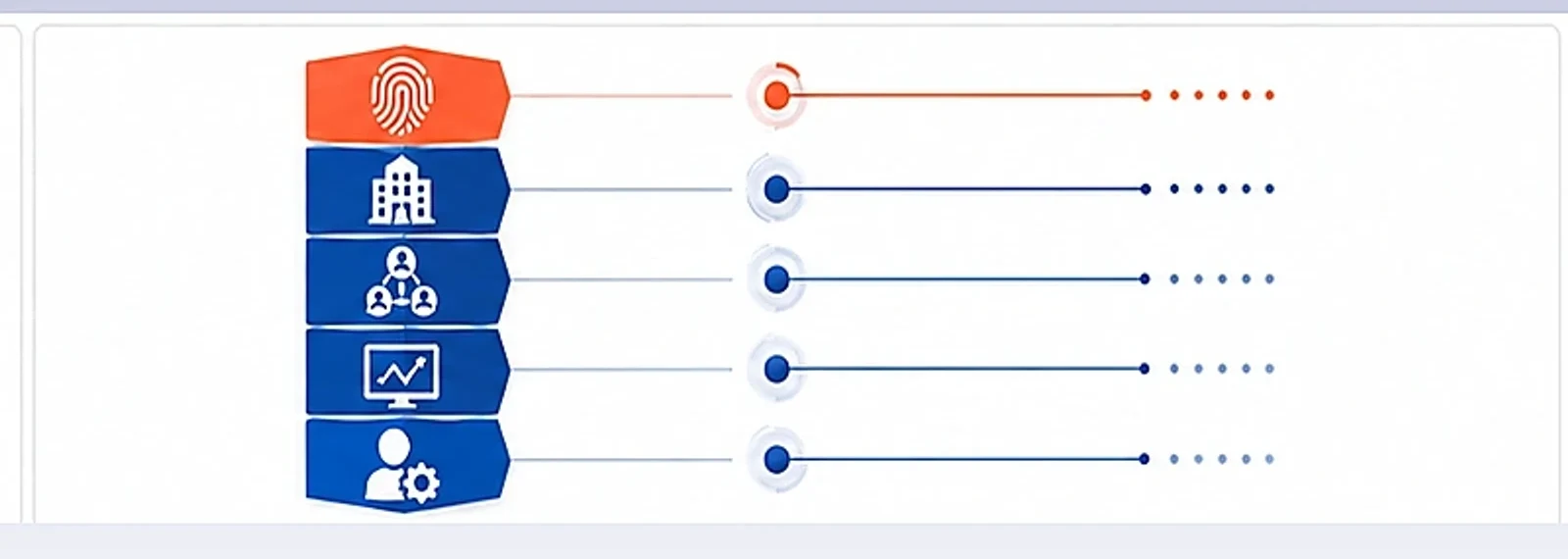
The five-layer detection infrastructure: identity verification, beneficial ownership, tri-bureau pulls, transaction monitoring, and staff training.
Why LASER for Fraud Detection and Identity Verification on Salesforce
Fraud detection at the point of origination — before a synthetic identity receives an approval, before a shell company's loan closes, before a stacked application draws down — requires identity verification data to be integrated into the same workflow where the credit decision is made. A verification step that runs in a parallel system, reports to a separate fraud team, and must be manually reconciled with the underwriting decision is a fraud detection step that happens after the origination workflow has already done its work.
Salesforce-native credit access, built-in compliance, and decisioning — unified in a single app, ready from day one.
LASER Credit Access connects lenders to Equifax, Experian, and TransUnion inside Salesforce, returning tri-bureau credit data — including inquiry history — as structured Salesforce objects on the borrower record. Because credit bureau data, identity verification signals, and the decisioning workflow all live natively in the same Salesforce environment, inquiry velocity patterns, cross-bureau inconsistencies, and identity verification flags are visible to the underwriting workflow at the point of decision — not retrieved separately from a fraud system and manually compared.
The COMPLY pillar enforces the compliance controls — permissible purpose documentation, FCRA audit trail, adverse action notice triggers — automatically as the natural output of the origination process. For lenders implementing the five-element fraud detection infrastructure described above, LASER's native Salesforce architecture means that as fraud monitoring rules are updated — in response to FinCEN advisories, Executive Order guidance, or scheme intelligence from information-sharing networks — those updates are reflected in platform configuration, not in separate system administration projects.
Explore LASER's Salesforce-native credit bureau integration and identity verification for lender fraud detection and its built-in compliance workflow and KYC documentation for lenders on Salesforce to see how detection and documentation fit into one origination workflow.
North American identity fraud reached $47 billion in reported losses — the scale that makes detection infrastructure a strategic investment, not a compliance overhead. Every lender managing a credit portfolio is managing fraud exposure simultaneously, and the two cannot be separated in the origination workflow without creating the detection gaps that 2026's fraud mutations are designed to exploit.
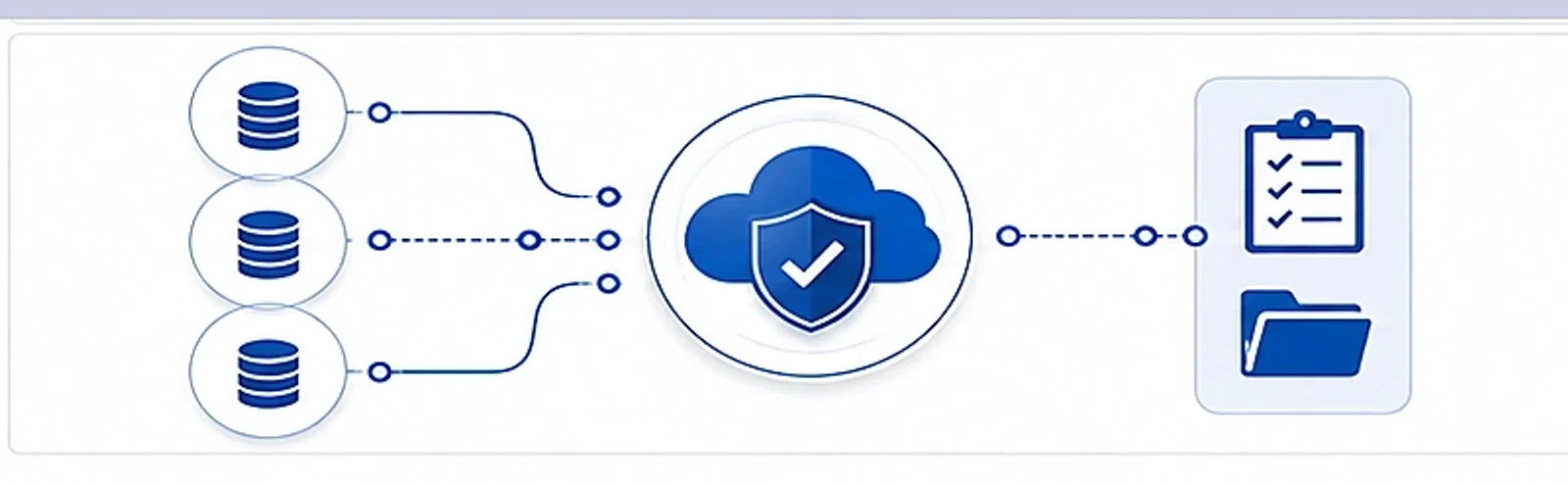
Tri-bureau credit data, identity signals, and compliance workflow unified on the borrower record in Salesforce.
What Every Lender Should Do Before the Next Scheme Arrives
1. Audit your CIP methodology for AI-generated document vulnerability. Review your current documentary verification procedures and assess whether they include non-documentary verification that can detect AI-generated identity documents. If your CIP relies primarily on visual document review — physical or digital — test that methodology against current AI-generated document samples and determine whether your process would pass or detect them.
2. Run inquiry velocity analysis on your recent origination data. Pull 90 days of credit applications and review the inquiry history on each. Identify the percentage of applications where the borrower had multiple hard inquiries from other lenders within 30 days of your pull. This analysis reveals the application stacking exposure in your current portfolio and informs the velocity alert thresholds to configure in your decisioning workflow.
3. Update your beneficial ownership verification procedures for commercial borrowers. For every active commercial credit relationship, confirm that beneficial ownership certification is on file, that the identified owners have been verified against registry records, and that ownership structure does not present indicators of shell company fraud — recently formed entity, registered agent-only address, multiple holding company layers with no operational rationale.
4. Review your transaction monitoring rules against current FinCEN advisory typologies. Compare your current monitoring configurations against the FinCEN mail theft check fraud alert typologies, the May 2026 Executive Order's named SAR red-flag categories, and the FinCEN 2022 elder financial exploitation advisory. Document the comparison and update rules that do not currently capture the identified patterns.
5. Connect your elder exploitation staff training to specific behavioral indicators and escalation protocols. If your current fraud training covers elder exploitation at the concept level but does not provide staff with specific behavioral indicators and a clear escalation path, update it before the next training cycle. The intervention that prevents a $50,000 cash withdrawal from reaching a crypto ATM happens at the teller window or the loan officer desk — not in the compliance department.
So what does this mean for your institution? Account takeover prevention and synthetic identity fraud share the same operational requirement: detection must happen before the transaction closes, not after it posts. Each of the five actions above moves your detection capability one step closer to that outcome.
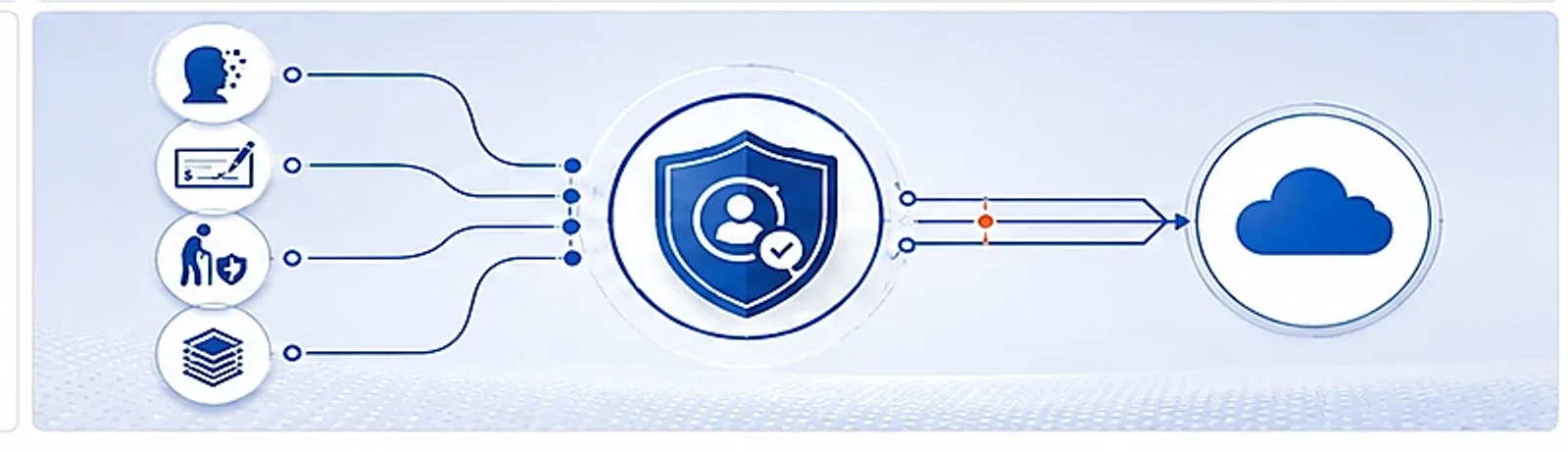
Building fraud detection into the origination workflow — verification and compliance as its natural output.
Ready to Build Fraud Detection Into Your Salesforce Lending Workflow?
Fraud schemes spread with viral adaptability — mutating to defeat the controls that stopped the previous iteration, migrating across institution types and geographies faster than manual intelligence sharing can track them. The lenders best positioned to stop the spread are not necessarily the ones with the largest fraud teams or the most information-sharing network memberships. They are the ones whose detection infrastructure is embedded in their origination workflow — making verification, monitoring, and documentation the natural output of the lending process rather than a parallel manual project.
LASER Credit Access delivers Salesforce-native credit bureau access, built-in identity verification support, and compliance workflow in a single application. If your institution needs to assess whether its current fraud detection infrastructure closes the gaps that synthetic identity fraud, check fraud, application stacking, and AI-enhanced counterfeiting are designed to exploit, a compliance discussion is the right starting point.