
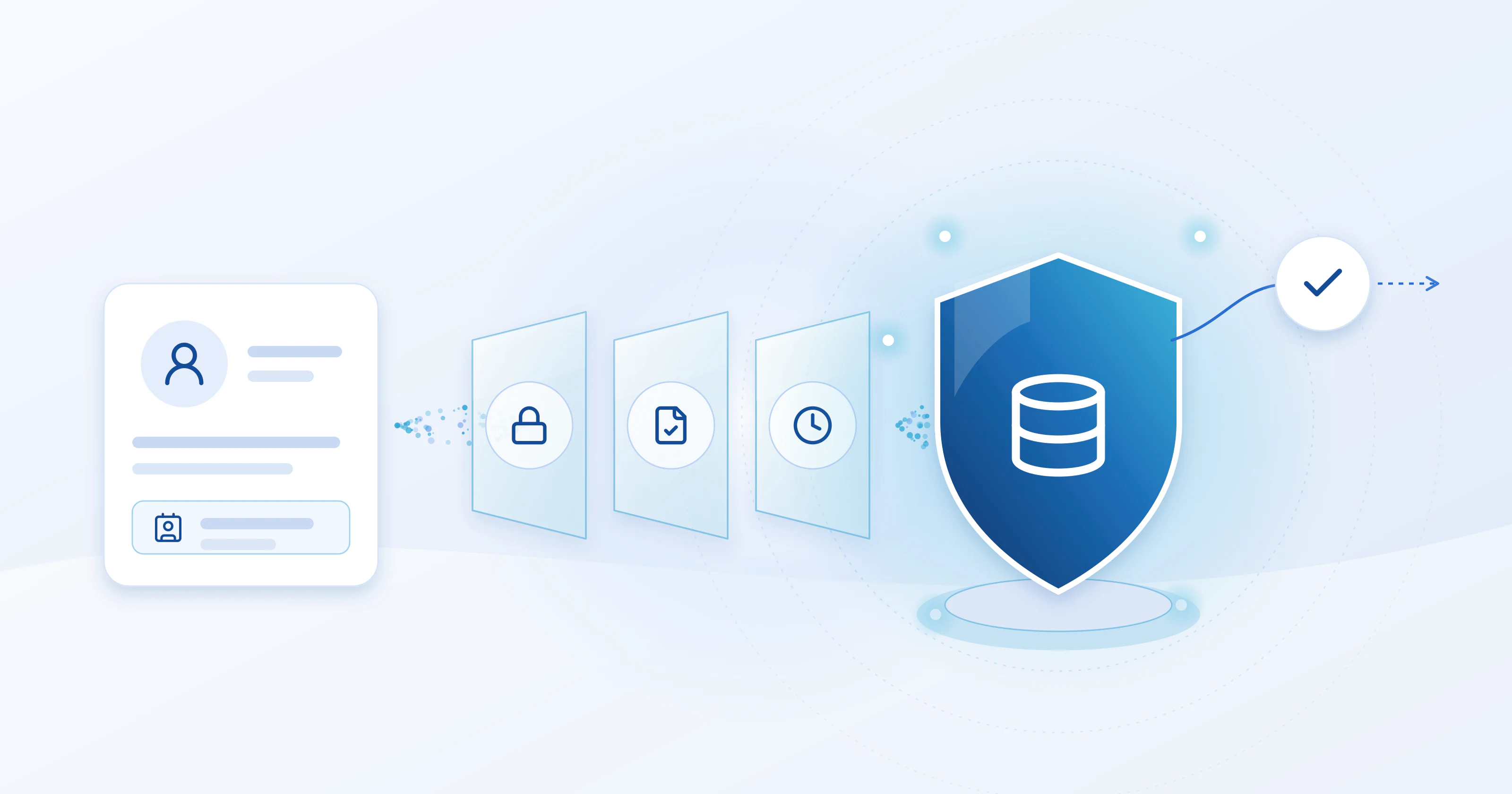
Borrower data safeguards are the controls around a borrower's personal information, plus the records that show what was checked and what was decided. For a lender, the practical test is simple: for any file, can you show where the borrower's data went, what was decided, and how long the record is kept?
This is checkpoint 2 of 5 in the LASER Credit Access® series on the path from online application to human review. Checkpoint 1 covered consent and notices: what a borrower authorizes at the application. Checkpoint 2 picks up the moment that authorization is given, when the borrower's information starts to move through your process.
What counts as borrower data
Borrower data is more than the application form. It starts with what the borrower typed in: name, address, date of birth, income, the details of the loan they want. It grows as the file moves. A credit report is added. An identity check returns a result. A reviewer adds a note. A decision is made, and the lender records why.
Each of those items is information about a person, and each one has to live somewhere. The lender's job is to know where, to protect it while it is there, and to keep it only as long as the lender's own policy says. That is why this checkpoint has two halves: safeguards (protect it) and records (prove what happened and keep it for the right time).
Where borrower data goes after the application
At the second step on the compliance view, the application details are collected once and saved to the record. One record means one place to look when someone asks what happened to a borrower's information. Without it, the same details end up in an inbox, a spreadsheet, a PDF and a loan system, and nobody can say which copy is the real one.
Borrower personal information is encrypted at rest and in transit, including data sent to and from service providers. If an identity verification provider receives the borrower's details, as consented at checkpoint 1, that data is included.
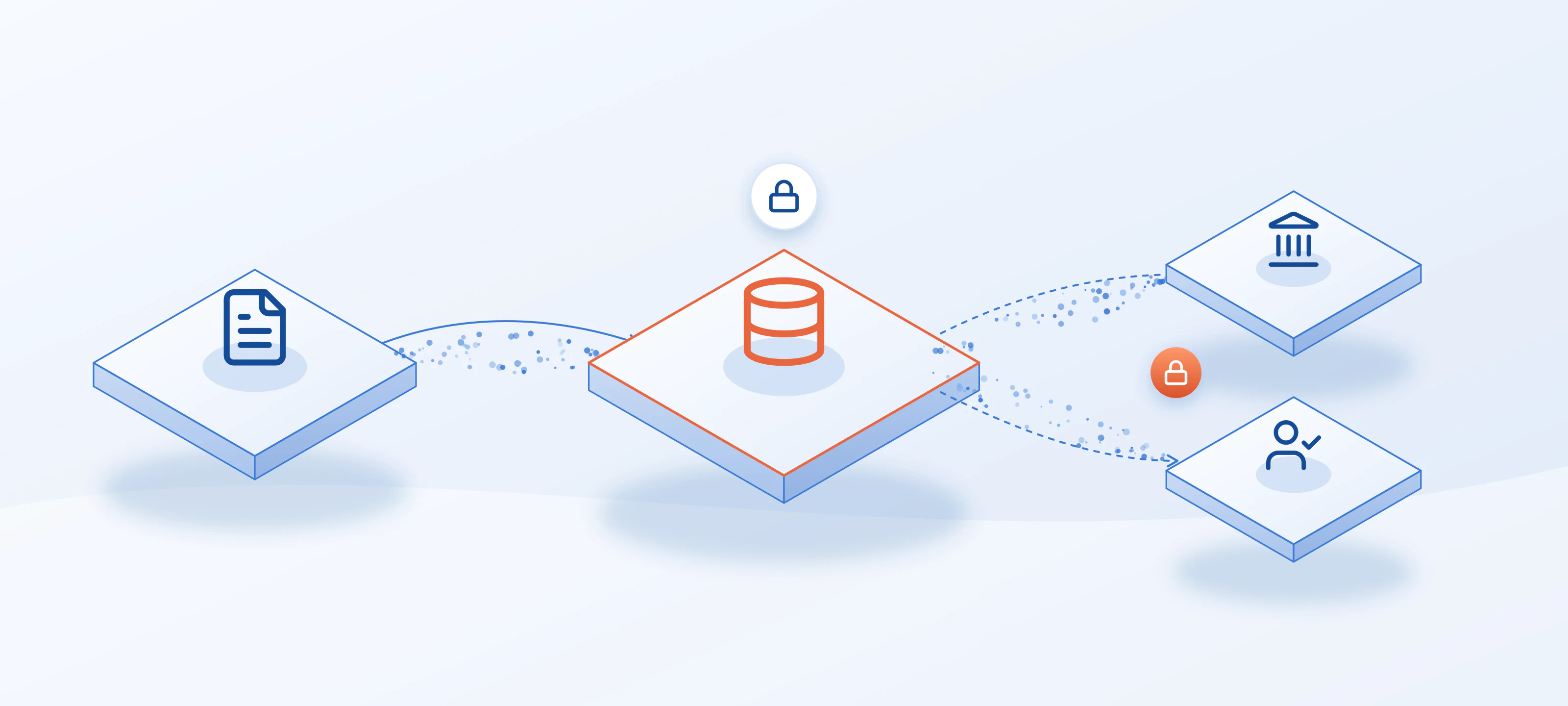
One record, one place to look. Data that moves on to a service provider moves protected.
Service providers: the list you should be able to produce
A service provider is any outside party that receives borrower data to do a job for the lender: a credit bureau, an identity verification provider, a document or e-signature tool, a hosting or software vendor. Most lenders use several, and the list tends to grow without anyone deciding it should.
The GLBA Safeguards Rule covers borrower personal information, including data sent to service providers. Our guides to the GLBA Safeguards requirements and the FTC Safeguards Rule for non-bank lenders cover the rules behind it. In plain terms, the rule does not stop at your own front door. Data you send to a provider is still borrower data, and you are still the one expected to know that it is going there.
A good working list answers three questions for each provider (our suggestion, not a legal requirement):
- What does it receive? Which fields, and for which step of the process.
- Why does it receive them? The job it does for you, tied to a step on your own compliance view.
- Who owns the relationship? One named person who can say what the contract and the settings are.
If you cannot produce that list in a few minutes, that is the first thing to fix, and it costs nothing but an afternoon.

For each provider, three answers: what it receives, why, and who owns the relationship.
What the audit trail holds
Results and decisions are kept in the audit trail. That means the record shows what each check returned and what the lender decided. When the question is "why was this file handled this way," the trail is the answer.
An audit trail earns its keep in three situations. A borrower disputes an outcome and you need to show what was checked. A colleague takes over a file and needs to see what happened before they arrived. An examiner or auditor asks for the file and expects it to explain itself. In all three, the lender who can open one record and read the sequence is in a better position than the lender who has to reconstruct it from several systems.
The trail also makes consistency visible. If two similar files were handled differently, the record shows where they diverged, and you can decide whether the difference was a reasoned exception or an error.
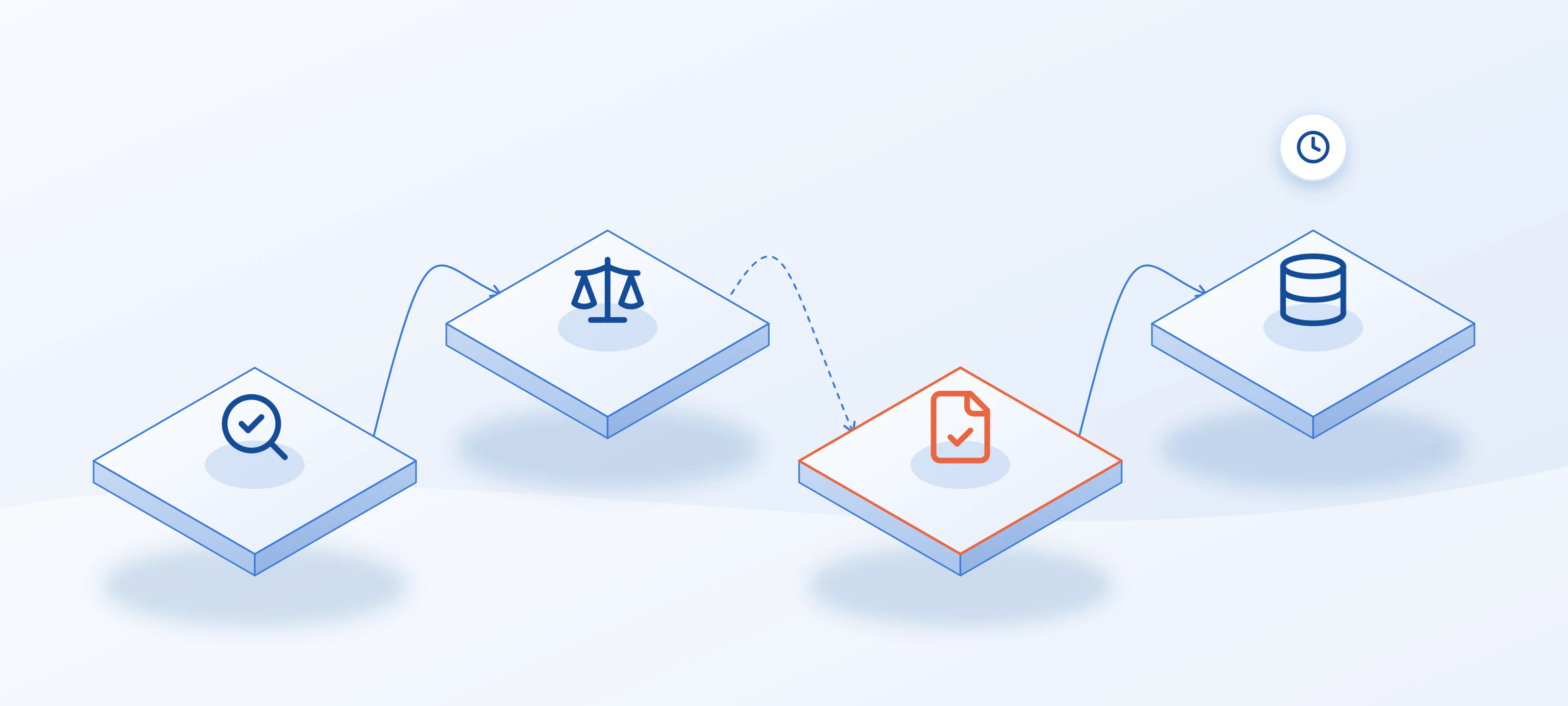
Checks and decisions in one sequence, so the record explains itself.
How long records are kept
Retention is set by the lender. The default setting is 25 months, and timed deletion is configurable. Timed deletion means records are removed on a schedule that follows the lender's own written policy, not on whoever remembers to do it.
There is no single number that fits every record. Retention periods vary by institution and by record type, and some records carry their own, longer periods under other rules: our AML and KYC requirements guide covers the CIP record periods. Your counsel confirms which apply to you.
Two habits make retention easier to defend. First, write the period down, per record type, in your own policy. Second, make sure what the system does matches what the policy says. A policy that says one thing while the settings do another is harder to explain than either on its own.
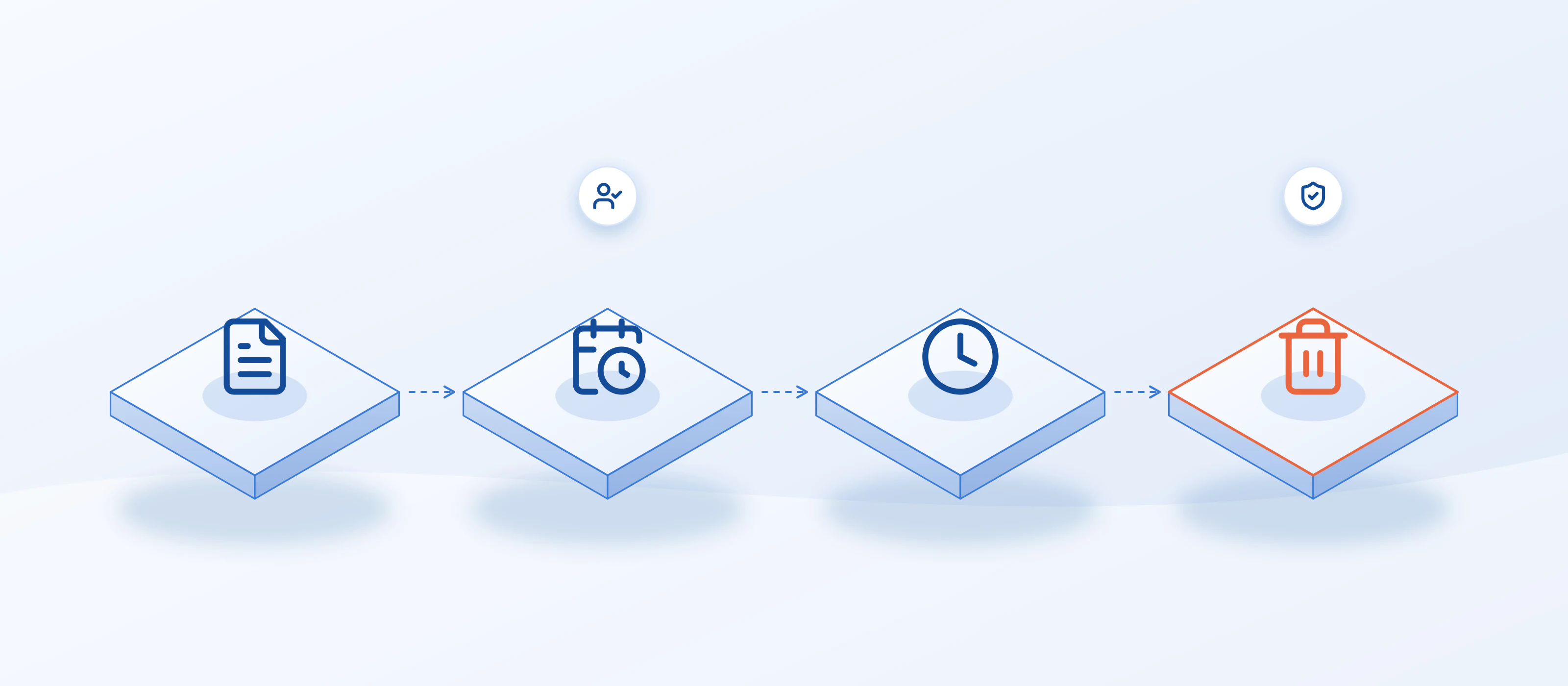
The lender sets the period, and timed deletion follows the written policy.
Retention stays in the lender's hands. Confirm your own period with your compliance counsel.
Four checks for your own process
These are questions for your team and your counsel, not conclusions.
A free one-page checklist covers these checks and a few more: the Borrower Data and Records Checklist. It is a resource for your own process, not an app feature.
A ten-minute test you can run this week
Pick one closed file from last quarter. Set a timer for ten minutes and try to answer five questions from the record alone:
If you answered all five without opening a second system, the checkpoint is working for that file. If you could not, you have found the exact step to fix, and a specific gap is easier to close than a general worry. Run the same test on a second file from a different loan type before you decide what to change.
Where this sits in the five checkpoints
Each checkpoint rests on the one before it. Consent tells you what the borrower agreed to. Safeguards and records tell you what happened to the information afterward. Next week: identity comes before credit.
Talk it through with your team
If you would like to map the five checkpoints to your own policies, we are glad to help. It is a short conversation, and you set the agenda.
General reference point, not legal advice. Each lender confirms its requirements with its own compliance counsel.
Consistency of Process – Identical Loans Scored Identically.