
A credit report authorization form is the record of what a borrower agreed to at the application. For a lender, it answers one question for any file: where did the borrower say yes? Clear consent gives the borrower transparency, and it gives your institution a documented basis for every step that follows.
Compliance Updates7 min read
Credit Report Authorization Form: What Lenders Capture
By Michael Dunleavey
•October 28, 2026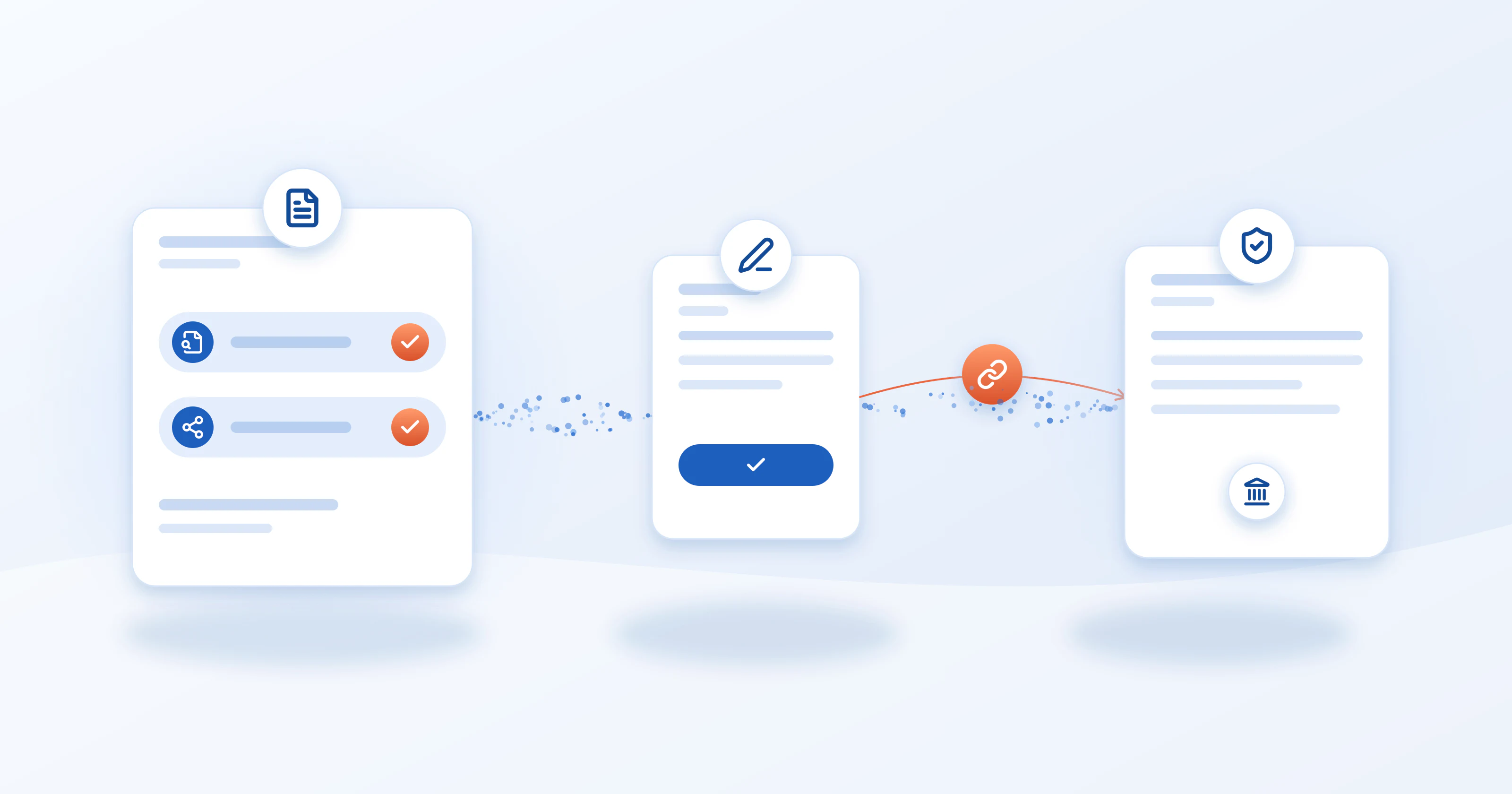
This is checkpoint 1 of 5 in the LASER Credit Access® series on the path from online application to human review. Gino walks through it in the video above. Below is the same checkpoint in writing, with four checks you can run on your own process.
What a borrower authorizes at the application
On the compliance view, checkpoint 1 sits at the first step, when the borrower applies online. They authorize two things, and both matter, because the first lets the lender obtain the report and the second lets the borrower's details go to the provider that checks identity:
- The credit report. The lender may obtain it for this application.
- The sharing of their data with the identity verification provider. The information they enter can be sent to the provider that checks their identity.
The lender's consent form should link to the lender's own privacy page. Consent and the privacy page sit together, so the borrower can see how their information is handled at the moment they agree to it.
What a good consent record shows
A consent record is only as useful as the details around it. When someone asks where the borrower said yes, a good record lets you answer four things without searching:
- What they agreed to. The credit report, and the sharing of their data with the identity verification provider.
- When and how. The date, and the way the borrower agreed, such as a tick box on the online application.
- Which version. The consent wording and notice the borrower saw at that moment, because wording changes over time.
- For which application. The consent belongs to this application, not to a general file.
Your counsel sets the wording. The record simply shows what was put in front of the borrower and what they accepted.
Why consent comes first
Every step after consent relies on it. Identity is checked next. The credit report is pulled after that, at checkpoint 4, and only with a permissible purpose and a documented legal basis.
Under the Fair Credit Reporting Act, the consumer's written instructions are one of the permissible purposes for obtaining a consumer report. The borrower's written authorization for this application is the record that supports it. If the consent is missing or unclear, the later steps have nothing to stand on.
Timing matters as much as wording. Consent that is captured after data has already moved does not do the job of consent captured before. That is why the first check below asks whether the borrower agrees before their information goes to a provider.
The order of the steps matters for the same reason. Our guide to KYC timing and FCRA compliance covers how identity checks and credit pulls fit together, and our AML and KYC requirements guide covers the identity side.
Four checks for your own process
These are questions for your team and your counsel.
Walk one recent application through it
The best test is a real file. Pick one recent application and walk it through four stages. This is the same order our one-page checklist follows.
Before the application opens
- Your compliance counsel has reviewed the consent language.
- The consent covers the credit report.
- The consent covers sharing the borrower's data with your identity verification provider, where you use one.
- Your consent form links to your privacy page.
At the application
- The borrower sees the consent before any data is sent to a provider.
- The borrower can see which version of the consent and notice they accepted.
- The consent is for this application.
After the application
- You can retrieve the consent with the application record.
- The record shows when and how the borrower agreed.
- Later steps, such as the identity check and the credit pull, can be matched back to the consent.
Review
- A sample of recent files is checked against this list, on a schedule your institution sets.
- Changes to the consent wording are dated and approved.
Anything you cannot tick goes on the list for your counsel.
Gaps worth looking for
These are common places a consent record can fall short:
- Does the consent cover the credit report but say nothing about sharing data with providers?
- Is consent captured, but the version the borrower saw cannot be shown later?
- Is the privacy page link missing from the consent form, or does it point to a page that has changed?
- Is the consent stored apart from the application, so finding it takes a search?
- Did the consent wording change without a date or an approval?
Each gap is small on its own. Together they decide how quickly you can answer the question "where did the borrower say yes?"
Where this sits in the five checkpoints
Consent is the first of five checkpoints, one explained each week:
If consent is unclear at checkpoint 1, every later step inherits the gap.
Next week: how borrower data is safeguarded once it is in the system. The last checkpoint ties to our adverse action notice guide.
Where LASER Credit Access fits
LASER Credit Access is the Salesforce-native credit platform for lenders: access, decide and comply without leaving Salesforce. Its COMPLY engine covers built-in KYC, AML, OFAC and adverse-action safeguards on every applicant. The consent form and the privacy page it links to stay yours: your counsel writes them, and your process owns them.
Talk it through with your team
A good first step is a small one. Choose one recent application, run it through the four stages above, and write down what you could not find. That list is a useful starting point for a conversation with your counsel.
If you would like to map the five checkpoints to your own policies, we are glad to help. It is a short conversation, and you set the agenda.
General reference point, not legal advice. Each lender confirms its requirements with its own compliance counsel.
Consistency of Process: Identical Loans Scored Identically.
credit report authorizationborrower consentfcra permissible purpose
Frequently Asked Questions
What is a credit report authorization form?
It is the record of a borrower's agreement to have a credit report obtained for a loan application. For lenders, it is the first document on file for the credit pull, and it sits alongside the privacy page the consent form links to.
What does a borrower authorize at the application?
Two things on the LASER compliance view: the credit report, and the sharing of the borrower's data with the identity verification provider. The lender's consent form should link to the lender's own privacy page.
Why does consent come before the credit pull?
The later steps rely on it. Credit is pulled only with a permissible purpose and a documented legal basis, which is the borrower's written authorization for this application.
Is a credit report authorization the same as a permissible purpose?
Not exactly. The Fair Credit Reporting Act lists the permissible purposes for obtaining a consumer report, and the consumer's written instructions are one of them. The authorization is the record that supports that purpose for this application.
Who decides the wording of the authorization?
Each lender, with its own compliance counsel. This guide is a general reference point and does not supply wording.
Related insights
Compliance Updates
KYC Timing & FCRA Compliance for Lenders
KYC timing before pulling credit reports closes a critical FCRA-BSA compliance gap. Learn how lenders use sequencing to prevent synthetic identity fraud.
Compliance UpdatesAML KYC Requirements: A Lender's Guide
KYC requirements for lenders under the BSA: the four CIP data points, beneficial owners at 25%, ongoing monitoring, and five-year record retention.
Compliance UpdatesAdverse Action Notice Requirements for Lenders
The 30-day deadline, the 25-month retention rule, and every element FCRA and ECOA require in an adverse action notice — plus the five most common mistakes.
Michael Dunleavey
Founder — LASER Credit Access
Michael Dunleavey has worked in lending since 2002, at Virginia Commercial Finance, CIT Small Business Lending, CapitalSource and SunTrust Bank, where compliance training and testing were part of the job. Michael designed the LASER Credit Access app and oversees its development, and designed its COMPLY compliance engine after a year of research.