
The short answer
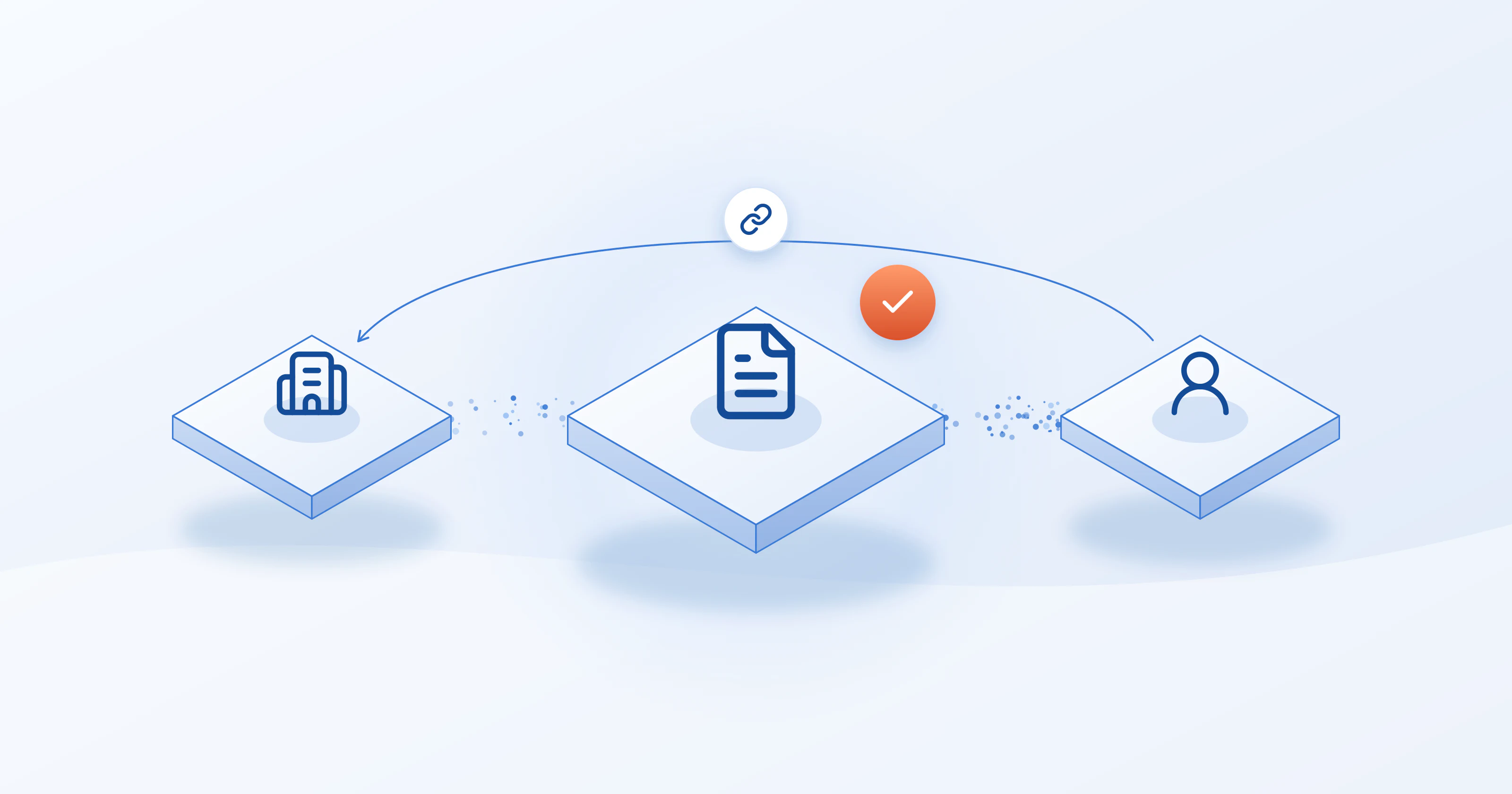
When the borrower is a company and a person guarantees the loan, pull two reports. A business credit report on the company shows how it pays its obligations. A consumer credit report on the guarantor shows how the person standing behind the loan manages personal credit. Each answers a different question, so one does not replace the other.
Most commercial lenders order a single-bureau consumer report on the guarantor, as their credit policy directs. A tri-merge, which combines Experian, TransUnion and Equifax into one report, is a mortgage convention and is rarely part of a business loan file.
Getting this right is harder than it sounds. Examiners ask which reports were pulled and why, and files drift when one underwriter pulls one report and the next pulls another. A clear rule for which reports to pull, applied the same way on every file, gives you the confidence that each file will stand up to review.
What a business credit report shows
A business credit report describes the company, not the owner. It typically covers payment history with suppliers and other trade creditors, public records such as liens and judgments, company details such as age and industry, and a commercial risk score. It comes from a commercial credit data provider, such as Dun & Bradstreet, Experian Business or Equifax Business, and it is separate from any consumer credit file.
For the lender, it answers a direct question: does this company pay its bills on time, and does anything in the public record raise a concern?

What the guarantor's consumer report adds
A personal guarantee means the lender can look to the guarantor if the company cannot repay. The guarantor's consumer credit report shows how that person handles their own obligations, including accounts, balances, payment history and public records.
In practice it often carries significant weight. Small and newer businesses frequently have thin commercial files, with little trade history and sometimes no score at all. In those cases the guarantor's personal credit may be the strongest credit evidence in the file. For a sole proprietor there is no separate company: the individual is the borrower, and the consumer report is the primary report.
Which report to pull
| Situation | What to pull | Why |
|---|---|---|
| LLC or corporation with a personal guarantor | Business report on the company. Consumer report on each guarantor. | Covers how the company pays and the person standing behind it. |
| Established company, strong trade history, no guarantee | Business report. Add an owner's consumer report only if your policy calls for it and the owner has authorized it in writing. | The company's own payment record carries the file. |
| Newer company with a thin commercial file | Business report plus a consumer report on each guarantor. | The commercial file may say little, so the guarantor's credit carries more of the decision. |
| Sole proprietor | Consumer report on the individual. Business report if one exists. | The individual is the borrower. |
| Individual applying for a mortgage | Tri-merge consumer report. | Mortgage guidelines typically call for data from all three bureaus. |
Single bureau or tri-merge: where each fits
A tri-merge belongs in mortgage lending, where investor and agency guidelines typically call for data from all three bureaus and lenders commonly work from the middle score. Requirements vary by investor and program, so confirm the guideline you underwrite to. For how scoring rules are changing on the mortgage side, read FHA's new scoring rules and credit bureau integration.
Business lending follows a different logic. Credit policy sets how many bureaus a guarantor pull uses, often based on loan size and complexity. Many lenders use one bureau; some add bureaus for larger credits. What matters most is that the rule is written down and applied the same way to every file.
Compliance checkpoints for guarantor pulls
- Permissible purpose. A guarantor's credit report is a consumer report, so the pull needs a permissible purpose under the FCRA even though the loan is commercial. Collect the guarantor's written authorization with the application and document it.
- Owners who are not guaranteeing. Do not assume ownership alone supports a consumer pull. If a person is not personally liable on the loan, obtain their written authorization first.
- Adverse action. If a decision relies in whole or in part on the guarantor's consumer report, FCRA adverse action disclosures may reach the guarantor. Regulation B treats guarantors as applicants only for limited purposes, such as the additional signature rule, so align your notice process with counsel.
- Verification and records. Pair the credit pulls with KYC and AML checks. LASER can screen a business against watchlists, and can verify and screen each owner individually. It does not verify a business's identity, so confirm the business itself through your own process. Keep every report on the loan record for audit.
Related reading: personal guarantor credit reports and FCRA duties and FCRA permissible purpose for compliant credit pulls.
If you are also weighing how to bring this bureau data into Salesforce in the first place, our credit report API guide for Salesforce compares three ways to connect it and lists eight questions to ask any vendor.
Both reports on one Salesforce record
LASER Credit Access® brings each guarantor's consumer credit report into Salesforce and links it to the loan record, so underwriters review everything in one place. LASER Credit Access does not order a business credit report. For the company itself, LASER Business Credit delivers Experian Premier Profile and Equifax PayNet reports to Salesforce, linked to the Account. A configurable reuse window stops the same report from being ordered twice, and every report stays on file for audit.
LASER ACCESS: Unified bureau and financial data from every major source, inside Salesforce. The Salesforce-native credit platform for lenders: access, decide and comply without leaving Salesforce.

With ACCESS, DECIDE and COMPLY unified in a single app, the same pull rules apply to every file. Consistency of Process – Identical Loans Scored Identically.
Lend with confidence, and keep every file audit-ready. Schedule a Compliance Discussion or read how credit reports, decisioning and compliance work together inside Salesforce.